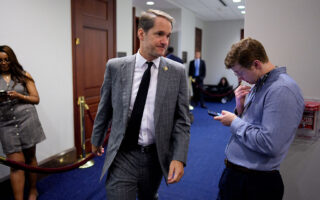
During the World Economic Forum meeting in Davos, US President Donald Trump asserted that individuals from Somalia possess low intelligence quotients. In his address, he remarked that such populations have low IQ levels, while his son, Donald Trump Jr., made comparable remarks regarding Haitian people in 2024. Following these developments, the administration terminated the protected migration status for both Somali and Haitian nationals within the United States.
The Resurgence of Racial Narratives
These remarks and their subsequent policy outcomes reflect a broader resurgence of racial perspectives on human nature within Western political spheres. Arguments concerning the inherent intellectual deficiencies of non-white populations compared to white individuals continue to circulate in academic publications. These narratives actively support far-right propaganda across major democracies, while reinforcing political movements and misinformation campaigns on social media platforms.
Frequently sanitized under labels such as “race science” or “race realism,” these viewpoints lack genuine scientific validity. Public attention recently turned toward these circles when Nathan Cofnas accused the late Jason Arday of plagiarism. However, less scrutiny was placed on Cofnas’s connections to a network of individuals asserting scientific backing for claims regarding the innate intelligence, criminality, and sexuality of various racial groups. Certain participants within this network maintain university affiliations, which provides their output with a veneer of institutional legitimacy.
Flawed Methodology and Academic Publication
The output generated by this faction mimics scientific research despite harboring deep methodological flaws and ignoring rigorous scientific standards. Nevertheless, these individuals frequently manage to secure publication for their work in a select group of mainstream academic journals. Understanding the mechanisms behind these publications and the real-world implications of these claims remains a critical challenge for the scientific community.