Table of Contents
President Trump may have initially accepted the results of his party’s midterm losses, but new data released Friday indicates widespread distrust in the electoral process persists among Republicans.
Republican Trust Falls Short
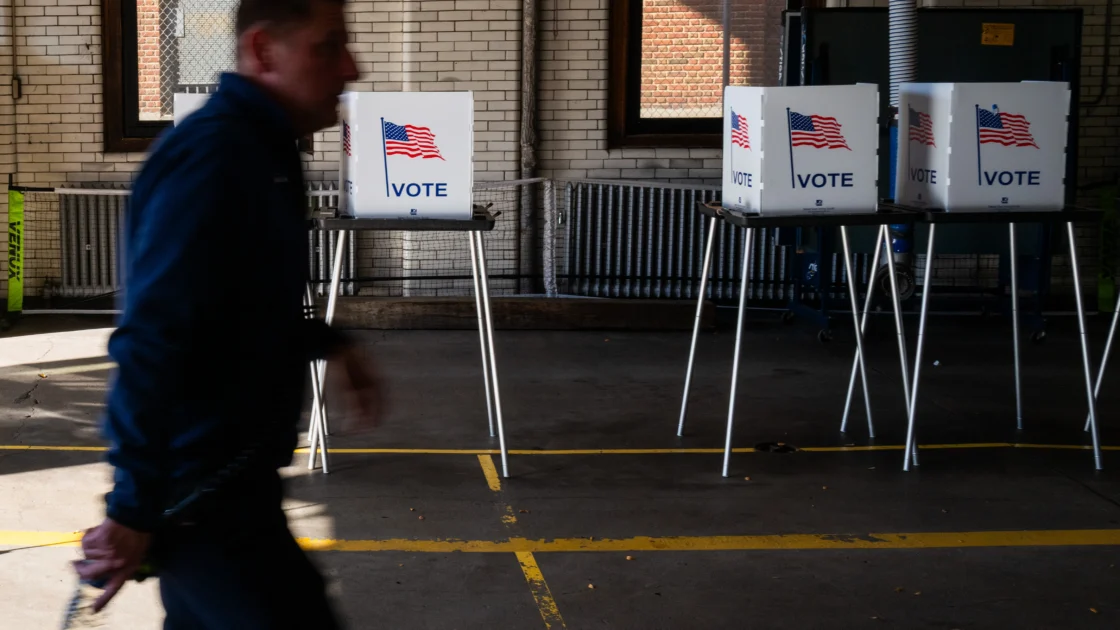
According to polling by the University of California San Diego, less than half of Republican voters nationwide considered the midterm elections to be free and fair. Furthermore, only 52% of Republicans expressed trust that the votes were counted accurately.
By comparison, over 80% of Republicans reported confidence in the vote-counting process following the 2024 election won by Trump. Although trust among supporters of a losing party typically dips, the Republican Party has experienced much larger swings in confidence in recent years due to false claims by Trump regarding U.S. election corruption.
Thad Kousser, a co-director of UC San Diego’s Center for Transparent and Trusted Elections, noted that many people remain unconvinced that elections can be trusted, and they belong predominantly to a single political party.
Overall Trust and Partisan Gaps
Across the entire country, a broad majority of 66% of Americans stated they believed the midterms were fair. This figure reflects an improvement compared to the period before the election, when less than half of U.S. adults expected free and fair contests.
However, this post-election rise in trust was driven primarily by Democrats and independents, many of whom had anticipated federal interference at the polls prior to Election Day that ultimately did not occur.
Lauren Prather, another co-director of the UC San Diego election center, cautioned against viewing the 66% figure as a sign that everyone holds a positive view of the election, explaining that it obscures a significant partisan gap.
Election Denial and Public Demand
The extensive doubt among Republicans serves as a reality check regarding whether Trump’s style of election denialism has faded from American politics. On one hand, fewer politicians who question election results will hold office next year, and most election-denying candidates running for statewide election oversight positions lost their races, according to tracking by States United Action.
Election experts also welcomed the concessions made by Trump and high-profile losing candidates this year. On election night, as it became clear that Democrats would recapture the House and Senate, Trump told Fox News that he would accept the results, asking why he would not.
However, just days later, Trump began promoting conspiracy theories about those exact results on social media, questioning if anyone truly believed the election was honest.
Polling from UC San Diego reveals that a receptive audience for such claims remains within the Republican base. When asked if politicians discuss voter fraud an excessive amount, too little, or the correct amount, a mere 15% of Republicans stated “too much.”
Kousser observed that demand exists among the Republican base to maintain focus on this issue, and politicians continue to supply it, creating an ongoing market for these concerns as long as both dynamics persist.
Comparing Past Election Cycles
While supporters of the losing party normally experience a drop in trust during domestic and international elections—likened by Kousser to asking people if they trust referees after an overtime basketball game—that oscillation would ideally be around 10 percentage points rather than the 30-point swing observed among Republicans between 2024 and 2026.
Even so, the current figures represent an improvement from 2020. Ahead of the January 6, 2021, riot at the U.S. Capitol, similar polling conducted by MIT’s Election Data and Science Lab showed that only 22% of Republicans had confidence in the nationwide vote count.