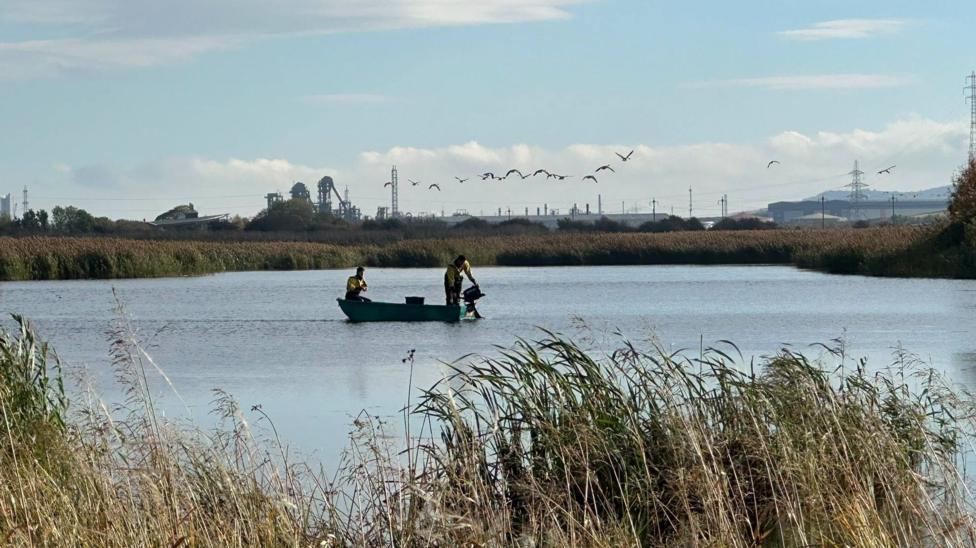
Conservationists have spent the summer and autumn months searching for critically endangered eels to tag as they begin their downstream migration. The Tees Rivers Trust successfully found 12 large eels using fyke netting, a technique involving a cylindrical net, across the River Tees catchment.
Tagging and Tracking Migration
The team managed to electronically tag 10 of the captured specimens, with the largest individual measuring 60 cm (23 inches) in length and weighing 435 g (0.9 lbs). Project manager Ellie Ward noted that the eels caught this year were smaller than usual and presented a greater challenge to capture.
Researchers have targeted “silver” eels, which have completed their maturation process and are preparing to journey back to the Sargasso Sea near Bermuda. Ward explained that European eels typically begin migrating downstream during the autumn and winter months as river discharges increase. She added that continuous low water flows from summer into autumn likely caused the lower catch rates recorded this year.
Understanding a Mysterious Species
The Eels of Steel project receives funding from Natural England, with the Tees Rivers Trust conducting the research in partnership with Hull University. Each tagged eel emits a unique signal that tracks its movements during the migration process. The initiative seeks to determine whether these critically endangered animals can successfully exit the river and navigate past barriers such as weirs and sluices.
Since 2008, the International Union for Conservation of Nature has classified European eels as critically endangered. Populations have plummeted by 90 to 95 percent since the 1980s, driven by factors such as overfishing, climate change, and habitat loss.
Ward expressed wonder at the upcoming voyage, stating that European eels begin an incredible journey back to their spawning grounds in the Sargasso Sea. She noted that no one has ever witnessed these creatures spawning, maintaining their status as a species of great mystery.
The research team welcomes suggestions from the public for potential netting locations, especially in lakes and ponds, and encourages individuals to reach out with information.