Table of Contents
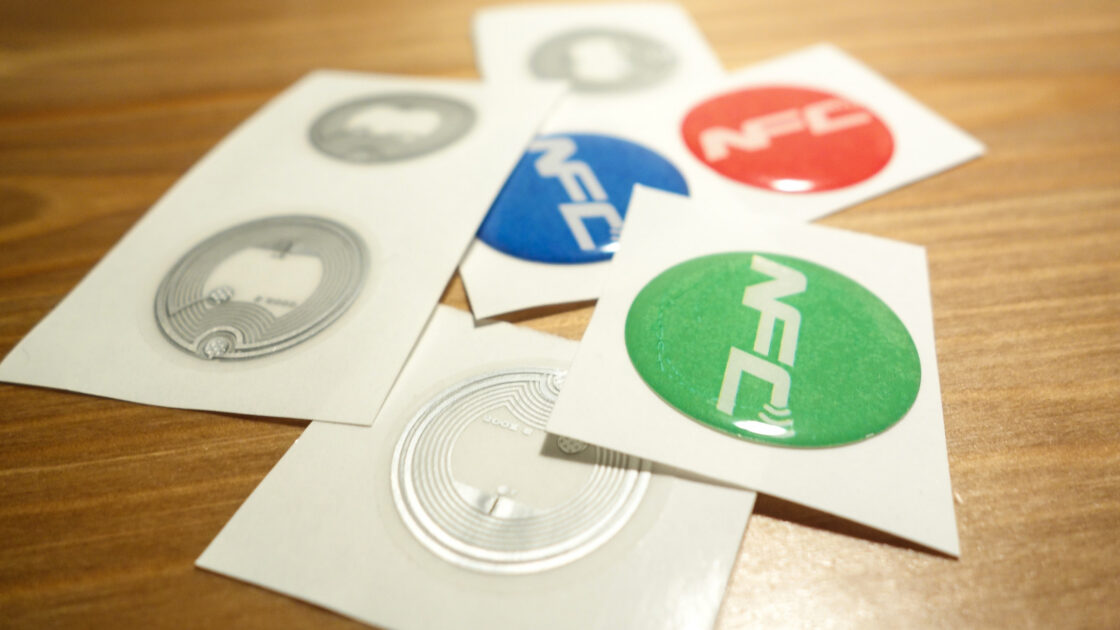
Near-field communication technology powers modern hotel room keys, digital transit gates, and contactless smartphone payments. NFC tags are inexpensive, paper-thin devices that can store simple commands and communicate wirelessly over very short distances.
How an NFC tag works without a battery
NFC is a wireless radio standard similar to Bluetooth or Wi-Fi, operating on the same radio wave principles as RFID technology. While RFID signals can be read from hundreds of feet away, NFC operates only over distances under an inch, making it more secure for close-range applications like tapping a credit card.
An NFC tag consists of a tiny chip with a small amount of memory and an antenna. Because the tag lacks a battery, it draws power through magnetic induction from whatever device reads it. When placed close to a reader, the reader energizes the tag and immediately extracts the stored data.
Common uses for NFC tags
Due to their low production cost and simplicity, NFC tags are widely utilized to store automated commands. Smart-home owners frequently use NFC stickers as physical switches to trigger routines like turning off lights and securing doors, while restaurants use them on tables for instant Wi-Fi access and digital menus.
These tags appear on posters, business cards, ski lift passes, and elevators, prompting phones to open webpages or activate device features upon scanning. Conversely, devices like smartphones act as NFC tags during tap-to-pay transactions, transit gate entries, and hotel check-ins, transmitting stored information to a reader. Apple recently allowed third-party developers access to the iPhone’s NFC chip with iOS 18.1, expanding functionality beyond Apple Wallet.
Security and tracking capabilities of NFC
NFC tags cannot track individuals, despite misconceptions comparing them to Apple AirTags. While AirTags contain batteries and broadcast Bluetooth signals picked up by nearby Apple devices, NFC tags have no power source, cannot emit independent signals, and require close proximity to a reader to activate. A hidden sticker cannot report a user’s location.
Most users leave NFC enabled since it consumes minimal power and only operates at very close range. Payment security is maintained because both Android and Apple phones require device unlocking before activating NFC, excluding special features like Express Mode for transit passes. Users can disable NFC on Android through connection settings, while iPhones from the XS model onward keep NFC active permanently without a manual shutoff option.