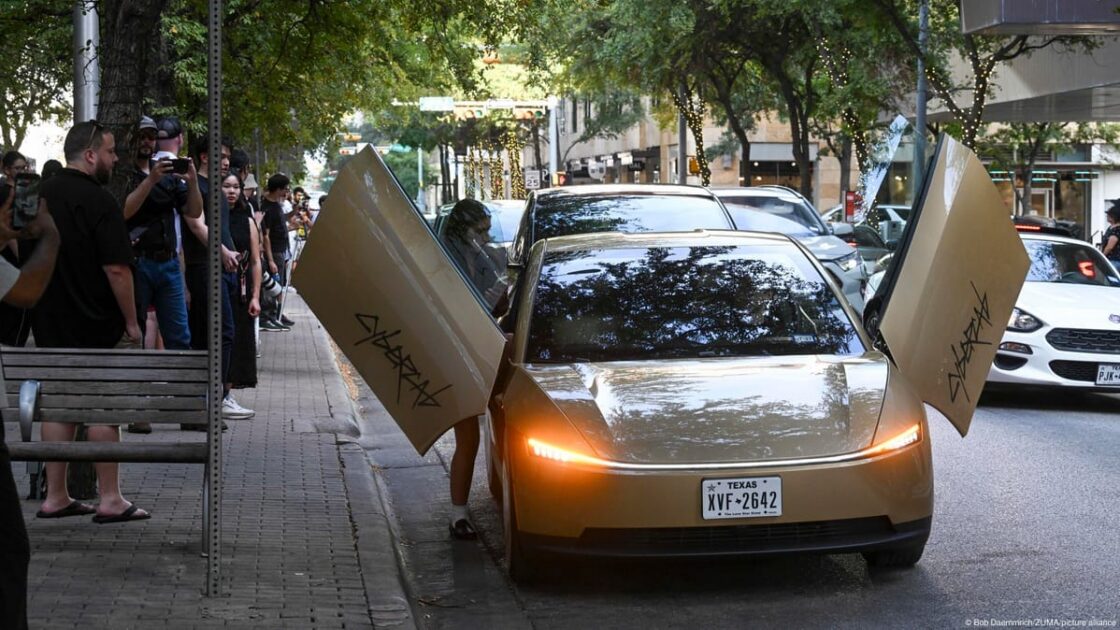
Electric vehicle manufacturer Tesla announced on Monday that it plans to invest €3 billion ($3.3 billion) in its German factory near Berlin to begin producing driverless Cybercabs. This expansion project at Tesla’s sole European facility follows owner Elon Musk’s announcement last week regarding the discontinuation of Cybertruck production.
Expansion Plans and Timeline for the Grünheide Facility
Construction work at the Grünheide complex in Brandenburg is scheduled to commence in 2027, with the initial vehicles expected to roll off the production line in 2029. The company stated that production capacity is designed to reach 1 million units, though a specific timeframe for achieving this maximum output was not specified.
Workforce numbers at the Brandenburg facility had previously dipped to approximately 11,000 before climbing back to 12,600 by October. The upcoming expansion is projected to create several hundred new jobs through additional hiring.
Tesla stated that the project establishes the foundation for creating the world’s most technologically advanced Tesla facility at the Grünheide location. The manufacturer intends to submit a formal application for the new construction before the conclusion of the year.
Regional and Economic Reception in Germany
Brandenburg State Premier Dietmar Woidke expressed strong support for the decision to expand the regional manufacturing plant. Woidke noted in a statement that the substantial investment and the future prospect of manufacturing up to one million Cybercabs represent a critically important economic decision for the area.
Woidke added that during economically challenging times, the project sends a strong message that Germany maintains its appeal as a destination for major industrial investments, with Brandenburg demonstrating successful implementation. Following a previous sales slump that caused expansion plans to pause, recovering demand has improved Tesla’s outlook.
The company recently announced objectives to elevate weekly vehicle manufacturing output to 7,500 units, representing an annual total of 375,000 vehicles, alongside plans to increase on-site battery cell production.