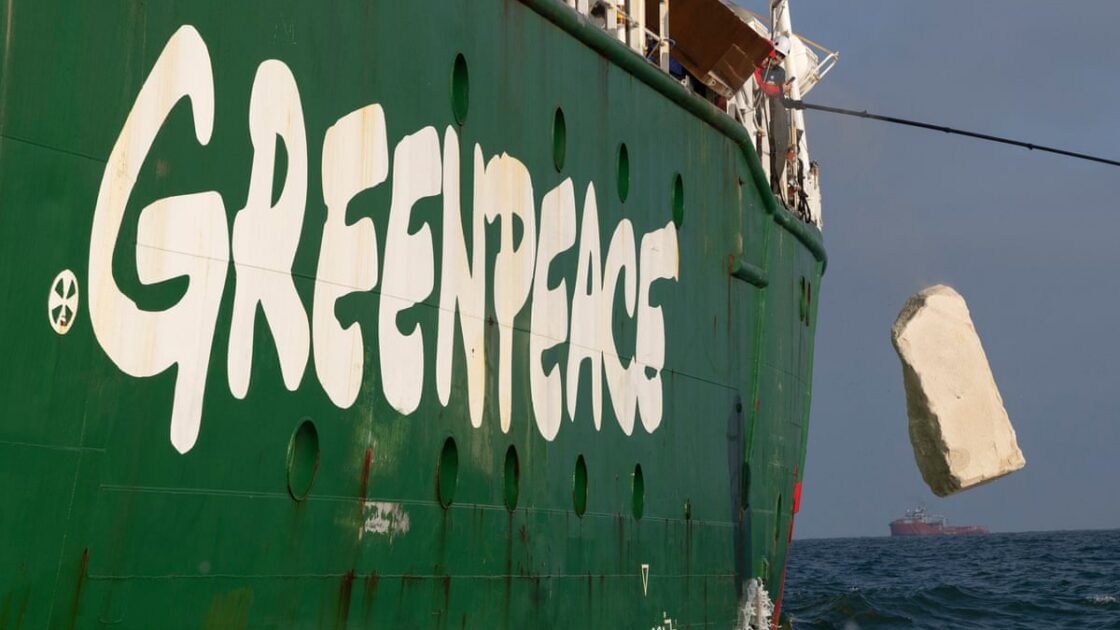
Greenpeace activists unintentionally dropped roughly 15 tonnes of boulders onto a North Sea site designated for a massive UK windfarm. The environmental group created the underwater barrier off the Norfolk coast to block destructive bottom trawling.
The Greenpeace Boulder Barrier
Greenpeace deployed the massive stone blocks, which weigh up to two tonnes each, to protect harbour porpoises from bottom trawling. The organization placed the boulder barrier in one of the most heavily trawled regions of the southern North Sea to coincide with the premiere of the BBC documentary Blue Planet III, narrated by Sir David Attenborough. Several boulders feature the signatures of well-known actors such as Simon Pegg and Benedict Cumberbatch, who backed the marine conservation initiative.
Before dropping the stones without consent from maritime authorities, Greenpeace verified that the seabed was free of existing pipelines, cables, and shipwrecks. However, the group was unaware that the location was slated for the Norfolk Vanguard East windfarm.
Impact on the Vanguard Windfarm Project
The placement of the barrier creates an extra hurdle for developers working on the £12bn green energy project. The action occurred just days prior to a government announcement committing £1bn of public funds to the Vanguard West and Vanguard East windfarms, marking what is considered the largest investment of its type in UK history.
The German utility company RWE, which serves as the offshore wind developer, is currently speaking with Greenpeace to pinpoint the precise location of the boulders. RWE intends to update seabed surveys that began during the previous summer and is reviewing any possible effects on undersea cables or construction timelines.
An RWE spokesperson characterized the dialogue with Greenpeace as constructive and stated that the firm will keep assessing the exact consequences for the project. Industrial fishing is also expected to shift away from the zone once construction commences next year.
Will McCallum, the co-executive director of Greenpeace UK, dismissed the idea that the boulders would create a serious hindrance as absurd. He explained that energy developers frequently clear naturally occurring boulders from the seabed ahead of construction, noting that natural rocks can weigh up to ten times more than the ones placed by activists.
“Greenpeace has long championed offshore wind and will continue to do so. While we wait for this windfarm to be built, our boulders will provide an essential barrier to destructive bottom trawlers that are decimating the seabed in this protected area,” McCallum said.