Table of Contents
People across the globe faced unprecedented weather events and fatal impacts driven by the climate catastrophe throughout 2026. Following the hottest summer in recorded history since 1850, conservative estimates place the death toll from extreme weather in the high tens of thousands, a figure expected to rise significantly.
Early Year Extremes and Energy Imbalance
January marked the fourth-hottest on record, with extreme heat fueling wildfires in Australia as temperatures surged nearly 20C above average. Victoria and other southern states recorded extreme peaks, including 50C in Port Augusta and Andamooka, while Melbourne hospitals saw a 25% surge in heat-related illnesses. February followed as the fourth-hottest on record, highlighted by mudslides that killed 72 people in Brazil after Juiz de Fora recorded its wettest month ever, displacing over 10,000 residents. March continued the trend as the fourth-hottest on record, bringing devastating floods to Ethiopia, Kenya, Tanzania, Oman, the UAE, Afghanistan, Russia, Argentina, and Chile.
During March, the World Meteorological Organization reported an alarming energy buildup in Earth’s system, with over 90% stored in oceans where warming doubled over two decades. UN Secretary General António Guterres stated that the global climate is in a state of emergency and urged rapid cuts to fossil fuel emissions. April ranked as the second-hottest April, featuring Super Typhoon Sinlaku, which struck Micronesia, Guam, and Saipan with 295 km/h winds, killing 12 people and causing $1.5bn in damages. May also ranked second-hottest, bringing deadly heat above 45C across India and Bangladesh, and reaching 52C in Pakistan’s Sindh province.
Midyear Uncharted Ocean Heat and Global Disruption
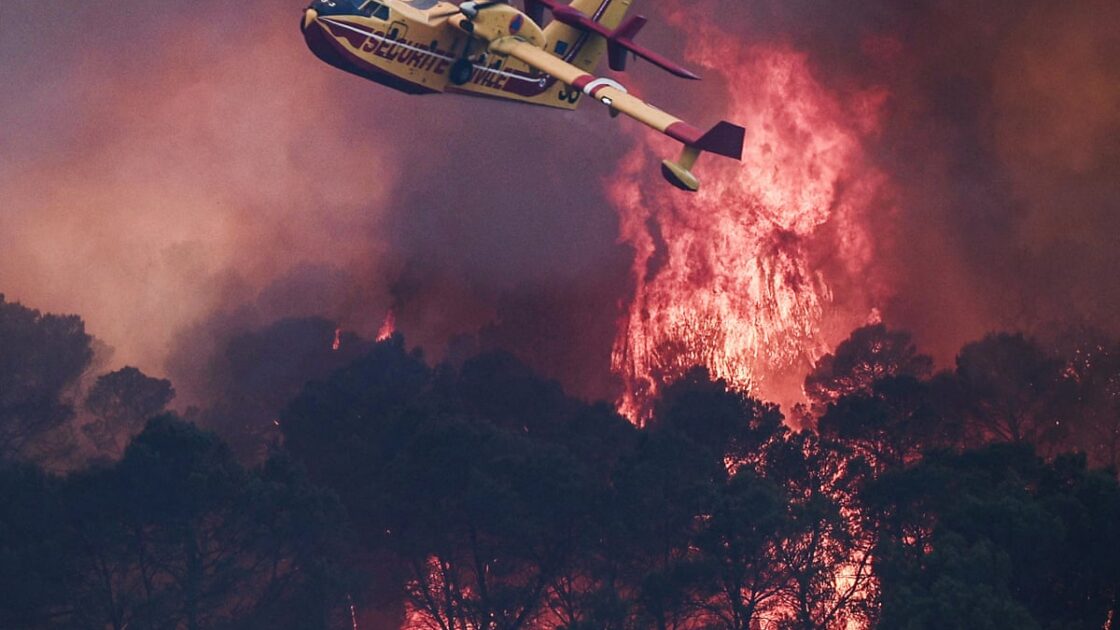
June marked the second-hottest June on record as ocean heat entered uncharted territory following the emergence of an El Niño confirmed on June 2. Antarctica’s Esperanza base recorded 15C amid rain and dirt, while Beliy Island in Siberia reached 28.3C. Simultaneously, relentless rains caused nearly 100 deaths across Côte d’Ivoire, Ghana, and Togo. July tied as the hottest July on record, with nearly 1,000 wildfires scorching 3 million hectares in Canada and causing severe air quality issues in Toronto and New York. Extended droughts also fueled major fires across Greece, Portugal, Italy, Norway, Germany, Spain, and France. In the United States, severe heat disrupted 250th-century independence celebrations and World Cup matches.
August became the hottest August on record. A glacier collapse in Nepal’s Lhende Khola river valley triggered a debris flood that killed at least 1,300 people, with over 5,000 missing. Concurrently, a murderous European heatwave killed an estimated 50,000 people, forcing Romania to shut down its sole nuclear power station due to low water levels in the Danube River.
Autumn Storms, Protests and Temperature Records
September stood as the second-hottest September on record, marked by Typhoon Dujuan and Typhoon Saudel in Asia, alongside heavy rains and flooding in Japan, China, India, Nepal, and Thailand. October was the hottest October on record, prompting UN warnings for an impending peak El Niño projected to cause over 450,000 deaths globally by February. In Indonesia, protesters demonstrated against a severe fire season that scorched nearly 2 million hectares and generated a toxic haze linked to 3,560 deaths in a month. Chile declared Santiago’s Las Condes district a disaster zone following record October rainfall, while severe drought and fires plagued the Amazon rainforest.
Global temperatures tied the all-time record of 2.04C above preindustrial levels in November, with 2026 projected to rank among the four warmest years in history alongside 2023, 2024, and 2025. Atmospheric carbon dioxide reached a peak unseen in 2 million years. However, global fossil fuel emissions were projected to decline slightly due to a shift away from oil and gas following high prices after the US-Israeli attack on Iran and cheaper renewable energy alternatives.