Table of Contents
The 2026 Rugby League World Cup generated plenty of contrasting opinions depending on geographic perspective. While the tournament delivered financial profit and strong crowd numbers in the southern hemisphere, it also faced criticism over its slimmed-down format and restricted television coverage in the north.
Hemispheric Tensions and Financial Success
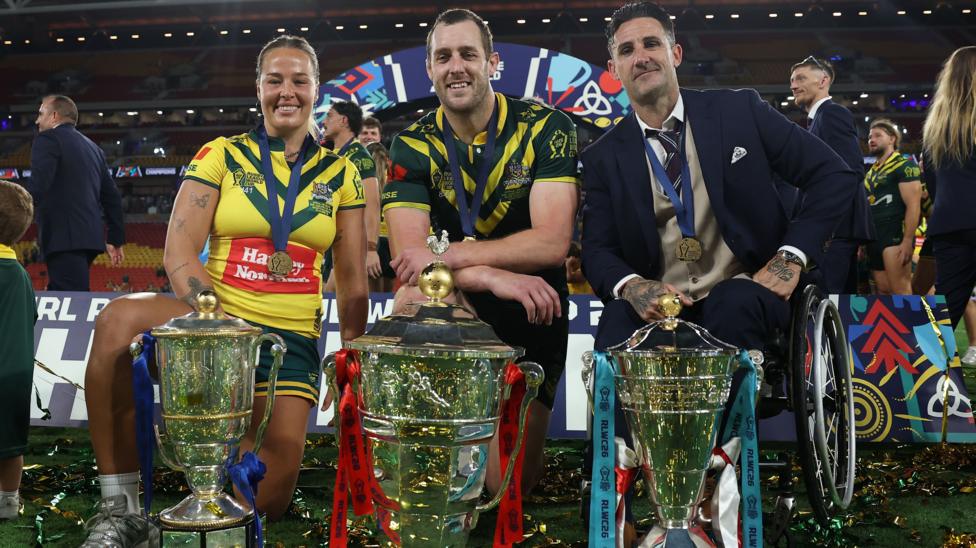
For the fourth consecutive tournament, Australia claimed both the men’s and women’s titles after defeating New Zealand in the finals. Strong performances from Tonga and Samoa highlighted their rise to Tier One status, while England secured a memorable victory in the wheelchair tournament against France. Financially, the event avoided the post-pandemic constraints of 2022 by posting a profit, supported by a reported A$12m broadcast deal from Australia’s Channel Seven.
However, cutting the men’s tournament from 16 teams to 10 drew criticism for excluding developing nations like Jamaica and Greece. Financial disparities remained stark, with Australian players earning equal payments of $40,000 compared to Wales, which reportedly spread $15,000 across its women’s and wheelchair squads. Viewer access also proved uneven, as fans in the UK and North America largely relied on a Premier Sports subscription to watch the matches.
Format Criticisms and Crowds
The tournament format omitted quarter-finals and featured unbalanced groups, earning criticism from pundits and coaches. Former England international Ryan Hall told BBC Radio 5 Live that reducing the team count stripped the event of its festival essence, while Castleford Tigers head coach Paul Rowley described the setup as trying to make a square with five sides. England’s men ultimately became major casualties, exiting the tournament despite winning two of their three group matches.
On a more positive note, holding the tournament during warmer months in Australia, New Zealand, and Papua New Guinea helped increase the average crowd size to 21,360. Ticket prices were lowered to A$19, and matches featuring Pacific nations drew strong support. Despite the attendance boost, the women’s tournament struggled with crowds, often leaving stands largely empty following men’s matches during double-headers.
Broadcasting and the Northern Hemisphere Gap
Unlike the 2022 tournament in the UK, which reached nearly 30 million viewers on the BBC, this year’s action was predominantly locked behind a paywall on Premier Sports. International Rugby League chair Troy Grant stated that the rights went to Premier because the BBC’s financial offer was insufficient. Former England international Jon Wilkin argued on BBC Radio 5 Live that the event deserved free-to-air coverage, while a BBC spokesperson cited the need to make difficult choices to deliver required savings.
This broadcasting split underscored a wider financial gulf between the sport in the northern and southern hemispheres. The NRL recently secured a record A$5.3bn television deal over seven years, vastly outstripping Super League’s existing financial agreements. As preparations begin for future cycles, Australia remains the dominant force expected to enter the next World Cup as clear favorites.