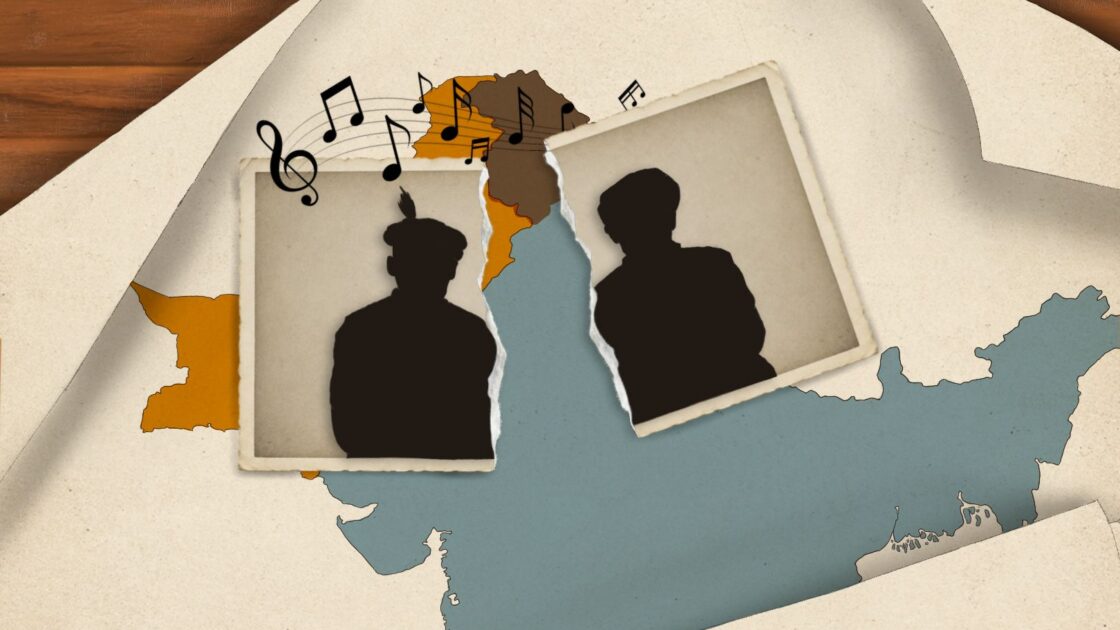
Music is serving as a cultural bridge across the Line of Control in Kashmir, uniting Shina-speaking communities separated by decades of political division. Through modern folk fusion and digital platforms, young artists are finding that their art resonates deeply with audiences on both sides of the border.
A Cultural Map Without Borders
Salman Paras, a 38-year-old contemporary Shina folk singer, grew up hearing stories of family separation. He was born in Sheikhpora Kilshay, a village in the Minimarg-Gurez area of Pakistan-administered Gilgit-Baltistan, where some relatives remained on the Indian-administered side after the region was divided. Paras’s grandfather’s brother stayed behind in Gurez while the rest of the family migrated to Gilgit, causing the relatives to lose touch over the decades.
The connection was eventually revived through modern media when a Shina musician on the Kashmir side discovered Paras’s songs on YouTube and contacted him to report that family members had been traced to Kangan, a central Kashmir town where Dard families migrated from Tulail. Although Paras keeps the musician’s identity confidential for security reasons and the families have yet to reunite, his music successfully bridged the generational gap.
Paras has gained widespread recognition by blending Shina folk with modern pop music. His song Karay Karay, recorded alongside Pakistani singer Ali Zafar and filmed in Skardu and the Katpana Desert, has accumulated millions of views on YouTube and introduced the Shina language to listeners outside the mountainous region, alongside recent performances in Dubai and Muscat.
During an Instagram live session on November 3, Paras performed in Shina and various regional dialects, drawing an audience from Gurez, Drass, Kargil, and Gilgit-Baltistan. Imtiyaz Samoon, a Shina speaker from Gurez on the Indian-administered side, joined the broadcast to tell Paras that his music is cherished in the valley and frequently performed by local singers at community events.
In response, Paras expressed a desire to collaborate with musicians on the Indian side and perform in Gurez and Ladakh if proper visas and permissions can be secured. “If you look at the official map of Gilgit-Baltistan today, Gurez and Ladakh are missing,” he says, referring to Shina-speaking areas on the Indian-administered side. “But in my mind, I’ve drawn a cultural map that includes Chitral, Kohistan, Gurez and Ladakh. They are my people.”
Expanding Audiences Through Digital Platforms
Iftikhar Uddin Iftikhar, a 29-year-old singer based in Gilgit, has experienced a similar growth in cross-border listenership. After beginning his musical training in 2015 under Shina folk singer Muhammad Amin Shah and releasing his debut album in 2018, he now collaborates with local artists and records in Gilgit studios.
Iftikhar views Paras as a major inspiration as he works to establish his own career and clear a path for younger generations of performers. “Shina music is our identity,” he says. “I am not just promoting songs – I am keeping our language alive.”
Both artists continue to release new material and expand their reach, utilizing digital tools to maintain cultural ties across political divides.