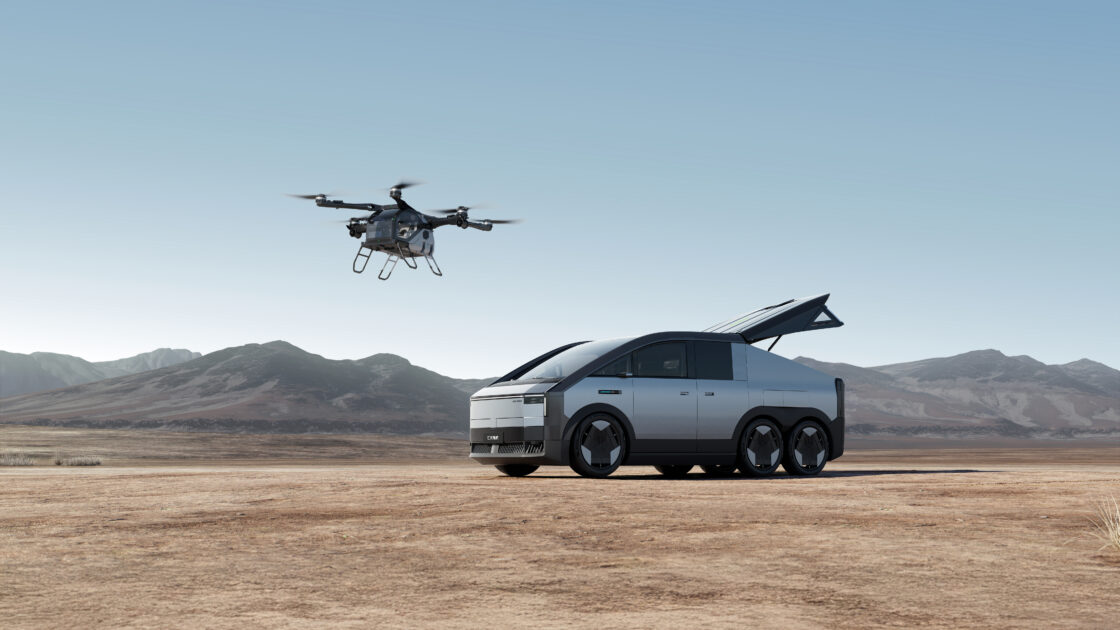
A modular flying car system developed by Chinese robotics company Xpeng features an electric vertical takeoff and landing vehicle (eVTOL) that can be mastered with just five minutes of training. Named the Aridge Land Aircraft Carrier, the two-part vehicle was presented by Aridge founder and president Deli Zhao at the Web Summit in Lisbon.
Inside the Land Aircraft Carrier System
The system consists of a ground vehicle, often called the mothership, which is a 5.5-meter-long van that fits in standard parking spaces and can be driven with a standard license. This van is designed to store, transport, and deploy the eVTOL, which features six foldable rotors and can fly as high as a helicopter for roughly 30 kilometers or 19 miles. Speaking to CNET, Zhao stated that he was inspired by Harry Potter and the Green Goblin to pursue flying cars despite lacking formal education.
According to Zhao, anyone can learn to operate the vehicle using a simple joystick after five minutes of instruction, or let it fly autonomously if the operator is fatigued. As Zhao explained during his presentation, everyone can be a pilot or a captain. The vehicle recharges while the mothership is driving, and solves common eVTOL challenges regarding storage, transportation to flight sites, and ease of use.
Commercialization and Global Plans
Xpeng reports that it has already secured 17,000 orders for the vehicle across China, the United Arab Emirates, and other Asian markets, with prices starting at $300,000. Zhao highlighted that the company is closer to commercialization than competitors, having established a mass-production factory for flying cars in Guangzhou where trial production began last November. While most preorders come from individuals, the vehicle is also intended for tourism and search and rescue operations.
The Land Aircraft Carrier has undergone extensive safety testing in China and is expected to launch there as a consumer-owned product as early as next summer, supported by national policies promoting the low-altitude economy. Xpeng also plans to explore certification in the United States next year and is eyeing the European market, though Zhao acknowledged that regulatory hurdles in Europe will be substantial due to its highly developed aviation sector.
During his appearance at the Web Summit, Zhao climbed into the cockpit on stage, prompting the audience to raise their phones in anticipation of an indoor flight before realizing European health and safety rules prevented any takeoff.