Table of Contents
Historic El Niño conditions have officially reached Monterey Bay in California, bringing exceptionally warm ocean waters, record-breaking high tides, and drastic disruptions to local marine ecosystems. As reported by Environment | The Guardian, scientists observe that the unfolding changes threaten the ocean food web and are unlike anything previously recorded.
Startling Marine Changes and Warming Waters
The climate phenomenon, characterized by unusually warm equatorial ocean conditions, is rapidly heating and expanding the Pacific. Dr Jono Wilson, science director for The Nature Conservancy’s oceans program, described the situation as unlike anything previously witnessed, noting that researchers are struggling to comprehend the sheer scale of the event. Dive reports and underwater cameras have documented unusual marine visitors traveling far north of their usual ranges, including halfmoon fish, winged comb jellyfish, Humboldt squid, whale sharks, and juvenile garibaldi fish.
Data from a moored buoy at the mouth of Monterey Bay revealed that temperatures in the thermocline layer have risen to 8C above average. Dr Henry Ruhl, director of an ocean observing collaboration at the Monterey Bay Aquarium Research Institute, noted that temperatures 200 feet below the surface are approaching room temperature. Simultaneously, phytoplankton populations plummeted by an order of magnitude.
Impacts on Kelp Forests and Seabirds
The warm water and nutrient scarcity have severely affected kelp forests, which are crucial foundation species supporting roughly 40% of dependent marine species. Dr Scott Hamilton from San Jose State University explained that the kelp began to disintegrate and melt as the water warmed. Hungry sea urchins are now mowing down any new kelp growth, perpetuating a food-limited habitat.
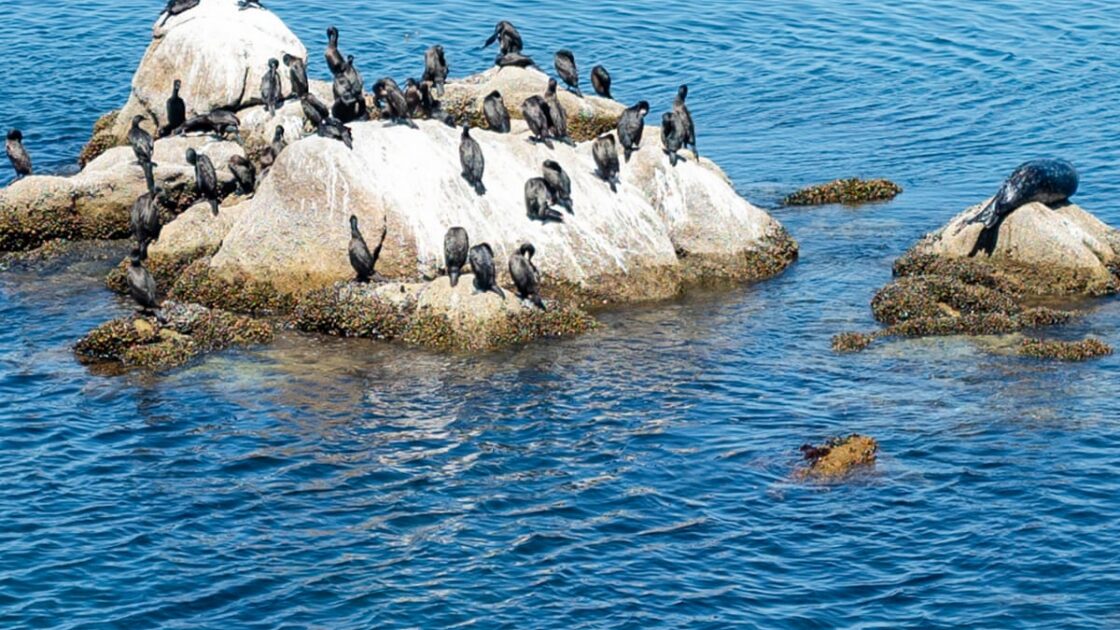
Rising temperatures are also pushing fish into deeper waters, leading to hundreds of starved seabirds, including brown pelicans, Brandt’s cormorants, and common murres, washing ashore between San Francisco and Los Angeles. Kriss Neuman, a principal ecologist with Point Blue, noted that shrinking sandy beaches and rising sea levels are further squeezing habitats and reducing the beach-launched food web.
Restoration Efforts and Future Outlook
To combat these threats, researchers at Moss Landing Marine Laboratories are cultivating kelp spores in laboratory beakers before moving them to outdoor tanks and eventually transplanting them onto ropes in the ocean. Bennett Bugbee, a research technician, acknowledged that warming seawater and rising tides present challenges, but expressed cautious optimism about saving parts of the ecosystem following previous restoration successes.
Scientists and conservationists continue to monitor the region, noting that while some species will move or perish over the coming months, tools and resources developed over the past decade will aid recovery efforts.