Table of Contents
New York is confronting a growing waste management crisis as its largest active landfill, Seneca Meadows, seeks to expand despite reaching the height of the Statue of Liberty. Located in the Finger Lakes region, the facility is now the subject of intense debate regarding its impact on local air quality, water safety, and climate change.
A Growing Mountain of Waste
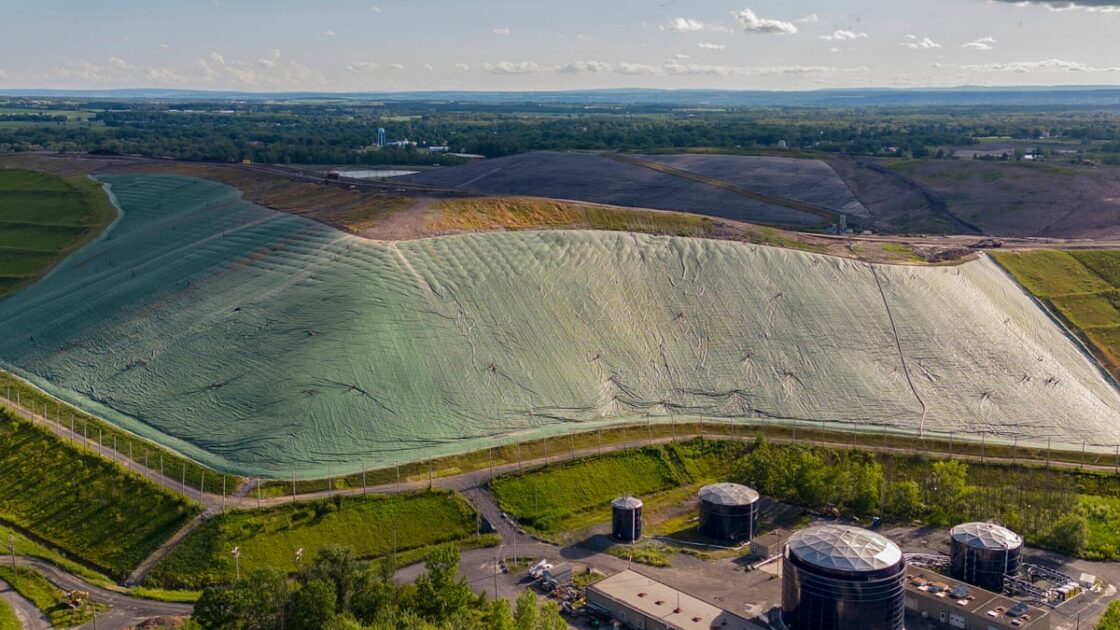
Since the 1980s, the Seneca Meadows landfill has expanded to cover 350 acres, with trash mounds reaching approximately 300 feet in height. Mark Pitifer, an administrator at a neighboring business, described the site as a “monster of a hill” that dominates the local landscape. While residents of nearby Waterloo and Seneca Falls had hoped the site would close following the expiration of its permit last year, the Texas-based operator, Waste Connections, has proposed a multi-decade extension.
The operator’s plan includes adding 47 acres of new disposal cells and increasing the height of the existing trash heap by another 70 feet. As state authorities review the expansion request, the landfill has become a focal point for grievances. According to a study using aircraft measurements, Seneca Meadows is currently the largest source of methane—a potent greenhouse gas—in New York state.
The Broader Waste Dilemma
The facility receives roughly 6,000 tons of waste daily from across the state, including 1,500 tons from New York City. With landfills across the region expected to reach capacity within 16 to 25 years, the situation highlights a systemic failure to manage the volume of trash produced by modern society. Emily Gallagher, a Democratic member of the New York state assembly, described the site as a “precipice of a crisis” during a recent visit.
Gallagher argues that roughly 80% of the material at Seneca Meadows could be recycled, but lobbying from plastics and fossil fuel industries has hindered progress. She advocates for a cultural shift away from “convenience culture” and toward a circular economy. “We say throwing away but there is no away,” Gallagher told The Guardian. “The problem is that it will take a culture change that people won’t want to do until it is forced in their faces.”
Local Impact and Future Outlook
For local residents, the impact is immediate and physical. Yvonne Taylor, co-founder of the environmental group Seneca Lake Guardian, reported that community members have had to pull children from school due to the smell, while businesses like Waterloo Containers have installed specialized filtration equipment to protect employees from the stench. Taylor emphasized that the goal is not to shift the burden to other communities but to address the root cause of waste production.
Waste Connections did not respond to requests for comment from The Guardian. However, the company maintains on its website that it holds an “exemplary compliance record” and utilizes advanced environmental protections, including a double composite liner and systems to capture methane for electricity generation. The company also asserts that its odor-control practices are effective based on air monitoring data.
Meanwhile, New York City officials noted that they are working to reduce waste through organic composting programs, which account for about one-third of the city’s remaining trash. A spokesperson for the city’s sanitation department acknowledged that as regional capacity shrinks, the city will likely need to export waste to more distant locations via rail.