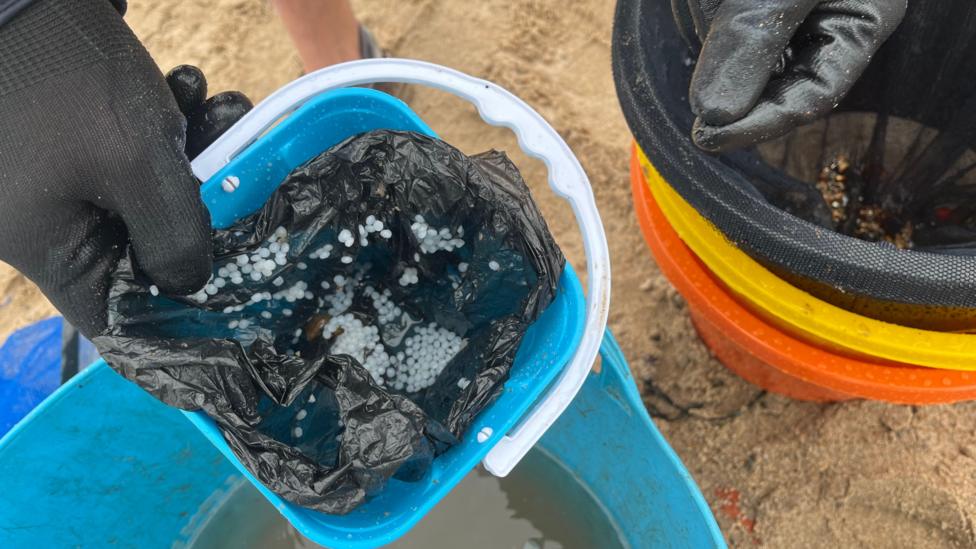
A research team based in Tyneside has secured funding to conduct a year-long study into the environmental consequences of a significant microplastic spill. The project aims to assess how the pellets, known as nurdles, affect local wildlife and to track the spread of the pollution following a ship collision at the Port of Tyne on 19 July.
Investigating the impact on marine life
Newcastle University is spearheading the study after receiving a grant of £81,905 from the Natural Environment Research Council (NERC). The research focuses on the River Tyne and the surrounding coastline, where tonnes of plastic pellets were released during the incident.
Dan Turner, the coordinator for North East England Beached Bird Surveys, is leading the investigation into the impact on seabirds. He noted that the funding allows for a broader scope of research, stating, “This will be a long-term issue, securing the grant now gives us room to conduct more research not just in the North East but worldwide.”
For the past six weeks, experts at the Dove Marine Laboratory in Cullercoats have been performing necropsies on dead seabirds. Researchers are currently utilizing stomach rinsing techniques to determine if the birds have ingested the pellets. While no plastics have been confirmed in the stomachs of the birds examined so far, Turner explained that there is evidence of nurdles appearing in regurgitated material. The team remains concerned that birds might mistake the pellets for food, leading to starvation, and that the breakdown of these plastics could eventually impact the wider food chain.
Tracking the spread of pellets
The research team, which includes experts from Newcastle University and the University of Liverpool, is collaborating with volunteers and organizations such as the Environment Agency, the Tyne Rivers Trust, and Groundwork North East and Cumbria. A key objective for the coming year is to map the movement of the spilled pellets.
Nurdles have already been discovered on beaches across Tyneside, Wearside, and Teesside. There is also evidence suggesting the pellets may have traveled as far as the coast of Denmark. Dr. Geoffrey Abbott, a reader in geochemistry at Newcastle University, stated that the team hopes to visit Denmark to verify if the pellets found there originated from the Tyne spill.
“There have been cases where they can travel great distances, for instance a spill in South Africa led to nurdles washing up in Perth, Australia, in no time at all,” Dr. Abbott explained. As the study progresses, the research team is encouraging members of the public to continue submitting photographs of nurdles to assist with their data collection.