Following a midterm election defeat that handed control of the House and Senate to Democrats, President Donald Trump’s unprecedented intervention in private sector companies could face intense scrutiny. During his second term, the federal government embedded itself in corporate affairs through stock agreements and ownership stakes, drawing plans from incoming Democratic lawmakers to root out alleged corruption.
Scrutiny Over Government Equity Deals
Democratic investigations may target Intel and the dozens of other companies that secured equity stakes with the administration. In July, Democratic lawmakers requested details from law firm Skadden Arps regarding its involvement in the Intel transaction. This dynamic could alter how Trump manages relationships with businesses, following two years of securing stock deals and acquiring a golden share in U.S. Steel when Nippon Steel acquired the company.
The June 2025 golden share arrangement grants the holder power to outvote other shareholders and gives Trump veto authority over key areas of the steelmaker’s business, including capital investment, employee salaries, and the company name. The amended charter specifies that after Trump leaves office, this veto power transfers to the Treasury and Commerce Departments.
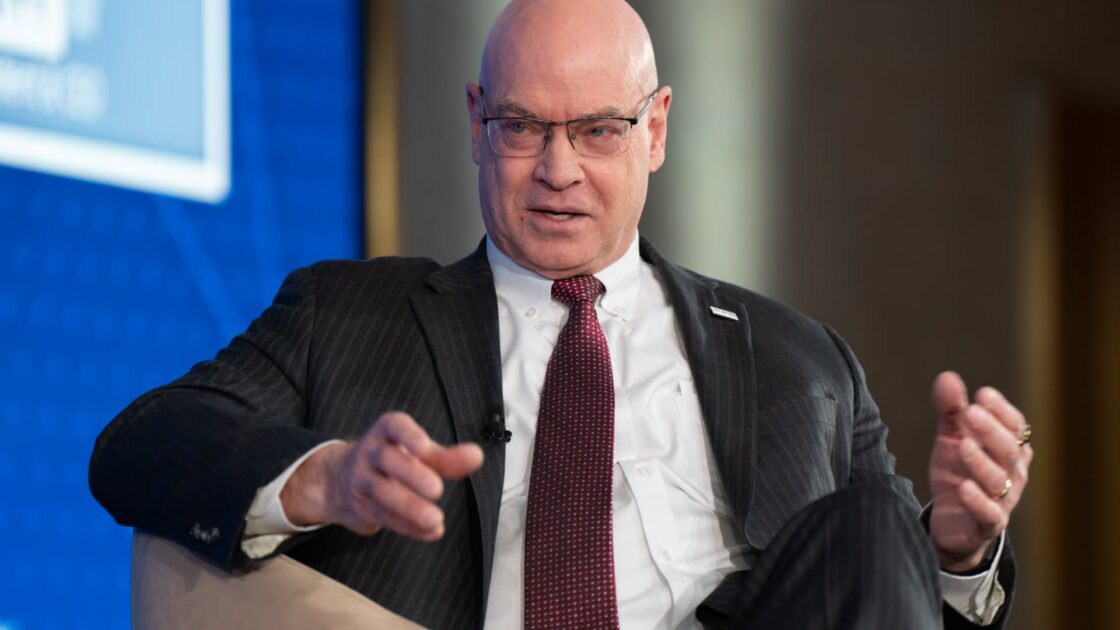
U.S. Steel CEO David Burritt told CNBC’s Megan Cassella at the U.S. Chamber of Commerce’s B20 summit in Washington that the government’s representative on the board, Commerce Department official David Shapiro, typically abstains from voting but maintains access to company discussions. Burritt noted that the arrangement has not restricted company operations.
The Cato Institute’s tracker shows the administration established equity positions in 14 companies by January of the first year of Trump’s second term, a number that grew to 41 by November. These holdings include both publicly and privately held companies.
Lame-Duck Status and Potential Investigations
Indiana University associate professor Sarah Bauerle Danzman noted that Trump, entering lame-duck status and losing political power in Congress, might continue pushing for more equity deals because he feels he has less to lose.
White House spokesman Matthew Middleton defended the actions in a statement to CNBC, explaining that through voluntary equity investments in willing companies, the administration partnered with the private sector to rebuild the industrial base and return critical production home. Middleton added that the President remains willing to work with anyone to advance economic solutions and support American workers.
However, these efforts may face resistance when Democrats assume majority control of Congress in January. Probes are expected to focus on tech giants like Apple, Meta Platforms, and Elon Musk’s companies, alongside potential conflicts tied to critical-minerals deals and Nvidia CEO Jensen Huang.
Bauerle Danzman predicted that Democrats might seek to increase oversight to ensure government stakes advance genuine national security priorities rather than offering special favors to political and family connections.
Burritt stated that he was unaware of any congressional investigations into U.S. Steel but expressed readiness to cooperate if one arises. It remains uncertain how strongly Republicans would defend Trump’s corporate stakes, given traditional conservative support for free markets and opposition to government meddling, though Bauerle Danzman suggested some Republicans might join Democrats in clamping down.
Despite embracing government involvement at U.S. Steel, Burritt emphasized that accountability must remain with corporate leaders, stating that businesses need to remain capitalist.