Table of Contents
Navigating the Strait of Hormuz remains one of the most hazardous maritime routes globally, where vessels face ongoing threats from missiles, drones, and underwater mines. To mitigate these dangers, navies are increasingly deploying autonomous robot systems to perform the high-risk task of mine hunting, effectively removing human crews from the immediate line of fire.
The Rising Threat of Sea Mines
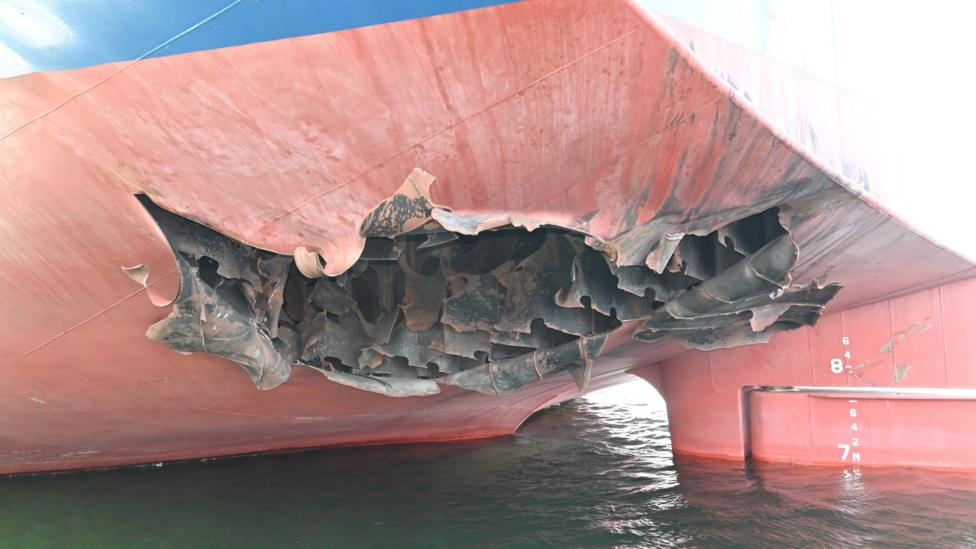
Sea mines represent a persistent danger to commercial shipping. These devices can rest on the seabed, detonating upon detecting acoustic or magnetic signals, or they may float in shallow waters. According to maritime consultant and former merchant navy officer Steve Cameron, the threat is significant enough to disrupt entire tanker fleets. “If you’re a captain, you’d like to see evidence mines aren’t present,” Cameron told BBC News.
Ian McFarlane, a naval architect at the French defence group Thales, noted that mines are a cost-effective method of naval warfare. Traditionally, identifying these threats required specialized mine-hunting vessels staffed by approximately 80 sailors. By shifting to autonomous systems monitored from the shore, the personnel requirement can be reduced to roughly 20 people, offering a strategic advantage for NATO navies currently facing recruitment and retention challenges.
Technological Advancements in Mine Detection
The development of uncrewed systems has evolved significantly over the last two decades. While the US Navy utilized the Remus 100 torpedo-shaped robot during the 2003 Iraq war to scan the seabed, modern conflicts are testing far more sophisticated technology. Recent reports highlighted an incident in September where Iranian forces seized an uncrewed US autonomous sub in the Strait of Hormuz. The Pentagon described the device, an Extra Large Uncrewed Underwater Vehicle (XLUUV) from the firm Anduril, as a malfunctioning older unit containing no classified equipment.
William Lupton, a naval analyst with the Shephard Group, emphasized that the primary benefit of such technology is the absence of human risk. “That was a drop in the ocean compared to having prisoners taken,” Lupton said. Regarding security concerns, experts suggest that sensitive data on captured vessels can be wiped or destroyed remotely.
Collaboration between Thales, the Royal Navy, and France’s Marine Nationale has resulted in the creation of uncrewed surface vehicles (USVs). These craft utilize sonar technology originally developed for the oil and gas industry. By towing a sensor-packed device, these robots create 3D images of the seabed, which are then refined by artificial intelligence to distinguish mines from natural surroundings.
The Future of Hybrid Naval Operations
Steve Prest, an associate fellow at the RUSI defence think tank and the Royal Navy’s first fleet robotics officer, explained that while autonomous systems cannot guarantee the total absence of mines, they significantly reduce risk. “We’ll see more use of autonomy but also the missions and capability will expand. And AI will be analysing data from those vessels on the spot as opposed to data being analysed when a drone returns,” Prest stated.
The Royal Navy has proposed a “hybrid navy” concept that integrates drones with conventional warships. Prest argues that the success of this vision depends on the fleet operating as a single, data-sharing force rather than focusing on individual assets. He compared the role of autonomous vessels to applications running on a broader operating system.
Despite the technological shift, the psychological impact of the mine threat remains a major concern for the shipping industry. Neil Roberts, representing insurers at Lloyd’s of London, noted that uncertainty regarding the presence of mines continues to affect maritime operations. While the US military reports that the Omani route has been cleared and shipments are recovering to roughly 75% of pre-conflict levels, the fear of the unknown persists. For now, autonomous robots serve as the primary tool for confronting that uncertainty and protecting human lives at sea.