Table of Contents
Israel’s new parliament has been sworn in as opposition leader Gadi Eisenkot works to build a government and oust caretaker Prime Minister Benjamin Netanyahu following an inconclusive election.
Coalition Challenges and Political Blocks
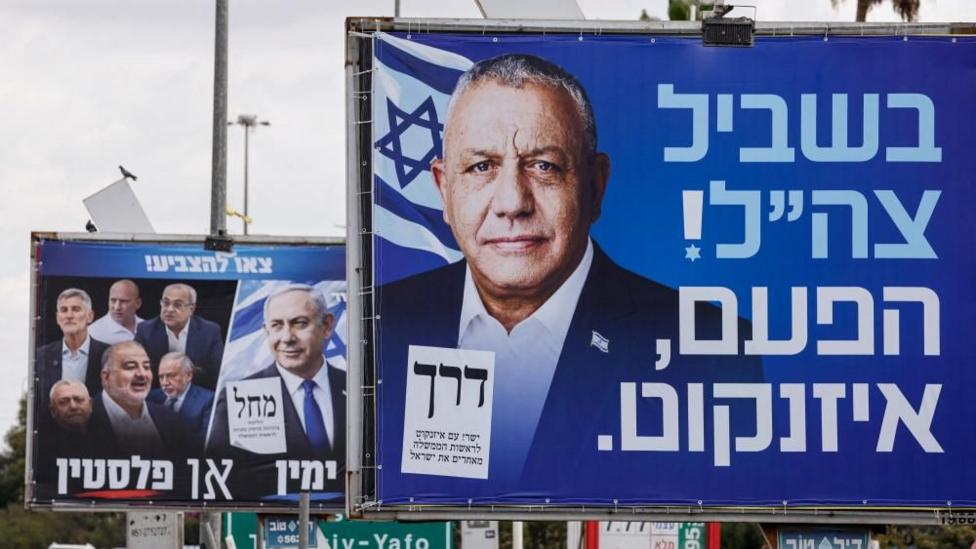
Eisenkot, a former army chief and leader of the centrist Yashar party, was tasked with forming a government by President Isaac Herzog after securing more recommendations from Knesset members than Netanyahu. Neither leader’s bloc reached a majority in the 120-seat Knesset during October’s election, where Eisenkot’s four-party bloc captured 48 seats and Netanyahu’s bloc secured 53. Eisenkot has 28 days to build a coalition, with a potential two-week extension, while Netanyahu continues to serve as caretaker prime minister.
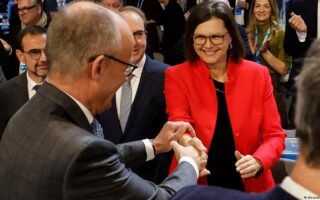
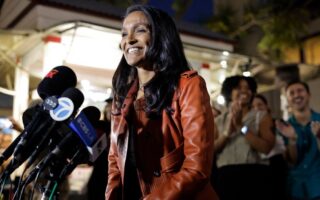
The election results brought significant shifts to the legislature, with nearly half of the new members of Knesset serving for the first time and Arab-led parties claiming a record number of seats. Israel’s two Arab-led alliances, the United Arab List and the Joint List, achieved an unprecedented 19 seats combined driven by higher turnout among Arab voters.
Proposed Emergency Government and Principles
At the president’s residence, Eisenkot appealed for a national emergency government that would set aside ideological differences to remove Netanyahu, stating the effort would require unconventional political steps. He outlined four core principles for potential coalition partners: recognizing Israel as a Jewish and democratic state, embracing the values of the Declaration of Independence, supporting mandatory military, national, or civilian service for all communities, and recognizing Hamas as a terrorist organization while committing to dismantling its military and governing capabilities.
These requirements create substantial hurdles for prospective allies. Ultra-Orthodox parties United Torah Judaism and Shas, which control 13 seats together, strongly oppose changing current exemptions from military service for full-time religious students, a practice Eisenkot’s bloc campaigned to alter. Meanwhile, Eisenkot’s conditions pose difficulties for Arab parties that emphasize equal rights, do not mandate military service for most Israeli Arabs, and have not publicly designated Hamas as a terrorist organization.
Alternative Scenarios and Netanyahu’s Position
Despite these obstacles, Arab parties could potentially enable a minority government. The United Arab List indicated a willingness to join an Eisenkot-led coalition, and the Joint List offered external parliamentary support. However, such an arrangement would require approval from other bloc members, such as Yisrael Beiteinu leader Avigdor Lieberman, who has rejected joining a minority administration reliant on Arab lawmakers.
Netanyahu renewed his appeal for a national unity government under his leadership in a video message, inviting any Zionist party to join while cautioning against an administration dependent on Arab parties he described as Islamists. Israel’s longest-serving leader asserted that a government cannot be formed with supporters of Hamas.
President Isaac Herzog concluded consultations with party representatives following the electoral deadlock to determine the path forward for the new parliament.