Table of Contents
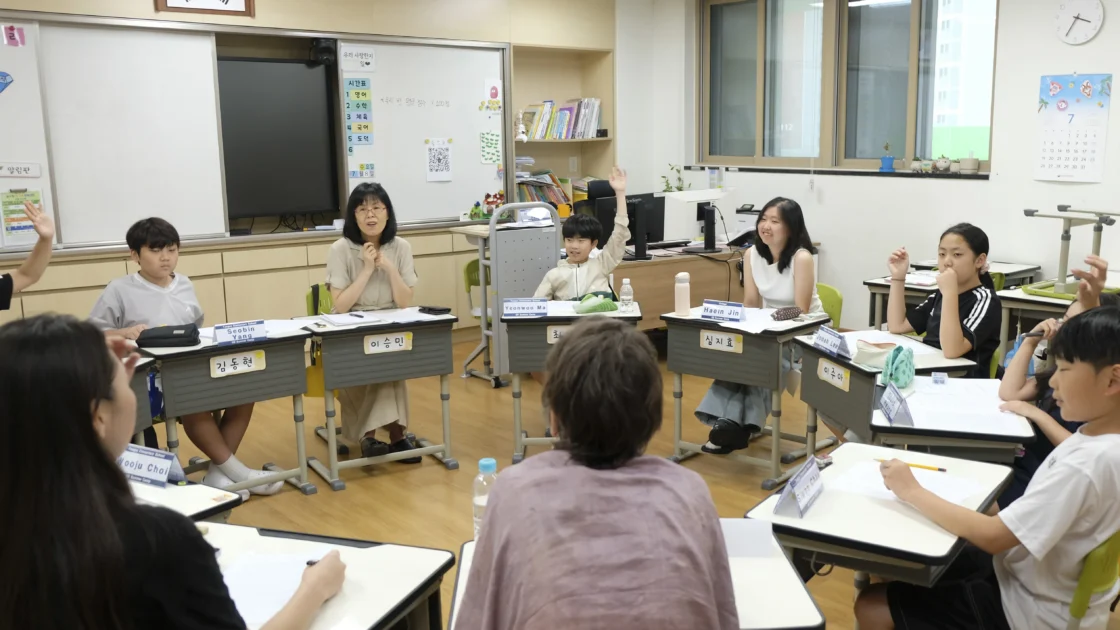
Students in the South Korean city of Chuncheon are discussing Mary Shelley’s novel Frankenstein at a public elementary school, debating whether the creature and artificial intelligence can be considered human. As reported by NPR, the local school has adopted the Great Books educational model created by St. John’s College in the United States.
The Great Books Approach
Under the Great Books framework, teachers do not lecture and instead guide discussions while students rely entirely on readings, personal reasoning, and peer debates without using external sources like the internet. Student Ma Yeonwoo states that debating together helps the class gather many different ideas rather than just listening to a single teacher. The curriculum involves reading works by authors such as Aristotle, Shakespeare, Euclid, Martin Luther King Jr., and Nobel laureate Han Kang.
Educational Challenges in South Korea
This emerging movement responds to several pressing issues, including post-COVID declines in South Korean reading proficiency recorded by international tests like PISA, and the widespread integration of artificial intelligence in education. OECD data indicates that 51% of South Korean students use AI chatbots weekly for their studies. At the same time, intense pressure to pass college entrance exams drives families toward cram schools or studying abroad.
Incheon National University English professor Lee Yonghwa, who co-founded South Korea’s first Great Books program in 2019, explains that the traditional education system leaves students no time to think because they spend all their time memorizing facts for tests. He adds that students are now losing even their ability to memorize facts because they rely on AI to collect information. Without independent reasoning skills, students struggle to evaluate the quality of AI-generated content.
Local Implementation and Civic Impact
Seeking an alternative to these limitations, Chuncheon Mayor Yook Dong-han established an academic partnership with St. John’s College last year to bring the educational model to the city. Lee Yonghwa reports that the program currently involves 120 college students, roughly 770 younger students, and 40 teachers in training. Mayor Yook describes the initiative as a small yet revolutionary breakthrough that challenges standard practices and has sparked student interest beyond initial expectations.
During a seminar at a Chuncheon high school, students read Martin Luther King Jr.’s 1963 Letter from Birmingham Jail to discuss just and unjust laws. Lee notes that students connected these concepts to real events in their own country, such as the 2024 resistance by citizens and lawmakers against former President Yoon Suk Yeol’s attempt to impose martial law. St. John’s College President J. Walter Sterling wrote in an essay last year that the seminar format serves as a miniature republic where ideas clash and individuals cooperate, helping to strengthen democracy through liberal education.