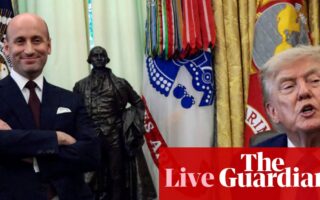
President Trump has named Stephen Miller as his new chief of staff, replacing Susie Wiles in the administration’s first major personnel shift following the Republican midterm election losses. Miller, who previously served as deputy chief of staff, has played a central role in crafting controversial administration policies, particularly regarding immigration enforcement.
Congressional Lame-Duck Session and White House Personnel
According to NPR’s Mara Liasson, Miller’s support for unchecked executive power signals that the president is preparing for direct confrontations with an opposition-controlled Congress. Meanwhile, President Trump also posted on social media that he offered the White House Press Secretary role to Ultimate Fighting Championship CEO Dana White before later stating the remark was a joke. Liasson notes that because the public takes presidential statements seriously, the inability to take such remarks at face value presents a challenge for the United States.
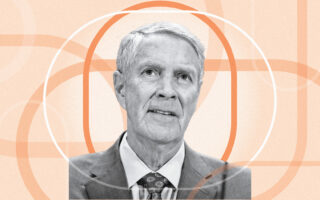
On Capitol Hill, the 119th Congress faces its final weeks before a new Democratic majority takes over the House and Senate. Lawmakers must fund the federal government before funding expires on December 11. NPR’s Eric McDaniel reports that legislators will likely pass a short-term continuing resolution because they lack the time and political agreement needed to negotiate 12 separate appropriations bills.
Absenteeism among defeated Republican lawmakers could threaten party plans, given their narrow two-vote majority in the House. McDaniel adds that Senate Republicans intend to confirm as many judges and presidential appointees as possible before January, as those confirmations will require significant compromises with the White House once Democrats assume control.
Nvidia Investigation and Global News
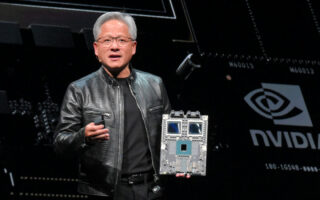
Artificial intelligence chip giant Nvidia is launching an internal investigation following reports that its CEO, Jensen Huang, maintained a close relationship with a woman accused of being a Chinese spy. The New York Times reported that a Chinese intelligence operation targeted Huang in an attempt to send advanced Nvidia AI chips to China. The Chinese Embassy in Washington, D.C., did not respond to NPR’s requests for comment, though Beijing denied the allegations during a Monday press briefing.
NPR’s John Ruwitch reports that Huang maintains close ties with President Trump, communicating frequently and traveling with him to China. When asked about the situation, President Trump stated that he considers Huang a fine person. While the United States restricts the export of advanced semiconductors to China, Huang has argued that allowing Chinese purchases would ultimately slow the growth of China’s chipmaking industry and benefit the American economy. Nvidia maintains that neither national security nor company secrets have been compromised, while the House of Representatives has requested a closed-door briefing from Huang regarding the allegations.
In other developments, comedian and actor Russell Brand faces a potential prison sentence as a London court prepares to announce his punishment after a jury convicted him of three counts of sexual assault and one count of rape. Brand has maintained his innocence throughout the proceedings. Meanwhile, the U.S. Department of Housing and Urban Development reported that the nation’s homeless population declined by more than 6% in 2025, marking the second consecutive year of reduction. Finally, Pope Leo XIV arrived in South America for a 12-day journey spanning three countries, representing his longest trip and first major international visit since undergoing lung cancer surgery.