Table of Contents
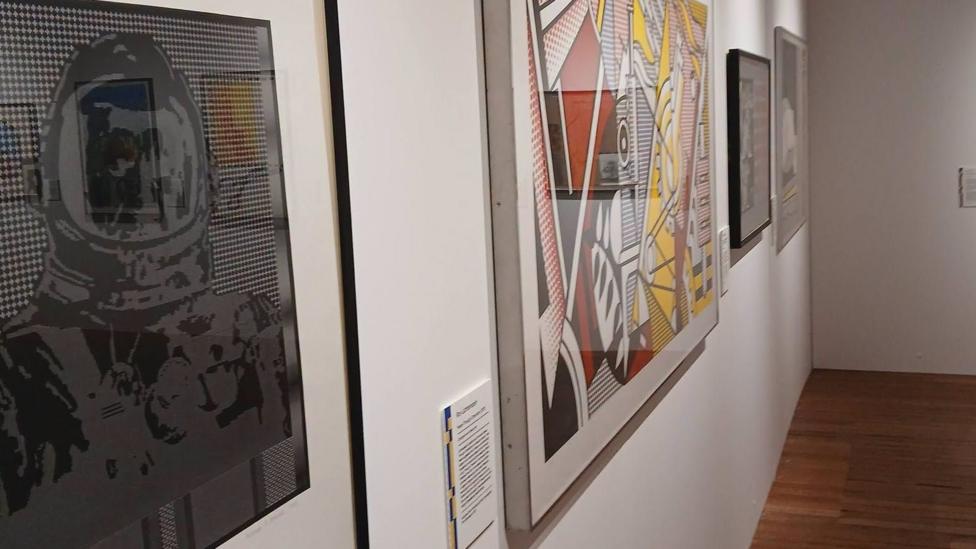
A print created by a Yorkshire artist who was commissioned by Nasa during the early era of space exploration is being featured in a new pop art exhibition. Titled Komtek I, the artwork by Michael Fossick was produced in 1962 to honor a Hong Kong firm that manufactured microcomputers during the infancy of space travel.
Uncovering a Rare Nasa Commission
The artwork formed part of a broader Nasa initiative to chronicle the historic effort to land the first humans on the moon. According to curator Jill Iredale, reporting for BBC News, the piece is currently on display as part of the Pop Art at Cartwright Hall exhibition in Bradford.
Iredale expressed astonishment at the unusual link between the Yorkshire-trained artist and the American space agency, noting that the piece is “definitely stuff that people won’t have seen before.” She explained that the artwork was executed as a screen print derived from a remarkably early computerized image.
Historical Context of the Space Programme
The commission dates back to March 1962, when Nasa administrator James Webb commissioned 38 artists to record the agency’s milestones. This decision coincided with John H. Glenn becoming the first American to orbit the Earth on February 20, 1962, paving the way for the Mercury programme, the Apollo missions, and Neil Armstrong’s historic moon landing in 1969.
Fossick, who studied at the Bradford School of Art and was born in Sheffield, decided to celebrate Komtek Technologies Ltd, a Hong Kong company that produced microcomputers vital to the early space program. He subsequently entered the print into the inaugural British International Print Biennale at Cartwright Hall in 1968, where it secured a prize.
The Legacy of the British International Print Biennale
The current exhibition chronicles the history of the British International Print Biennale, which was hosted at the Bradford gallery 11 times between 1968 and 1990 and is scheduled to run until March 2027. At its peak, the biennial showcased upwards of 500 pieces chosen from more than 3,000 submissions.
The gallery’s permanent collection still retains works by renowned artists such as Andy Warhol, Roy Lichtenstein, and David Hockney, all of whom contributed to the event. Hockney served as a judge for the first biennial in 1968 and designed the official poster for the event, which is also featured in the current display alongside pieces by Warhol.
Iredale noted that the pop art movement in Bradford emerged as a cultural reaction to the gravity of World War II alongside a surge in commercial print culture. She highlighted that the city possessed a robust, experimental, and DIY aesthetic championed by local artists and the local college, supported by a post-baby boom generation and expanding opportunities for working-class youth.