Table of Contents
Holocaust remembrance in Germany faces intense attacks and growing pressure amid rising right-wing populism, historical revisionism, and instances of disrespectful behavior at memorial sites. Experts and survivors warn that preserving the memory of Nazi crimes has become increasingly difficult as the last generation of eyewitnesses passes away.
Challenges in educating young people
Jens-Christian Wagner, director of the Buchenwald and Mittelbau-Dora Memorials Foundation, told Deutsche Welle that disrespectful incidents involving young people at former concentration camps have grown more frequent. Wagner highlighted cases where visitors posed inside crematorium ovens while laughing and giving Nazi salutes, calling the social media posts trophies intended to break the ultimate taboo. Memorial trees planted to honor victims have also been cut down, which Wagner described as killing the victims a second time.
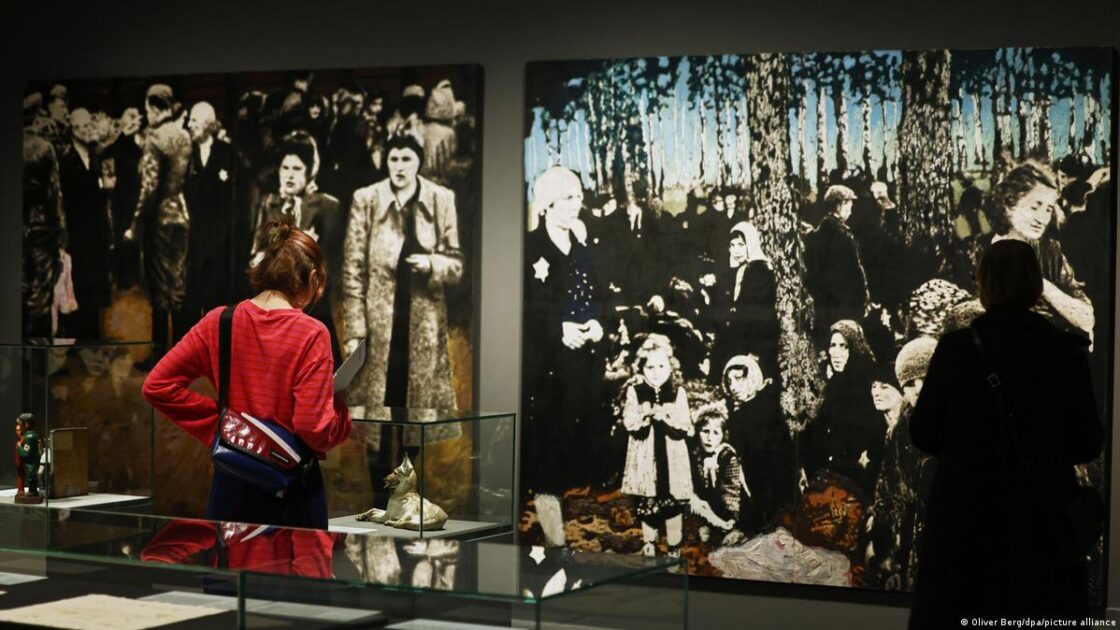
As part of the curatorial team behind the exhibition “Never Again! Against Forgetting the Crimes of the Nazi Regime” at Bonn’s Bundeskunsthalle, Wagner expressed concern over critics dismissing remembrance as a “cult of guilt” or “national masochism.” He noted that telling students to remember events their grandparents did not even experience feels like an emotional burden and an unwelcome finger-wagging exercise that hinders genuine learning. Instead of brief, ineffective lectures, Buchenwald utilizes full-day programs that enable students to explore historical sources independently.
Wagner stated that the exhibition connects past atrocities with current events, such as contemporary debates surrounding migration. He explained that discussing migration primarily through the lens of threats to public safety and crime marginalizes certain groups, echoing mechanisms utilized during National Socialism.
A survivor’s lifelong trauma
Eva Umlauf, an 83-year-old Holocaust survivor and patron of the Bonn exhibition, experienced Nazi persecution firsthand when she was deported from the Novaky labor camp in Slovakia to Auschwitz-Birkenau at just two years old. As reported by Deutsche Welle, Umlauf and her pregnant mother were saved from the gas chambers by mere days when the Nazis halted operations as the Red Army advanced.
While the camp was liberated on January 27, 1945, Umlauf’s father, grandparents, and mother’s siblings were murdered. Umlauf survived severe malnutrition and illnesses, later returning with her mother and newborn sister to Czechoslovakia. Although her mother rarely spoke directly about the camp, Umlauf grew up with the recurring phrase “They stayed there” and the tattoo A26959 marked on her arm.
Umlauf eventually moved to Germany in 1966 after marrying fellow Holocaust survivor Jakob Umlauf. She noted that while she does not hate Germans, she cannot forgive the deaths of six million people. Having initially kept silent, she began speaking publicly in 2011 and became the chair of the International Auschwitz Committee in 2025, following the release of her memoir.
Concerns over the return of extremism
Umlauf expressed dismay at the resurgence of widespread antisemitism in Europe and the United States, alongside the growing influence of Germany’s far-right Alternative for Germany (AfD) party. She told Deutsche Welle that the rapid growth of the political party sometimes makes her educational work in schools feel futile, warning that Germany must prevent a return to right-wing dictatorship.
In the exhibition catalog, Umlauf urged the younger generation to recognize their responsibility for the future. She reminded young people that while they are not responsible for the crimes of their ancestors, they must remain alert and safeguard their country as a safe place for everyone regardless of background, faith, or skin color.
The exhibition “Never Again! Against Forgetting the Crimes of the Nazi Regime” at the Bundeskunsthalle in Bonn remains open to visitors through May 2, 2027.