Table of Contents
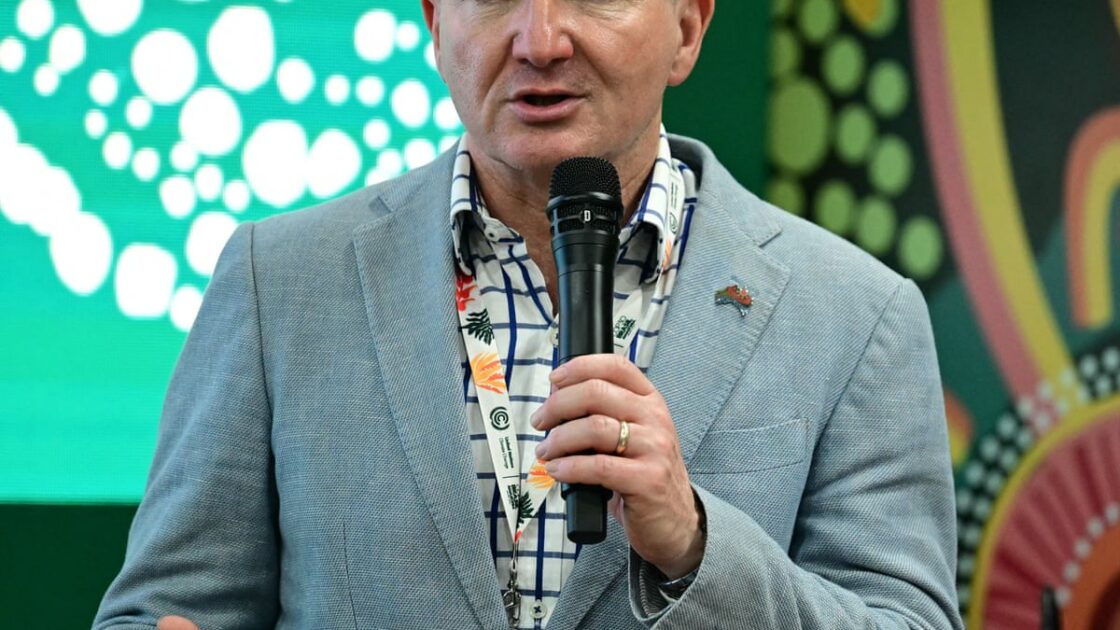
Australia’s climate change minister, Chris Bowen, is set to lead negotiations among nearly 200 nations at the Cop31 summit in Antalya, Turkey, starting this Monday. As the representative for the talks, Bowen faces the challenge of brokering a global consensus on climate action while representing a country that remains one of the world’s largest exporters of coal and gas.
Navigating Global Climate Goals
The two-week conference takes place against a backdrop of geopolitical instability and rising energy costs. A primary objective for the summit is to secure support for a new 2035 electrification target, championed by both Turkey and Australia, which aims to have 35% of global energy consumption derived from electricity rather than fossil fuels.
Bowen, serving as the Cop31 president of negotiations, told The Guardian that his focus will center on three key areas: minimizing the temperature overshoot beyond the 1.5C Paris agreement threshold, improving climate finance access for vulnerable nations, and advancing the electrification goal. Ocean protection is also expected to be a significant topic of discussion.
Australia’s role as a major fossil fuel producer has drawn criticism from climate advocates. The nation is the world’s second-largest exporter of thermal coal, the largest exporter of metallurgical coal, and a major supplier of liquefied natural gas. The government projects the export value of these fuels to reach approximately US$98bn this financial year.
Calls for a Fossil Fuel Roadmap
While the official agenda does not currently include a detailed plan for transitioning away from fossil fuels, experts argue such a roadmap is essential. Bill Hare, chief executive of Climate Analytics, noted that while the 2023 summit established the need for a transition, concrete progress remains stalled. He suggested that Australia has an opportunity to lead this process, stating, “Australia could pitch this up – to continue this process of developing a fossil fuel roadmap. Australia could do that.”
Hare emphasized that limiting global temperature increases is impossible without a rapid shift away from fossil fuels, which account for roughly 75% of global emissions. However, economist Prof Frank Jotzo of the Australian National University expressed skepticism that a roadmap would be adopted, noting that nations opposed to such measures would likely block their inclusion in the final agreement.
Domestic Political Pressure
The Australian government faces significant pressure at home regarding its climate policies. A group of over 500 scientists and academics recently urged Prime Minister Anthony Albanese to halt new coal and gas approvals, arguing that continued expansion undermines Australia’s credibility on the international stage. Critics, including Kathryn McCallum of the Climate Action Network Australia, pointed out that the government has approved 38 fossil fuel projects since 2022, including the extension of the North West Shelf gas facility until 2070.
“Australia has the opportunity to play a climate leadership role, but as one of the biggest producers and exporters that’s expanding coal and gas production at an enormous scale, it doesn’t pass the pub test to talk about limiting overshoot while approving corporate proposals for new coal and gas,” McCallum told The Guardian.
Despite these concerns, Bowen dismissed the notion that Australia’s export status prevents it from leading the transition. He argued that all nations are navigating the shift and that Australia’s domestic efforts to move away from coal-fired power have received international recognition.
Prime Minister Albanese is scheduled to address the summit during a two-day leaders’ event, where he will attempt to balance these competing domestic and international interests. The conference aims to conclude with a “cover decision,” an overarching agreement that requires consensus from all participating countries.