Table of Contents
Demand for emergency medical flights in Maine has surged as rural healthcare systems face closures and increased pressure. To combat staffing shortages, LifeFlight of Maine has introduced a model approach combining advanced training, pay equity, and dedicated mental health support.
A Rising Need for Air Medical Services
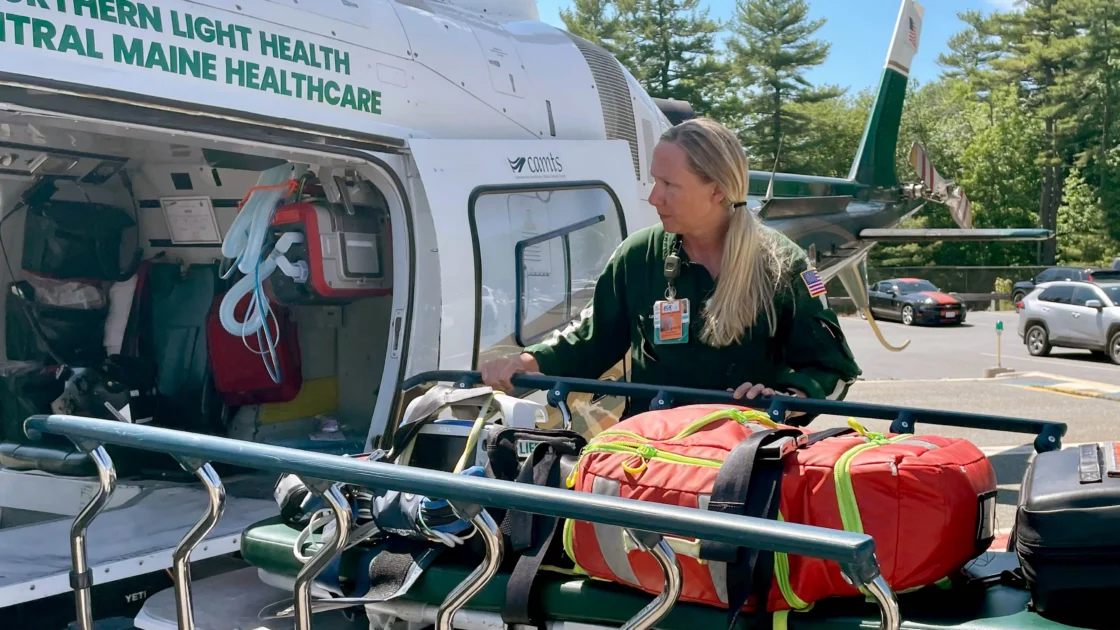
Flight nurse Denise Saucier and paramedic Brian Merklin prepare for a medical transport flight at LifeFlight of Maine’s Bangor headquarters, working alongside pilot Will Bradbury. Demand for medical flights in the state has doubled since 2015, with crews flying 3,031 missions in 2025—averaging more than one every three hours—and seeing another 10% increase this year. Nationally, air medical services are filling gaps as rural hospitals close, convert to outpatient centers, or cut unprofitable services like labor and delivery.
These challenges are compounded by upcoming Medicaid cuts estimated by the Congressional Budget Office at $911 billion over a decade, which threaten hundreds more rural facilities. Strained ground ambulance stations are increasingly unable to meet local needs, turning air ambulances into a critical healthcare backstop. While LifeFlight occasionally lands on islands, forests, or roadsides, the majority of its missions are interfacility transports, stabilizing patients at small local hospitals and flying them to better-resourced centers.
Addressing Retention and Staffing Challenges
Air ambulance services struggle with high staff turnover, retaining workers who can handle dangerous conditions, long shifts, and severe trauma. Nationwide, nearly a quarter of ground-based EMS workers leave the field annually, driven by low pay and immense mental health burdens. For years, LifeFlight retained only 60% to 70% of its personnel, according to CEO Joe Kellner, who noted that clinicians repeatedly witness patients on their worst days.
To reverse this trend, LifeFlight has achieved nearly full staffing for the first time in nine years by implementing a comprehensive retention strategy. As a nonprofit independent air medical company, it offers better training, higher compensation, and in-house mental health resources, drawing praise from EMS experts who contrast it with profit-driven providers.
Innovative Training and Mental Health Support
LifeFlight’s “Critical Care Academy” provides a six- to eight-month orientation program to help clinicians master advanced procedures. Instructors regularly test paramedics and nurses using high-tech simulations involving advanced mannequins that mimic complex medical emergencies, burns, and newborn resuscitations. To widen the talent pool, the organization also runs a mentorship program for prospective applicants.
Kellner instituted pay equity by raising paramedics’ pay to match flight nurses, a rare move in an industry where paramedics typically earn less. Additionally, the company hired a full-time mental health counselor to address high rates of post-traumatic stress, anxiety, and depression among EMS workers. Merklin, who previously left the profession due to burnout in Nevada, praised LifeFlight for providing tangible mental health resources that help prevent staff exhaustion and reduce the high cost of training replacements.
Following a flight to a community hospital rooftop to treat a severely injured patient, Merklin and Saucier remain focused on their mission. As rural hospital closures loom large, the retention of highly trained emergency medical workers remains vital to patient survival.