Table of Contents
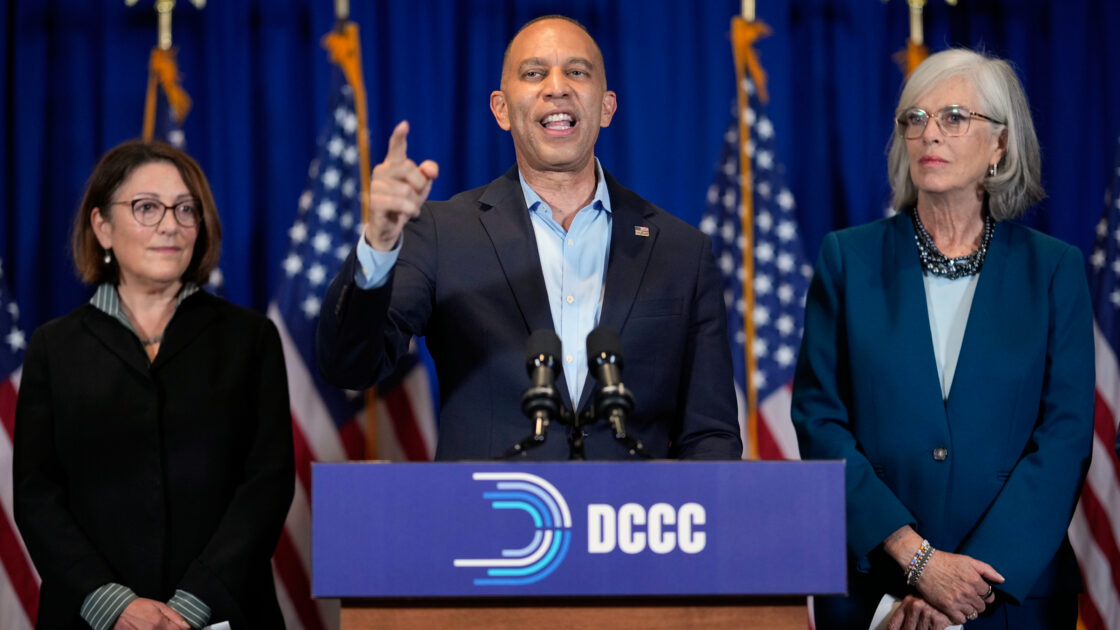
Following a decisive victory by Democrats in the United States midterm elections, House Minority Leader Hakeem Jeffries of New York is on the verge of making history as the first Black speaker of the US House of Representatives. For the 56-year-old congressman, the position would culminate nearly two decades in office and place him at the forefront of efforts to challenge Republican US President Donald Trump during his final two years in the White House.
Public Pressure and Party Divisions
As Jeffries celebrated a blue wave returning Democrats to power, some voters and party members questioned whether his cautious political approach and historical support for Israel make him the right leader. An online petition on Change.org urging lawmakers to select a different speaker gathered over one million signatures by Saturday afternoon, while multiple newly elected progressive politicians have withheld their support.
The petition organizers stated that the speaker should represent Democratic voters rather than solely the establishment, adding that the outcome is not guaranteed and encouraging others to contest the role. Jeffries, who has spent years strengthening relationships within the Democratic caucus, now navigates a broader internal conflict as the party’s progressive wing demands a confrontational stance against Trump, a departure from traditional party policies, and an end to US backing for Israel.
Stance on Israel
Tensions between Jeffries and progressives are particularly pronounced regarding his long-standing support for Israel and connections to the American Israel Public Affairs Committee (AIPAC). At a 2020 conference hosted by the organization, Jeffries rejected placing conditions on US aid to Israel and referred to Jerusalem as the sixth borough of New York City. He has also received significant financial backing from AIPAC and associated donors, prompting New York radio host Charlamagne tha God to dub him AIPAC Shakur.
Following the elections, AIPAC publicly congratulated Jeffries and Senate Democratic leader Chuck Schumer. However, Jeffries’s unwavering support for Israel throughout its military campaign in Gaza has alienated members of his own party, prompting recent indications that his perspective may be evolving. In July, while voting against an amendment that proposed cutting $3.3bn in annual military aid to Israel, he conceded in a letter to colleagues that a meaningful change in direction is needed for US-Israel relations.
Political Background
Jeffries grew up in the Crown Heights neighborhood of Brooklyn during the 1970s and 1980s amid the crack cocaine epidemic. He recalled that the area experienced significant dysfunction and pain alongside deep love and compassion from family, friends, and community members. The son of two social workers, Jeffries pursued a legal career after being influenced by the 1992 Los Angeles riots that followed the acquittal of four white police officers who beat Rodney King, noting that the events highlighted the distance remaining to eradicate social and racial injustice.
Before entering politics, Jeffries practiced as a corporate lawyer, unsuccessfully ran twice for the New York State Assembly, and finally won a seat in 2006 before advancing to Congress six years later. In Washington, he helped negotiate a bipartisan criminal justice reform law signed by Trump in 2018 and served as one of seven House impeachment managers during Trump’s first impeachment trial in 2020. He advanced rapidly through party leadership, becoming caucus chair in 2019 and making history three years later when he was unanimously chosen to succeed Nancy Pelosi as the first Black politician to lead a party in either chamber of Congress.
Leadership Style and Future Challenges
While Pelosi was recognized for a commanding, top-down leadership style, Jeffries has cultivated a reputation for quietly and deliberately forging consensus. That methodology has frustrated some Democrats who view him as overly hesitant to take firm stances or aggressively confront Trump and congressional Republicans. Such concerns intensified after Jeffries stated post-election that the American people want results rather than retribution, drawing pushback from left-wing political commentator Hasan Piker, who argued that people are actively seeking justice and accountability.
Criticism also arose after August reports revealed that Jeffries privately met with Jared Kushner, Trump’s son-in-law and advisor on Middle Eastern and Russian diplomatic efforts. Jeffries defended the meeting by stating Kushner requested it and that they discussed the affordability crisis, though critics argued he should have focused on investigating Kushner’s business dealings instead. Prior to the election, Axios reported on a strategy by incoming progressive lawmakers known as The Bloc—including Claire Valdez, Darializa Avila Chevalier, and Melat Kiros—to leverage the speaker vote to secure concessions on Medicare for All, reduced funding for ICE, and limitations on weapons shipments to Israel.
Achieving those concessions may prove more difficult now that Democrats hold a comfortable majority, reducing Jeffries’s reliance on progressive newcomers to secure the speakership. At the same time, the majority eliminates Jeffries’s previous argument that Republican control of Congress hindered the party’s ability to advance its agenda and hold Trump accountable, leaving voters expecting tangible changes on issues ranging from the cost of living to the war on Iran.