Table of Contents
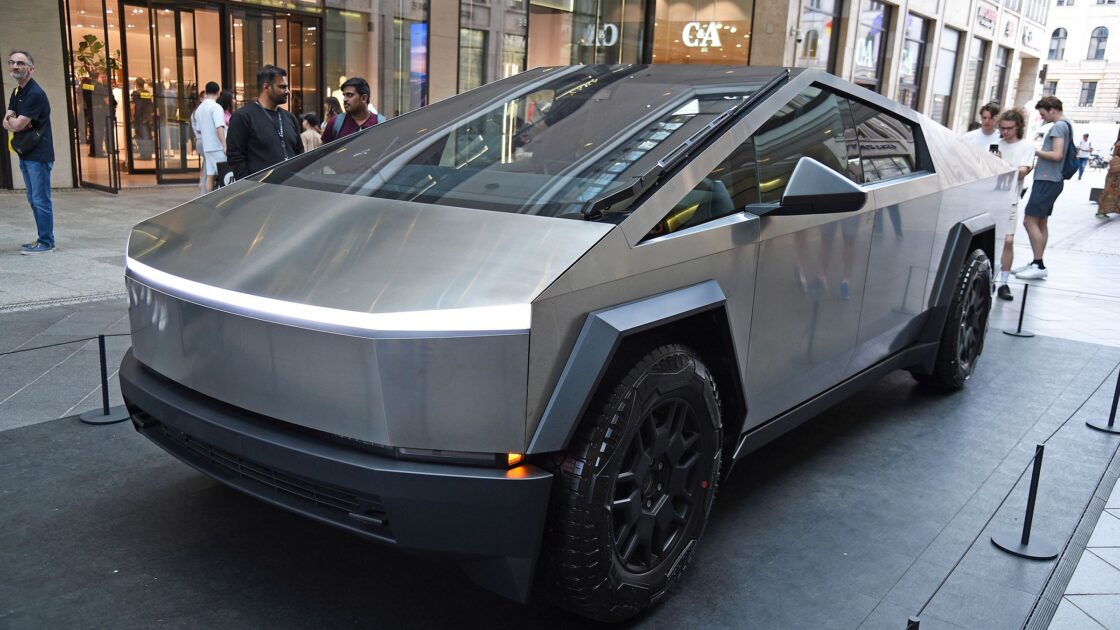
The conclusion of Tesla’s Cybertruck production marks a significant shift in the electric vehicle market away from massive trucks. This trend offers clear advantages for pedestrian safety, vehicle affordability, and the global battery supply chain.
The Problem with Massive EV Batteries
The Cybertruck utilized a massive 123-kilowatt-hour battery weighing roughly 1,600 pounds, which accounted for approximately a quarter of the vehicle’s total weight. This mirrored the battery capacity of Ford’s F-150 Lightning, another electric truck canceled late last year alongside a three-row EV in 2024. Ford’s large batteries ranged from 98 kilowatt-hours up to 131 kilowatt-hours.
The cancellation of both trucks within a single year coincides with automakers announcing a variety of smaller electric vehicles and gas-powered autos featuring electric range extenders. Ford plans to introduce the Fathom next year, a sub-$30,000 electric pickup comparable in size to the company’s compact Maverick. Meanwhile, startup Slate is preparing to launch a tiny electric pickup starting below $25,000 with a smaller battery and high pre-order numbers. Additionally, the Rivian R2 launched this year with an 88-kilowatt-hour battery weighing around 1,200 pounds, which is still smaller than the flagship R1S, and the company has teased an even smaller R3 model for future release.
Market Shift Toward Affordability and Efficiency
While larger electric vehicles like the Kia EV9 and Rivian R1S maintain strong sales positions in the United States, the majority of top-selling new EVs consist of crossovers, sedans, and mid-sized SUVs equipped with moderately sized batteries. Producing smaller vehicles allows automakers to use smaller batteries because less weight requires propulsion. Since the battery pack is the most expensive component of an electric vehicle, downsizing helps lower overall costs at a time when the average transaction price for a new model sits at $55,800, according to Cox Automotive.
Opting for smaller designs also maximizes a restricted battery supply chain. Most drivers utilize heavy trucks like the Cybertruck for routine daily errands such as grocery shopping, commuting, and family transport—tasks accomplished by standard-range vehicles like the Hyundai Ioniq 5 using a battery roughly half the size.
Political Shifts and Future Production
Electric vehicle sales dropped significantly following the elimination of government incentives by President Donald Trump’s administration last year, though an Iran War and rising gas prices have recently boosted interest. Even with a Democratic-controlled Congress, the return of federal EV incentives under the Trump administration remains unlikely. However, future political shifts could reintroduce buyer support, leaving automakers that pivot toward smaller cars better positioned to meet pent-up demand and reduce delivery delays.
As reported by WIRED, even Tesla’s announcement to terminate Cybertruck production points toward this market evolution, with Elon Musk stating the company is stopping production to manufacture more Cybercabs, which feature a much smaller 48-kilowatt-hour battery.