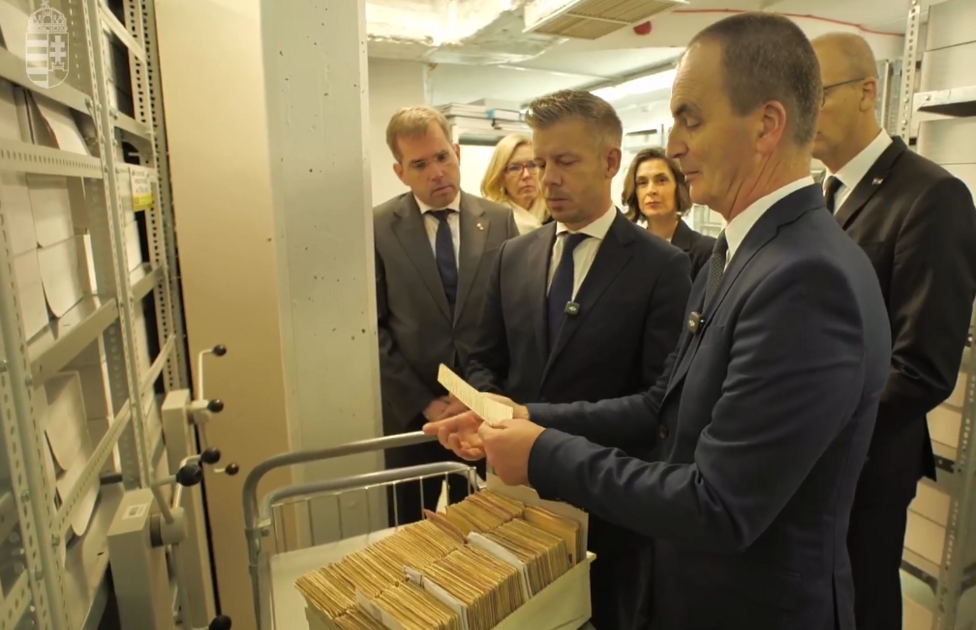
Hungary has made communist-era secret police records publicly accessible in a controversial step that the government asserts will assist society in overcoming the psychological wounds of 45 years of communist domination. The release date carries symbolic weight, marking the anniversary of the entry of Soviet tanks into Budapest and other Hungarian cities on November 4, 1956, to suppress the country’s brief revolution.
Government Rationale and Public Access
Prime Minister Péter Magyar addressed reporters at the state archives in Budapest, urging everyone to approach the long-overdue document publication with dignity and humanity. He noted that numerous families will confront challenging details concerning deceased relatives, emphasizing that processing trauma requires discussion and inquiry. As reported by BBC News, Magyar defended the initiative—a key pledge from his election campaign leading to an April landslide victory—as fulfilling a commitment made by the individuals who overthrew the Hungarian Communist party in 1989.
Previous conservative, Socialist-Liberal, and Fidesz-led administrations considered opening the archives over the decades but ultimately declined. Although citizens could request their own files and historians could study others starting in 1998, numerous names remained redacted, and post-communist secret services withheld records for their own purposes. Past decades also saw frequent data leaks intended to discredit political opponents, alongside the shredding of documents as the Communist party lost power in 1988 and 1989.
Beginning Wednesday, the identities and personal details of roughly 60,000 individuals enlisted by the communist-era secret services became accessible on the nyitottaktak.hu website. Standard entries document an informer’s real identity, codename, birthdate, residential address, mother’s name, recruitment motivation—whether voluntary, coerced, or blackmailed—and the supervising officer. An additional collection known as the B-dossiers is undergoing digitization and will launch on February 25, providing deeper insights into recruitment procedures and the quality of intelligence gathered.
Criticism and Historical Perspectives
Detractors argue that the release arrives tardily, that the records remain incomplete, and that the disclosure threatens to provoke division and distress among relatives. Historians and critics caution that the public may rush to judgment regarding individuals found in the archives without appreciating the underlying complexities. Between December 1944 and February 1990, an estimated 150,000 to 160,000 people were recruited as informers in Hungary.
Coercion tactics frequently involved blackmail, including threats of losing employment or educational prospects, denial of access to medications, or exposure of private matters concerning addictions or sexuality. Authorities will excise such intimate details from the current publications. Krisztian Ungváry, a historian advocating for unrestricted public access for years, argues that viewing state records concerning citizens is a fundamental right that ought not to rely on the discretion of political leaders.
Conversely, opponents of the initiative express concern over potential misrepresentation. Zsuzsanna Borvendég, a historian and Member of the European Parliament representing the far-right Our Homeland party, told Hungarian media that publishing informer names without fully detailing their recruitment context and activities runs the risk of misleading the public. She added that identifying agents or their motives is unfeasible in the vast majority of surviving reports.