Table of Contents
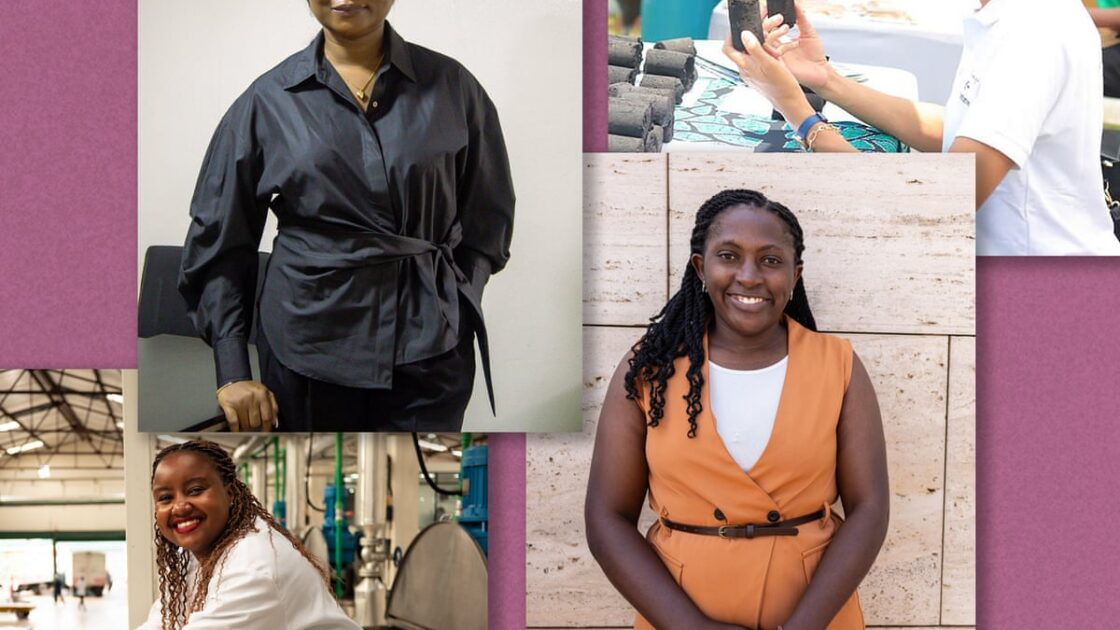
Africa is believed to have a higher proportion of female entrepreneurs than any other continent, yet many continue to face significant hurdles in securing financing. Four business leaders from Nigeria, Uganda, Kenya, and Malawi share their personal inspirations and the persistent obstacles women encounter in their respective industries, as reported by The Guardian.
Ifedolapo Runsewe, Nigeria: Giving waste tyres a new life
In south-west Nigeria, Ifedolapo Runsewe operates Freee Recycle, a business that shreds discarded tyres into rubber granules to produce playground surfaces, gym flooring, and interlocking tiles. Runsewe launched the company in 2020 after working in banking for over 12 years and witnessing the health hazards of burning waste tyres.
According to the World Bank, women in Nigeria own about 40% of small businesses, but 56% of female entrepreneurs’ last loan applications were denied, compared with 17% for men. In capital-intensive sectors like recycling, this financing gap hinders women from becoming factory owners. Freee Recycle currently employs about 62 people and collects tyres across four states, securing partnerships with organizations such as Michelin and Save the Children. Runsewe told The Guardian about initial gender biases, noting that investors in boardrooms often assumed a male colleague was the owner and questioned why a woman should receive millions in funding. Beyond tyres, she plans to establish Nigeria’s first dedicated recycling facility for aerosol cans and has launched an art residency transforming discarded tyres into large-scale cultural sculptures.
Kyokushaba Shine, Uganda: Building solar-powered irrigation systems
Growing up in Kabale, southern Uganda, Kyokushaba Shine watched her mother struggle with crop failures due to a lack of water and degraded soil. As a 31-year-old water engineer, she founded Winta Engineering Solutions in February 2025 to design affordable irrigation systems for smallholder farmers.
Winta Engineering Solutions has installed 30 water systems across Uganda, predominantly powered by solar energy, with an 80% female workforce. Kyokushaba collaborates with local microfinance providers to help farmers access loans of about 5 million Ugandan shillings to fund the equipment. Alongside installing solar pumps and drip irrigation, she conducts educational campaigns on soil health and the climate crisis. Driven by a desire to set an example for her young daughter, Kyokushaba told The Guardian that women must challenge male-dominated spaces where men attempt to set the agenda.
Wawira Njiru, Kenya: Feeding 700,000 schoolchildren a day
Wawira Njiru founded Food4Education after raising funds while studying nutrition in Australia to build a makeshift kitchen in her home town of Ruiru, Kenya. What started in 2012 by feeding 25 children now operates 209 kitchens that provide daily meals to more than 700,000 children.
The organization’s flagship kitchen in Nairobi runs on solar and steam power, while regional kitchens utilize eco-briquettes made from sawdust and agricultural waste. Food4Education minimizes food waste to about 2% through a digital platform that verifies meal counts, and it sources roughly 80% of its food from local smallholder farmers. Njiru told The Guardian about a 2026 mango surplus in Murang’a county where her organization absorbed 1.3 million mangoes to distribute to schools. Employing a workforce of 6,000 that is predominantly female, Njiru emphasized that women are naturally driven to focus on completing essential tasks rather than being paralyzed by massive challenges.
Chifuno Stevens, Malawi: Turning peanut shells into fuel
In Dedza town, Malawi, Chifuno Stevens founded the Chifuno Changa Green Initiative (CCGI) in September 2020 to combat poor waste management and rapid deforestation. The women-led enterprise works with 18 local members from the Dauya Ladies Environmental Group to produce eco-friendly charcoal briquettes made from discarded peanut shells.
CCGI supplies its briquettes to a sister business, Dedza Pottery, as a supplementary fuel source and has introduced sewing classes for members to create reusable tote bags from kitenge fabric. Stevens also hosts tourist workshops to build consumer familiarity and trust in charcoal briquettes. She told The Guardian that balancing affordability with business growth remains a constant challenge, alongside systemic financial barriers that limit the enterprise’s ability to scale up its production equipment.
Stevens remains dedicated to expanding the initiative, emphasizing that environmental protection and economic empowerment for women must advance together to ensure a sustainable future.