Table of Contents
Chinese stock markets have lost trillions of dollars in recent months as growing doubts over the commercial viability of artificial intelligence compound the fallout from Beijing’s technological rivalry with the United States. The decline highlights how weak domestic economic demand is hindering state efforts to build a sustainable tech-driven growth model.
Market Plunge and Profitability Hurdles
The STAR 50 Index, which tracks technology and innovation equities on the Shanghai stock exchange, has dropped 40% since June. Other primary Chinese market indexes registered declines of approximately 20% over the same timeframe. According to Bloomberg, the prolonged sell-off has erased $2.4 trillion in market valuation from Chinese exchanges since May. Goldman Sachs estimates that AI-linked equities represent more than 40% of total stock market value across China and Hong Kong, leaving the wider market vulnerable to technology sector downturns.
Beijing has maintained aggressive state investment in the sector, including launching a 60 billion yuan government-backed fund that began disbursing capital to domestic developers this month. However, tech firms continue to struggle to generate profits due to cautious spending among domestic consumers across the broader economy.
International policy pressures have escalated the sell-off. The US government recently banned Chinese humanoid robots citing national security concerns and is reportedly evaluating bans on Chinese components used in data centers. Because Chinese technology firms rely heavily on export markets, foreign restrictions directly impact revenue streams that domestic sales cannot offset.
Challenges in Embodied AI and Consumer Demand
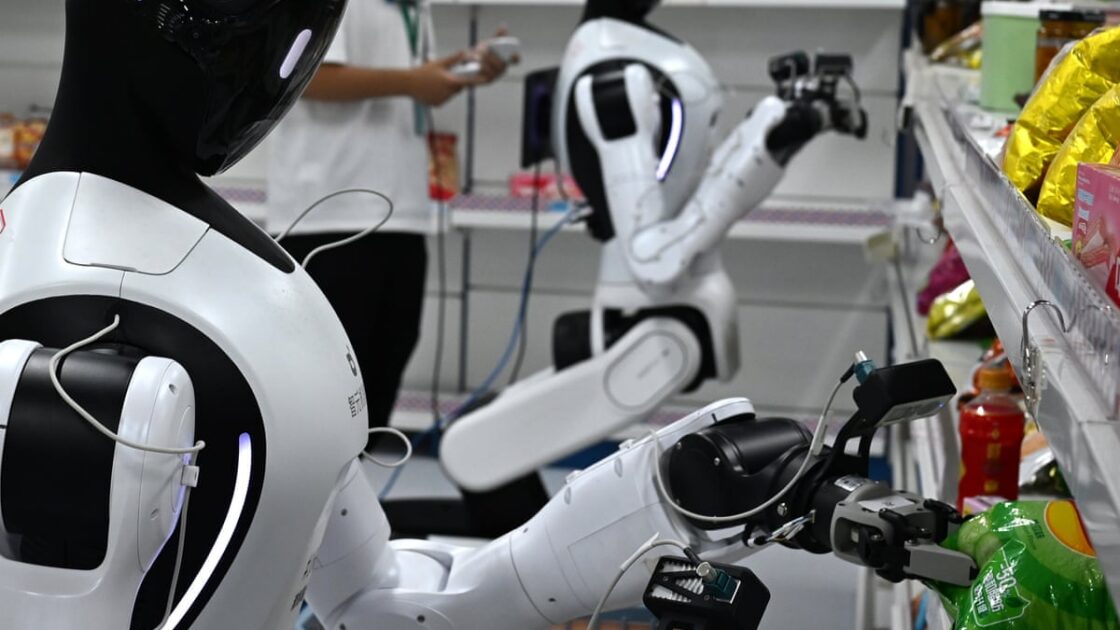
To counteract demographic challenges, including an aging population and a contracting workforce, Beijing has prioritized robotics, also referred to as embodied AI. However, current market adoption is primarily restricted to government entities and research institutions. The technology remains too expensive and impractical for widespread household use, despite brief popularity in the entertainment sector. Indicating the sector’s difficulties, share prices for Unitree, China’s leading robotics producer, have fallen by 50% since its stock market debut in August.
According to Dan Wang, the China director for the Eurasia Group, thin profit margins, rising US interest rates, and stagnant domestic demand have generated widespread concern among tech firms. Wang noted that “general anxiety” exists over whether state funding alone can succeed without strong consumer adoption.
Wang stated, “This year, the profit margin is not as good as expected. And the US is raising rates. And China’s domestic demand is so weak.” She added that “It doesn’t look like embodied intelligence could turn into profits in the in the mass market.”
Geopolitical Divergence and Policy Outlook
Beijing has attempted to keep domestic capital within its financial system by tightening controls on outbound investments, with additional regulations scheduled to take effect on December 1. These measures have not yet yielded increased domestic equity investment. Nevertheless, investor optimism persists in select niches like AI research and satellite technology, where long-term state backing is assured due to military applications.
The downturn in China contrasts with global market trends. US artificial intelligence company Anthropic, developer of the Claude chatbot, recently submitted paperwork for an initial public offering that could be valued at up to $100 billion. China currently has no major technology market listings planned.
Despite growing pressure on Chinese authorities to release economic stimulus measures, major announcements are not anticipated in the immediate term. Senior leaders of the Chinese Communist Party are gathering for the fifth plenum to prepare for the 21st Party Congress, where leader Xi Jinping is expected to be appointed to a fourth term. Policymakers are avoiding financial measures that could introduce market instability ahead of the political transition, with Wang noting that any unsuccessful policy would leave its originators accountable.