Table of Contents
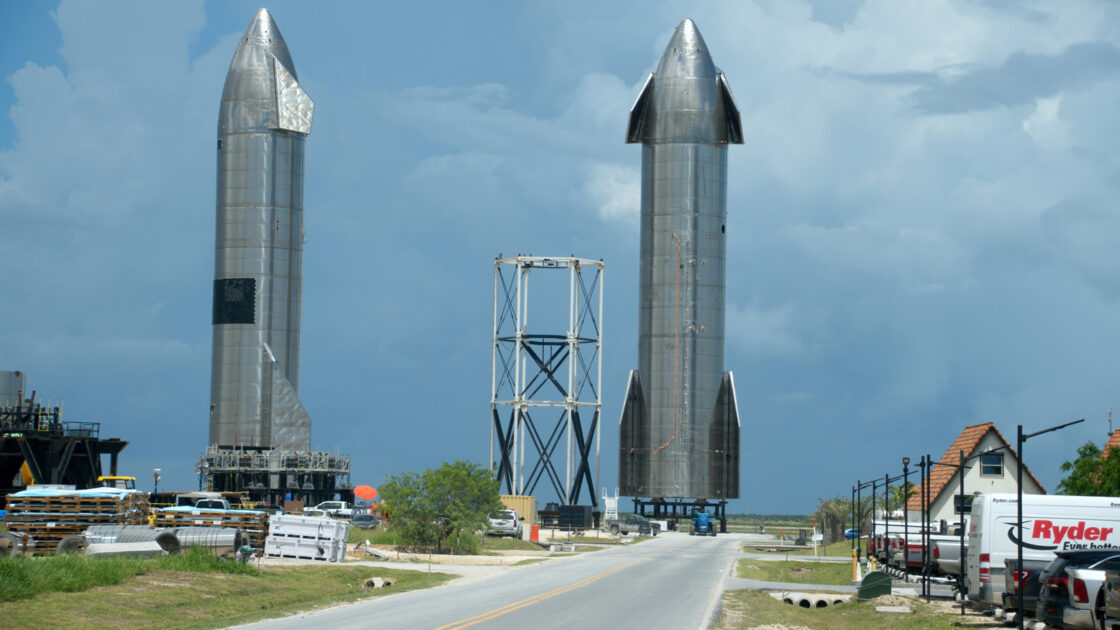
Standing at a height of 407 feet when fully stacked, SpaceX’s Starship is the tallest and most powerful rocket ever flown. Engadget reported that the launch vehicle generates 18.1 million pounds-force of liftoff thrust, towering over both the Statue of Liberty and the tallest known living tree.
Dimensions and Design Purpose
The complete two-stage vehicle consists of a 236.2-foot bottom section known as the Super Heavy booster and a 170.6-foot Starship spacecraft sitting above it. During the first full-stack launch in April 2023, the booster generated 16.7 million pounds of thrust—slightly less than the September 28, 2026 launch—which shattered the concrete launch pad and flung debris across 385 acres.
The enormous size and power are designed to transport massive payloads and eventually carry cargo and crew beyond Earth orbit. SpaceX also plans to recover and reuse both stages of the rocket.
Power and Propellant Capacity
The Super Heavy booster relies on 33 Raptor engines that burn liquid methane and liquid oxygen to produce its record-breaking liftoff thrust. By comparison, NASA’s Space Launch System generates a maximum thrust between 8.8 million and 9.4 million pounds.
Once the Super Heavy booster separates, the upper stage uses three regular Raptor engines and three Raptor Vacuum engines built for operation in space, generating roughly 3.5 million pounds-force of thrust. To lift these massive payloads against gravity, the Super Heavy holds a propellant capacity of 3,650 metric tons while Starship carries another 1,600 metric tons, bringing the total to 5,250 metric tons.
Lunar Missions and Refueling
For NASA’s planned lunar-landing missions, Starship will need to refuel in Earth orbit because the lunar lander consumes a major portion of its propellant just reaching orbit. The strategy involves launching a propellant depot first, followed by tanker Starships that deliver fuel, and finally launching the lunar lander to dock with the depot.
Under the Artemis program, a crew will launch aboard NASA’s Orion spacecraft and meet the prepositioned Starship lander in Earth orbit before traveling to lunar orbit. The Starship lander will then transport two crew members to the lunar surface and back, relying on a complex support system to manage the transfer and storage of extremely cold propellants in space.