Table of Contents
As Meta prepares to release its Muse Charm AI wearable, tests using an open-source development kit show how users can construct a functional version for $50. Using a small touchscreen computer and AI programming tools, non-programmers can build and modify dedicated AI hardware without waiting for retail consumer devices.
Building Hardware with Open-Source Code
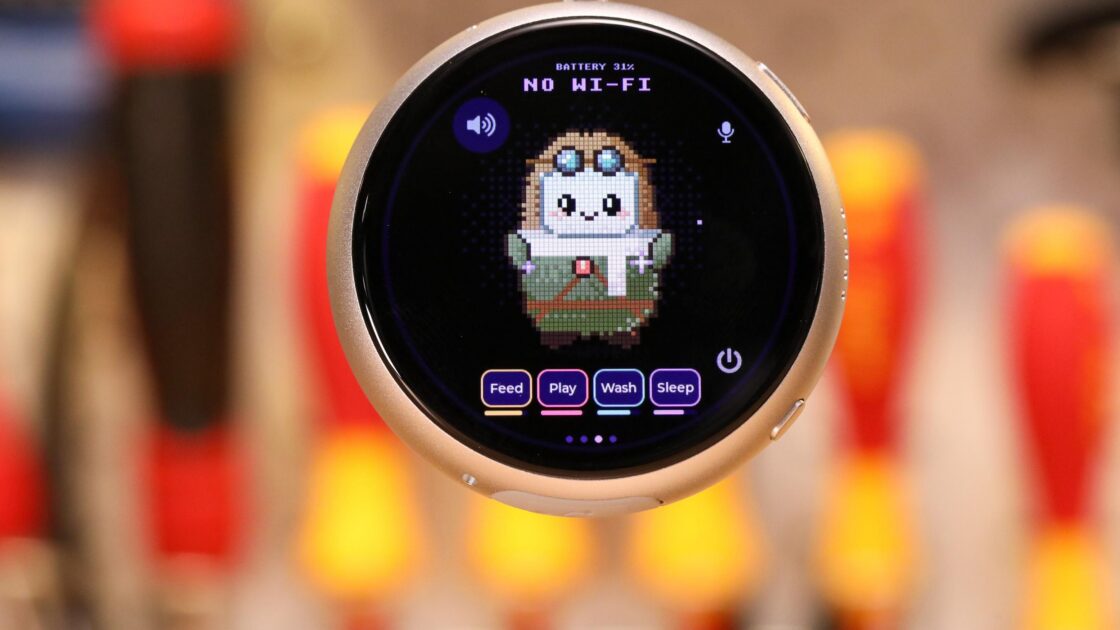
According to reporting by The Verge, the custom device utilizes the Waveshare ESP32-S3 1.75C, a $50 pocket-watch-style touchscreen pendant shipped from China. Meta officially lists the hardware as a suggested kit for creating a “Muse Gadget,” which connects directly to Meta’s Muse AI cloud infrastructure using open-source code and software tokens.
Initial installation involved connecting the pendant to a PC, using the Claude AI assistant to integrate Meta’s GitHub repository, and pairing the hardware with the Muse mobile application. Early tests revealed several operational limitations in Meta’s base setup. The pendant initially mistook push-to-talk voice inputs for transcription requests rather than actionable commands, exhibited slow response times, and offered no voice output, showing only brief text fragments on its screen.
Customizing Features with AI Coding Assistance
To resolve these functional gaps, software modifications were applied using Claude Code without requiring manual programming skills. The AI assistant added a scrollable conversation history interface and integrated a text-to-speech voice from ElevenLabs to read responses aloud.
Further updates added a remote camera shutter with live previews transmitted from a smartphone via Bluetooth and Wi-Fi. The software was also updated to feature interactive avatars inside a Tamagotchi-style pet minigame with adjustable levels for hunger, boredom, and cleanliness. Additional features included a functional analog-style pocket watch display with three hands and an embedded media player capable of playing video clips directly on the hardware.
Security and Hardware Capabilities
The project also highlighted potential security considerations tied to connecting AI assistants to personal home networks. Due to general privacy risks and past reports of data leaks involving AI services, the hardware was isolated on a guest Wi-Fi network throughout testing.
While packaged consumer devices like the upcoming Muse Charm aim to offer consumer-ready experiences, accessible development kits combined with AI coding tools now allow users to create customized hardware tailored to specific functions ahead of official product releases.