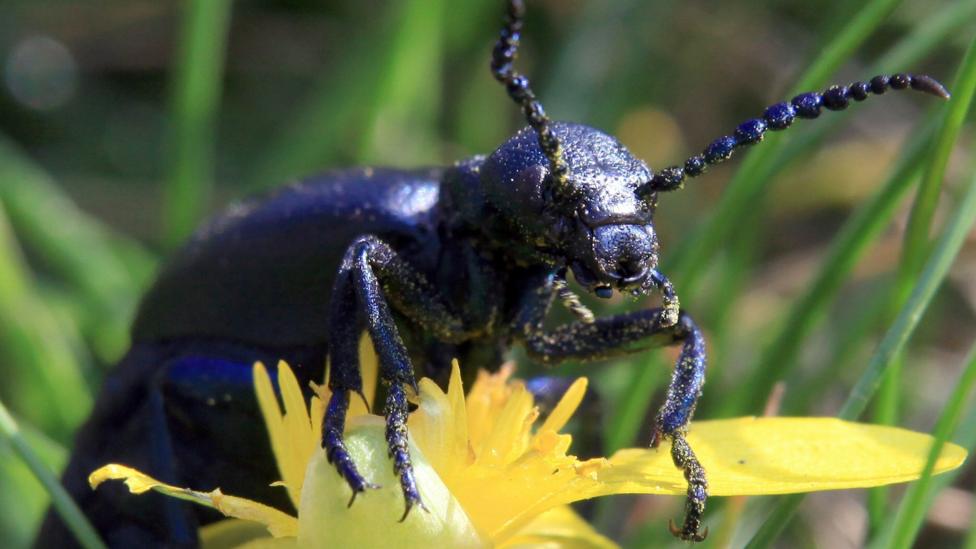
A rare species of beetle has been rediscovered in Pembrokeshire after disappearing from Wales for 60 years. The short-necked oil beetle relies on solitary bees for its lifecycle and requires specific habitats featuring dense flower coverage and thick vegetation for shelter.
Habitat Loss and Rediscovery
Following 1948, the species went unreported in the United Kingdom for nearly six decades as habitat loss pushed the insects close to extinction. Anne Hobbs, representing the Bumblebee Conservation Trust, told BBC News that finding evidence of the species breeding in Wales again was “very exciting.”
During the previous year, a survey at Castlemartin uncovered only dead adults, which created worries regarding the future of the population at the location. However, following three years of searching, specialists identified beetle larvae across a small section of the area, indicating surveyors located hatchlings from a larger group of immature beetles.
Natural Resources Wales noted that the quantity and distribution of the observed larvae further confirmed this finding. The short-necked oil beetle holds a nationally rare status across Great Britain and is categorized as vulnerable on the IUCN Red List.
Conservation Efforts in Wales
These insects generally appear between March and June within sand dune and flower-rich coastal grassland environments, showing the highest activity levels during warm and sunny weather. Adults reach lengths of up to 24mm, or 0.9 inches, and maintain a lifespan of approximately one year. Natural Resources Wales explained that these ecological requirements restrict the insect to only a few suitable locations throughout the UK.
Following rediscoveries in Devon in 2006 and Scotland’s Isle of Coll in 2009, populations were subsequently identified on Tiree, Islay, Barra, and Uist. Currently, the Castlemartin Range in Pembrokeshire serves as the sole location in Wales where the species exists, with conservationists performing regular surveys.
Natural Resources Wales stated that the initiative forms part of the nation’s premier species recovery program, designed to protect the short-necked oil beetle alongside other wildlife sharing comparable habitats. Hobbs characterized the insect as an amazing creature and emphasized that conservation efforts must account for the requirements of multiple species to achieve success.
Hobbs expressed gratitude to partners and volunteers for their ongoing backing despite two consecutive years passing without spotting any larvae, adding that organizers anticipate ongoing site management to ensure the survival of the species.