Table of Contents
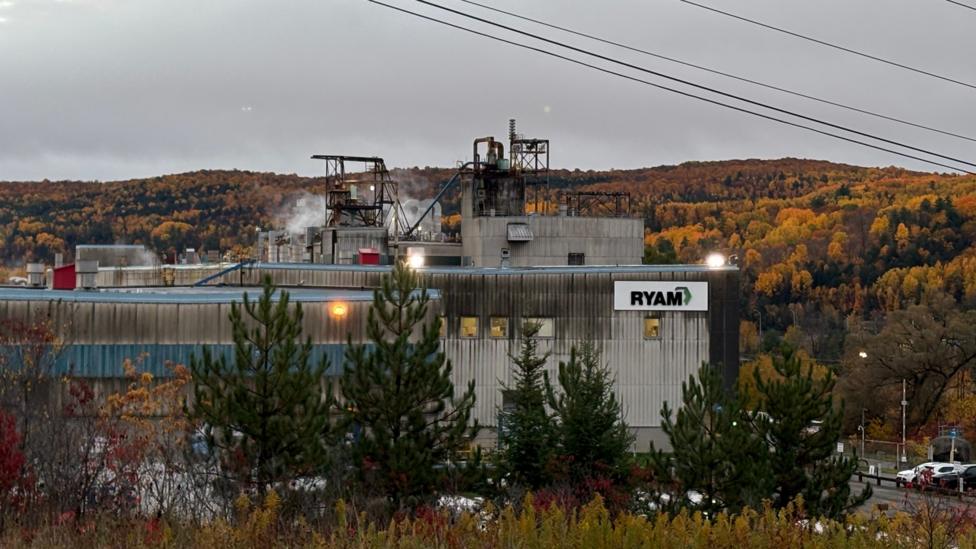
The paper mill in Témiscaming, Quebec, has dominated the local landscape for over a century, serving as the main economic anchor for the forest-encircled community. Today, the facility stands idle after Canada-US trade negotiations collapsed and President Donald Trump implemented steep tariffs on Canadian imports, leaving most of the mill’s 360 workers unemployed and relying on partial government relief.
Deep Local Strain and Economic Uncertainty
The sudden halt at the plant has sent shockwaves through the small town. Real estate values have plummeted, housing yards display sale signs, and residents express grave concern that doctors, grocery clerks, and other essential workers will leave the community. Resident Nadine Suley noted that US duties feel like “a personal attack”, adding, “It’s not just a job. It’s our home.” She joked that locals will depend heavily on moose hunting during the short season to keep meat on the table.
Local worker Ronnie Raymond warned of the severe consequences if the plant closes permanently. “If the mill goes down, it’ll turn into a ghost town,” Raymond said. “There’ll be nothing, nothing left. There’s no work for anybody, really. It’s scary.”
While Canada’s national unemployment rate has remained relatively steady at roughly 6.5% alongside modest economic growth, specific sectors face severe distress from US duties reaching as high as 50%. The tariffs, which apply to about C$28bn of Canadian goods including paper, pulp, timber, steel, and aluminum, have spilled over into local supply chains. A local contractor told BBC News that he has already had to lay off 13 workers due to the regional forestry slowdown.
The facility’s American owner, RYAM, initiated an “economic shutdown” of the mill for “an indefinite period” in early October. The mill exports approximately 75% of its output to the United States, producing specialized paperboard used for frozen-food packaging and lottery scratch cards. In an email to BBC News, RYAM said it would not comment on a potential sale of the plant or any prospective buyers.
A Historic Buyout Model
This is not the first time Témiscaming has confronted such a crisis. In 1973, when the mill’s former American owners prepared to close the facility, workers and managers united to purchase the plant themselves. That movement created Tembec, an international wood-products company owned in Quebec. Frank Dottori, a retired engineer who helped lead the 1973 effort by organizing workers to accept a 10% pay cut before becoming CEO, recalled being initially dismissed by provincial officials before securing support.
Union leader Stéphane Lefebvre, whose father and grandfather worked at the mill, is leading a new local coalition seeking to buy the plant back from RYAM. “We’re hoping that lightning will hit twice,” Lefebvre said.
Lefebvre acknowledged that succeeding a second time will require substantial financial backing or tariff relief from Prime Minister Mark Carney and the Quebec provincial government. He questioned why smaller forestry communities receive less immediate national attention compared to major urban centers. “If there was 10% of job loss in Toronto or Montreal or Quebec City or Vancouver, it’d be all over the news, and it’d be a lot of pressure on the governments to do something,” Lefebvre said.
Frustration Over Government Support
Local leaders argue that federal efforts have prioritized larger urban manufacturing sectors like steel and automotive over forestry. Recently, Prime Minister Carney and Ontario Premier Doug Ford announced nearly C$9bn ($6.4bn) to help Ontario’s steel and auto sector modernize and open new overseas markets. Industry Minister Mélanie Joly also threatened US-owned steelmaker Stelco with financial penalties or a forced asset sale if it proceeded with laying off some 500 workers in Hamilton due to tariff pressures.
In contrast, Témiscaming Mayor Alain Gauthier criticized Ottawa’s response to the forestry crisis, describing US tariffs as “a bomb to shut down our manufacturing in Canada”. Mayor Gauthier called for retaliatory duties on tariff-free US board products entering Canada, stating, “in reality we see absolutely no evidence of war measures being taken. We feel we got into a war with kid’s water guns to fight back.”
Sébastien Lemire, the regional Member of Parliament representing the Bloc Québécois, told BBC News that he is “very concerned and worried” about what he called inaction from the Carney government to support the town and Quebec’s timber industry more broadly.
Addressing these concerns, a spokesperson for Minister Joly told BBC News in a statement that Ottawa has made available C$400m to support the forestry sector in rural and remote areas, alongside cash-flow programs to help businesses transition away from US markets. The spokesperson added that the government “is actively working with all parties involved to find a viable solution to the issues facing the company, while responsibly managing Canadians’ dollars.”
With sub-zero winter temperatures approaching—which could freeze machinery and cause damage that makes reopening even more difficult—residents are watching political developments closely. Some hold out hope that upcoming US midterm elections could pressure Trump to ease duties, following recent lobbying by Republican Maine Senator Susan Collins that led the White House to lift tariffs on select Canadian goods, though those changes do not yet apply to the products made at Témiscaming’s mill.