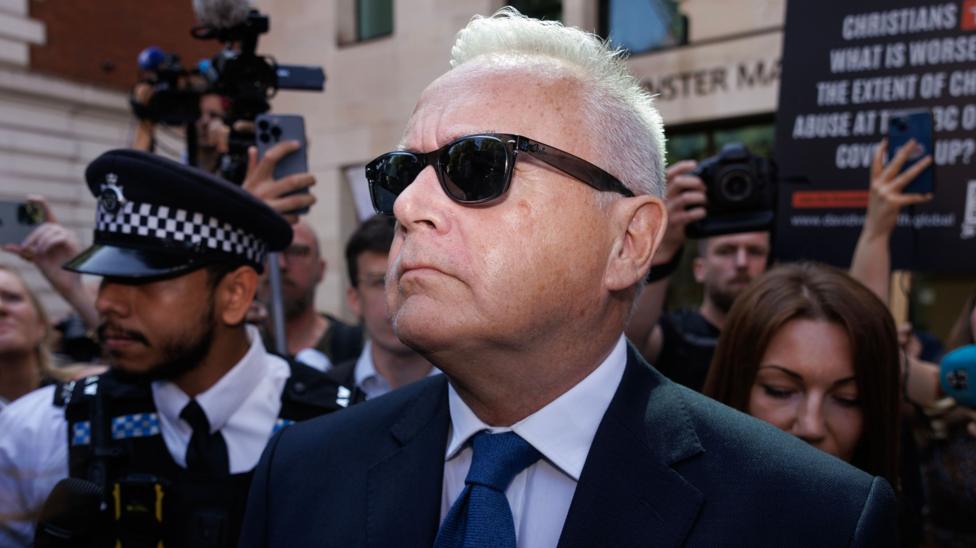
Downing Street has stated that broadcasters must act responsibly and that the government has no interest in hearing what Huw Edwards has to say. The reaction follows a severe backlash against new interviews granted by the disgraced former BBC News presenter, who was convicted in 2024 for making indecent images of children.
Government and Ministerial Reactions
Edwards was interviewed for a forthcoming Channel 4 documentary as well as a podcast produced by the Observer and Tortoise Media. A Downing Street spokesperson emphasized that the primary thoughts remain with the victims of child sexual abuse and exploitation, adding that anyone convicted of such extremely serious crimes must face the consequences of their actions.
While noting that Channel 4 is editorially independent regarding individual programs and contributors, the spokesperson stressed that broadcasters are expected to act responsibly and consider their audiences. Earlier, Environment Minister Emma Hardy told LBC that the initiative made her feel sick because it provided a platform to a registered sex offender who denied that same platform to his victims.
Conservative MP Dame Caroline Dinenage, chair of the House of Commons culture and media select committee, argued that media outlets should not merely act as a platform for Edwards to voice his perspective. She stated that any featuring program must properly challenge his past actions and raise unresolved questions about whether he will return more than £200,000 paid to him by the BBC following his arrest.
Criticism From Survivors and Campaigners
The documentary and podcast releases have also drawn condemnation from individuals who previously spoke out about inappropriate behavior by Edwards, alongside abuse support advocates. One anonymous individual who accused Edwards of sending threatening messages in 2023 described it as bizarre that major names like Channel Four would platform a convicted sex offender attempting damage repair. Another former junior BBC employee called the decision strange and irresponsible, while a third critic who received suggestive messages expressed disgust over the air time provided.
Duncan Craig, head of the survivor support organization We Are Survivors, remarked that the media companies failed to consider the victims and that the timing coincided with a crucial reckoning moment for media abuse. Criticizing a promotional clip where an interviewer referred to Edwards’ situation as a terrible fix, Craig pointed out that downloading grade-A images of young boys being sexually abused is far beyond a simple fix. Broadcaster Nicky Campbell echoed concerns for the children depicted in the photographs, while journalist Sangita Myska labeled the potential rehabilitation of Edwards’ reputation through a personal journey documentary as contemptible. In contrast, fellow broadcaster Richard Bacon defended the project, asking why reporting on different types of individuals through a documentary format should be categorized as rehabilitation.
The upcoming documentary and podcast are scheduled for release on Tuesday, with additional material expected to be published by the Observer.