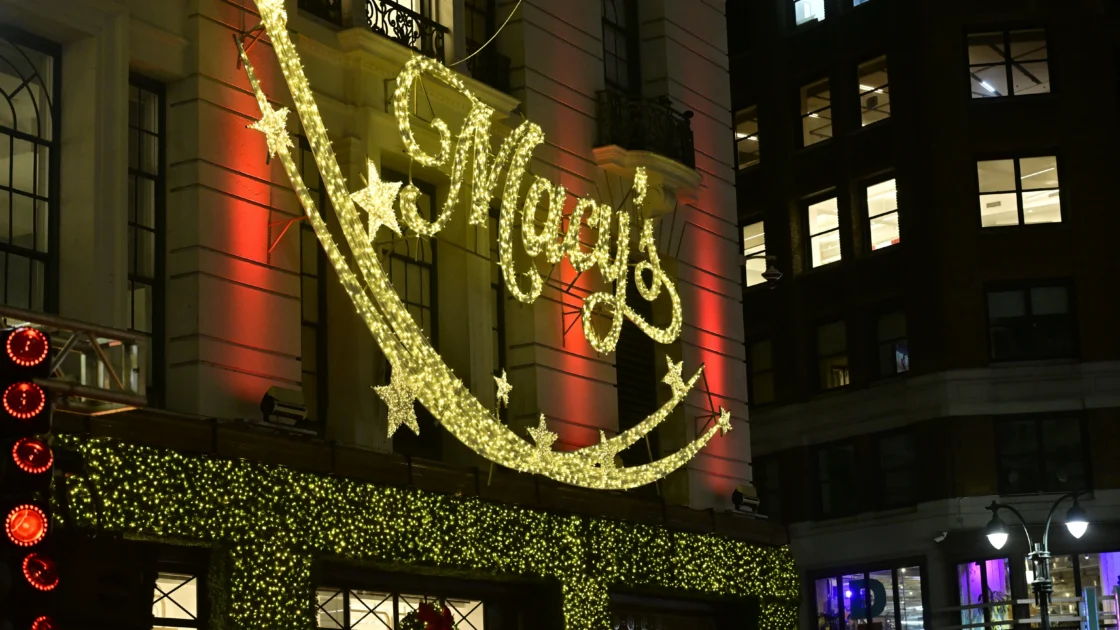
As Macy’s celebrates the 100th edition of its Thanksgiving Day Parade, the iconic department store finds itself at a turning point after years of questionable financial prospects. The retailer is attempting to reinvent itself as a luxury destination, hoping to retain its traditional shoppers while attracting new customers willing to pay more for upscale brands.
Getting Squeezed in the Middle
Long before the pandemic, Macy’s struggled with America’s shrinking middle class and a lack of fresh vision. The department store business has grown increasingly challenging due to expensive large store spaces, stiff online competition, and shoppers buying directly from their favorite brands.
Macy’s found itself stuck between discounters like Kohl’s and T.J.Maxx, and upscale stores like Bergdorf Goodman and Nordstrom. Michael Prendergast, a retail adviser at consulting firm Alvarez & Marsal, explained as reported by NPR that the middle tier has essentially been crushed over time. When the pandemic hit, store closures forced Macy’s to forecast an estimated $1.1 billion in losses, causing its stock value to drop so low that the company was removed from the S&P 500 index.
The New Luxury Vision
To reverse its fortunes, Macy’s tried discounting heavily to generate sales, but the strategy resulted in disheveled stores, chaotic displays, and a lack of floor staff. Over 2023, sales dropped by nearly 7 percent as soaring inflation forced the company’s hand. As a K-shaped economy split the nation, budget-conscious shoppers went to Walmart or Target, while wealthier spenders bypassed Macy’s for higher-end shops.
Following these challenges, the head of Macy’s upscale sister chain Bloomingdale’s took over the entire company in 2024 and announced a turnaround plan titled “A Bold New Chapter.” The strategy includes closing 150 stores, upgrading more than 300 others, reworking the website, and improving staffing. Julie Walsh, senior vice president at Macy’s who buys women’s accessories and beauty products, stated as reported by NPR that the team needed to remove redundancy so products on the floor show up in a meaningful way.
Putting Prices to the Test
In March, Macy’s finally reported a year of growing sales, driven largely by Bloomingdale’s while changes also began paying off at Macy’s locations. Fancier options, such as real leather and brands like Ralph Lauren and Coach, raised the retailer’s average selling price by 9 percent in the latest quarter, according to executives who described shopping visits as very steady and significant.
Loyal shopper Barb Anderson-Kerlin noticed a difference at the New York flagship store, noting that previous visits felt overwhelming with bedding, towels, and pots mixed together, whereas brands are now easier to locate. However, some visitors remained skeptical, with Chelsea Bates suggesting that true luxury stores should serve champagne or offer coffee lounges.
Macy’s insists it is not turning away from the middle class, but rather widening its offerings for a bifurcated economy. Walsh emphasized that the chain aims to service customers across different categories and price points while adding elevated products. Prendergast noted that breaking out of a long-held middle-price reputation is difficult, but Macy’s might succeed given that it has outlived many rivals over its 168 years as the last man standing in that price range.