Congressional Democrats, legislative staff, legal scholars, and nonpartisan governance groups have formed an election protection task force to defend vote counting and counter potential executive branch interference in upcoming elections. The coalition is working to prepare both the public and state officials to ensure that official vote tallies are recognized and upheld.
Preparing for Potential Challenges
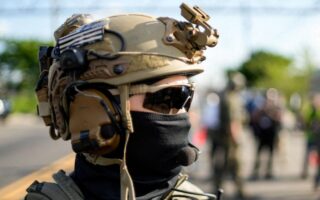
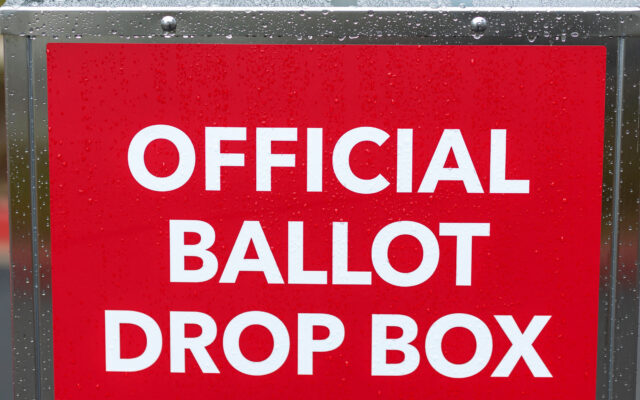
The coalition was established following a series of actions by the Trump administration, including gathering state voter files, attempting to limit mail-in voting nationwide, declining traditional international election observers, and raising the possibility of sending armed federal personnel to polling places. Members of the task force expressed concern that routine election operations, such as delayed vote processing in states like California and Alaska, could be misrepresented as evidence of fraud.
Responding to these concerns in a statement to NPR, White House spokeswoman Lauren Bis defended the administration’s policy, stating, “While extreme Democrats and the media continue to dismiss concerns about voter fraud, the Trump Administration is taking decisive action to protect our elections including prosecuting election crimes, strengthening election infrastructure security, and protecting vulnerable voters from fraud and coercion.”
Task force members argue that the administration is seeking to make claims of widespread voter fraud—which research shows is extremely rare—appear plausible to the public. Former Biden administration official Justin Vail, now with the advocacy group Protect Democracy, told NPR that the strategy relies on a three-part approach. “First, he deceives Americans, manufacturing false claims about voter fraud and the security of our elections,” Vail said. “Second, he seeks to disrupt the normal state and local management of elections,” he continued, “in an attempt to coerce them to enact policies that threaten the eligible voters’ access. And if that’s all not enough, Trump is prepared to outright deny election results that he doesn’t like.”
Legal Battles and Legislative Strategy
Prominent election attorney Marc Elias, a task force participant, noted that legal teams are actively contesting federal actions across multiple states. Past legal disputes have focused on mail-in voting restrictions, where a Postal Service directive regarding voter distribution lists was ultimately blocked by the Supreme Court. Furthermore, data collected by the State Democracy Research Initiative at the University of Wisconsin-Madison indicates the administration filed 31 federal lawsuits seeking state voter registration files, which states largely refused to provide citing privacy laws and constitutional boundaries.
In a lawsuit brought by Common Cause against the Justice Department’s voter file collection initiative, a federal district court ruled on October 9, 2026, that the policy exceeded federal legal authority and was arbitrary and capricious. The court vacated the program nationwide, though the Justice Department has appealed the decision to the U.S. Court of Appeals for the D.C. Circuit.
Because congressional Democrats remain in the minority, their direct legislative options are limited. Senator Lisa Blunt Rochester, a Delaware Democrat, told NPR in August that elected officials are focusing on acting as a link between state authorities, attorneys, and grassroots organizations working to safeguard poll workers and voters. Additionally, Senate Democratic Leader Chuck Schumer and Senator Alex Padilla initiated a Senate Election Observer Program, enrolling over 100 congressional staff members to observe voting and counting sites. Senator Mitch McConnell, who chairs the oversight committee, has not indicated whether Republican staff will join the initiative.
As election day approaches, task force members have prepared prewritten legal motions and compiled contacts in areas perceived as high risk for disputes. Vanita Gupta, director of the Center for Law and Public Trust at New York University’s law school, told NPR that while the post-election period may involve complex litigation and organizing, civic participation remains essential to preserving free and fair elections.