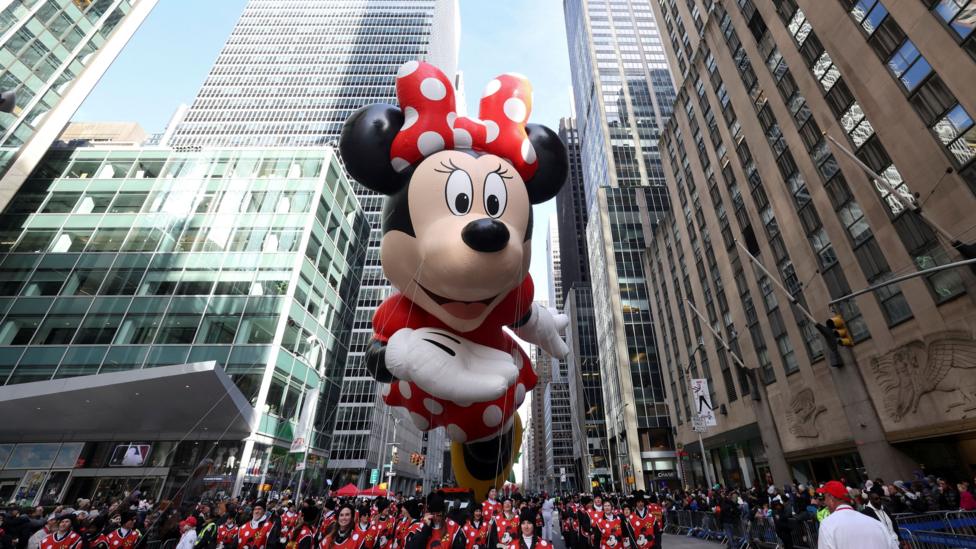
Strong winds are threatening to disrupt Thursday’s Thanksgiving parade in New York City for the first time since World War Two. A potent Nor’easter storm could impact the Macy’s Thanksgiving Day Parade during its 100th-anniversary event, raising the risk that conditions will be too windy to fly the parade’s iconic balloons.
Weather Warnings and Forecasts
The US National Weather Service issued a high wind warning effective from 10:00 local time on Thursday until 01:00 on Friday. Gusts could potentially reach 60 mph (97 km/h), although the strongest winds are expected to arrive after the parade concludes. Heavy rain and coastal flooding will create additional hazards across the eastern United States as the storm system moves through, while inland regions may experience snow.
The disturbance originated from a cluster of showers and thunderstorms in the Gulf of Mexico. This weather system has traveled northward near the east coast, intensifying into a potent Nor’easter storm that delivers strong north-easterly winds. The warning covers New York City, Long Island, and north-east New Jersey, bringing the threat of downed trees and power lines alongside significant travel disruption.
Forecasters predict up to 3 inches (75 mm) of rain with accompanying flood risks, which will be heightened along the coast by high tides on Thursday evening. Large waves and elevated sea levels also threaten shoreline erosion and damage, while western areas of the country face separate travel difficulties due to Pacific storms and coastal flooding.
History of the Macy’s Thanksgiving Day Parade
The celebration began as the Macy’s Christmas Parade, organized by department store employees in New York City to encourage holiday sales. The inaugural event took place on Thanksgiving Day in 1924 and has only been canceled during World War Two, observing a hiatus from 1942 to 1944. This year’s procession marks the 100th parade.
Scheduled to run from 08:30 local time until around 12:00, the event features marching bands, street performers, floats, and 100 brightly colored inflatable balloons. City regulations dictate that full-size balloons cannot fly if sustained winds exceed 23 mph (37 km/h) or if gusts surpass 35 mph (56 km/h). Thursday’s forecast carries the risk of winds reaching those thresholds.
Historical precedents exist for handling adverse weather during the route. Record wind gusts in 1997 also created a no-fly zone for the balloons, yet organizers still included them by tethering the giant character balloons to golf carts. In 1989, a major snowstorm prevented balloon handlers from reaching the route, prompting cheer and dance teams to pull the giant inflatables instead.
The winds are expected to strengthen throughout the day and peak during the evening, placing the most severe gusts after the parade’s conclusion.