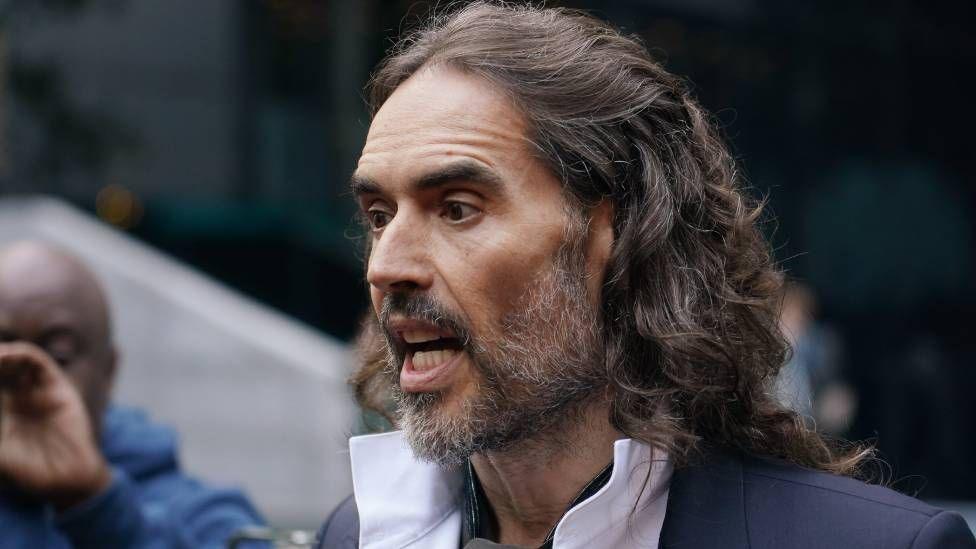
Entertainer Russell Brand has testified at his trial that he considers sexual consent to be fundamental and more important than sex itself. Brand, 51, faces three counts of rape, three counts of sexual assault, and one charge of attempted indecent assault spanning a decade between 1999 and 2009, brought by six female complainants. He denies all of the charges against him.
Evidence at Southwark Crown Court
Taking the stand on Wednesday as his defense case began at Southwark Crown Court in London, Brand described the allegations as deeply traumatic and devastating to his life. When defense barrister Ian Winter KC went through the indictment and asked if he had committed the offenses, Brand responded loudly with “no” to the jury after each question.
Asked by Winter about the importance of consent, Brand told the court, “Consent is fundamental, essential, necessary and indeed in many ways more important than sex itself.” He added from the witness box that consent is non-negotiable. He acknowledged he previously allowed his fame to facilitate sexual access, admitting that approach was wrong, but strongly denied going to any lengths to force encounters.
Brand stated that his entire life has been consumed by the allegations and the subsequent fallout, which he said impacted his relationships with friends and colleagues following a media documentary and newspaper investigation. He testified that he was barred from attending his son’s open heart surgery at Great Ormond Street hospital in London due to published material in the public eye. When asked if any friends or acquaintances would appear in court on his behalf, he replied that they would not touch him with a bargepole.
Cross-Examination and Specific Allegations
During cross-examination, prosecutor Riel Karmy-Jones KC pointed out inconsistencies between Brand’s previous prepared police statement and his testimony. Brand agreed, explaining that he had experienced escalating recollection during a deeply traumatic episode in his life and acknowledged that his memory included small inconsistent details.
Addressing the individual claims, Brand denied raping the first complainant at a Labour Party conference in Bournemouth in 1999, describing her as loquacious and interesting. He also rejected allegations that he grabbed a woman’s breasts and dragged her into a bar toilet in London in 2004, calling such behavior criminal, vulgar, and something he would never do. He similarly denied attempting to drag a former MTV employee into a work toilet in 2001.
Regarding a complainant who accused him of anal rape in his Hammersmith Apollo dressing room in 2009, Brand recalled a memorable sexual encounter and subsequent contact because he was excited and enthusiastic. He admitted saving her number with a code used for casual hook-ups, but maintained they later had consensual sex at his Hampstead home and denied any assault or that she asked him to stop.
Brand also denied pretending to be gay to make women feel sexually safe, and disputed having a goal to sleep with 5,000 women despite admitting to a past obsession with sex and reckless philandering. He agreed with the prosecution that the marriage to singer Katy Perry in October 2010 brought him staggering fame, and strongly rejected the fairness of media coverage regarding the case.
The trial continues.