Table of Contents
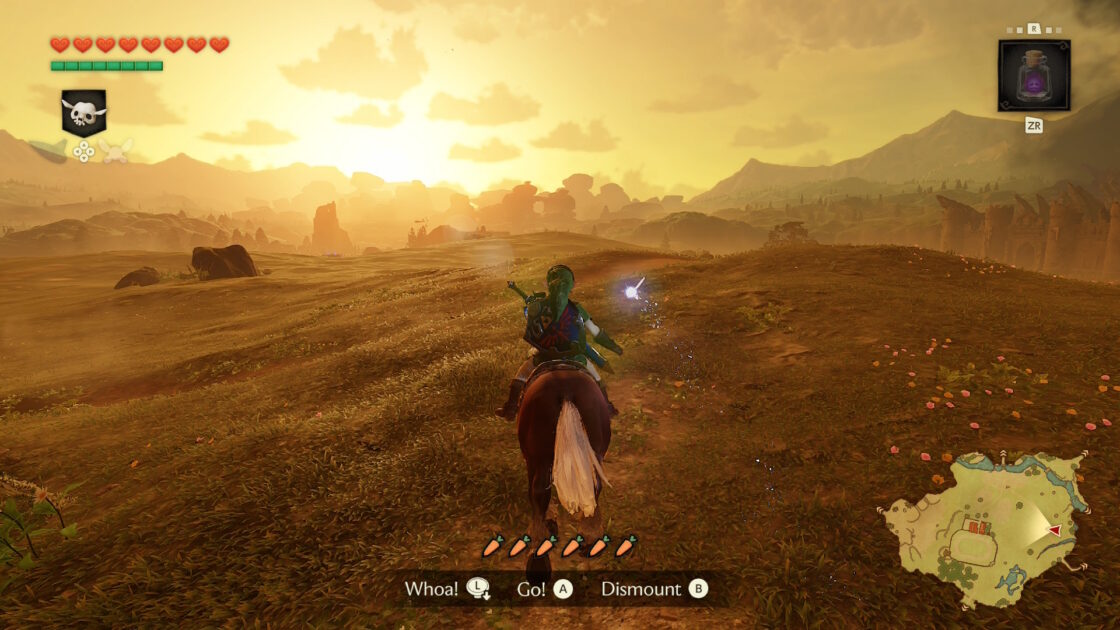
Nintendo’s remake of The Legend of Zelda: Ocarina of Time on the Switch 2 has captivated players with its 60fps vistas and detailed world, sparking questions about how it influences future titles. As reported by CNET, the project serves as a connecting bridge between classic Zelda design and newer open-world entries.
Connecting Generations of Developers
During the game’s launch, CNET met with Nintendo producers Eiji Aonuma and Hidemaro Fujibayashi to discuss the remake’s development. Aonuma has produced Zelda games since the original Nintendo 64 release, while Fujibayashi directed both Breath of the Wild and Tears of the Kingdom. For the remake, the team brought on younger staffers who had worked on Tears of the Kingdom, many of whom had never played the original Nintendo 64 version.
According to Aonuma, as reported by CNET, the studio viewed the project as an opportunity for younger staff to make discoveries that they can carry forward into future Zelda projects. The team incorporated higher-capacity visual details and immersion learned from Tears of the Kingdom into the remake. Aonuma explained that visual details spotted from a distance can draw players in and motivate them to explore.
Visual Clues and Puzzle Solving
Fujibayashi highlighted the core throughline in Zelda games as the concept of exploration and discovery. Improved visual tools allow the development team to provide dense volumes of visual information, giving players new ways to gather clues for puzzle-solving using their sight.
Fujibayashi noted to CNET that the graphics look slightly more realistic compared to Breath of the Wild, which directly impacts how the team approaches puzzle creation. Unlike games that rely heavily on pop-up interaction graphics, Ocarina of Time encourages players to study the environment for clues.
Audio Features and Future Remakes
The development team also considered allowing players to hold up a Joy-Con and use it like an ocarina. Aonuma told CNET that they briefly explored the idea, but ultimately decided against it due to the difficulty of making the controller produce faithful sounds and integrating it into the game application.
Instead, the software features audio recognition that allows players to use any analog or digital instrument, or their own voice and humming, to play themes within the game. While Nintendo declined to answer questions about a potential Majora’s Mask remake, players continue to uncover secrets in the updated world as anticipation builds for future Nintendo 3D experiences on the Switch 2.