Table of Contents
Tiny, low-speed vehicles known as motorised quadricycles are becoming an increasingly common sight on European roads. These “four-wheel mopeds” have gained significant popularity among teenagers and rural residents, offering a practical solution for those who lack a standard driver’s license or access to public transport.
A Growing Trend Among Youth and Rural Residents
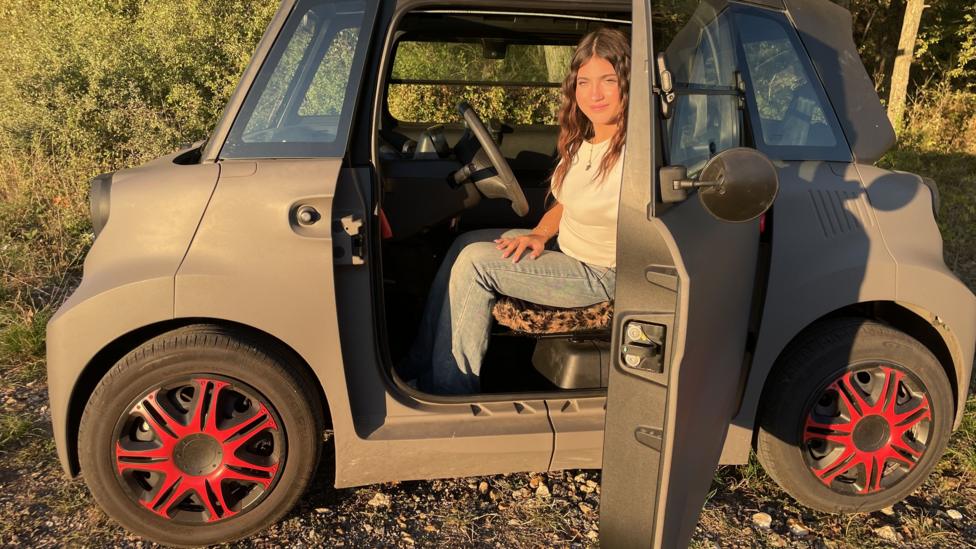
For 16-year-old Selena Buse, the Citroën Ami has provided newfound independence. “I got it because I really needed it to get to school. And I use it to visit friends on the weekends. It’s indispensable in rural areas like where I live,” she told BBC News. In France and Italy, individuals can operate these vehicles from age 14, provided they hold a road safety certificate and have completed eight hours of training. Similar regulations exist in Germany and Spain, where the age limit is 15, and the UK, where it is 16.
The market has seen substantial growth, with European sales climbing from 30,000 to 60,000 units over the past five years. In France alone, registrations jumped from approximately 13,000 in 2019 to about 25,000 last year. Teenagers now represent a quarter of all mini-car sales, a shift largely attributed to the 2020 launch of the electric Citroën Ami.
Safety and Operational Challenges
These vehicles are limited to a top speed of 45km/h (28mph) and are prohibited from using motorways. While they offer mobility, they can present challenges for other road users. “When I’m on faster roads and there’s a lot of traffic the cars behind me sometimes honk their horns but I can’t go any quicker!” Buse explained.
Daniel Laprès, a 77-year-old who drives a micro-car from market-leader Aixam, noted that the vehicles are essential for rural living but can feel vulnerable. “They’re little more than tin cans on wheels, right? I mean, you’re not going to be driving fast, but someone else could be,” he said. Laprès, who turned to a micro-car after losing his license, warned that driving on national highways can be dangerous due to the speed differential with larger vehicles and trucks.
Market Evolution and Electric Adoption
The profile of the micro-car driver has evolved from older individuals in rural areas or those who lost their licenses due to traffic offenses to a younger demographic. Marie-Laure Nivot, a market analyst at AAA Data, noted that the sector has undergone a transformation. “In 2026, more than 67% of new licence-free cars are electric,” Nivot stated. This shift was accelerated by stricter EU regulations on two-wheelers, which made mopeds and small scooters less viable for manufacturers, effectively clearing the way for licence-free cars.
The entry of major players like Stellantis, the parent company of Citroën, has benefited smaller, specialized manufacturers like Aixam and Ligier. “They helped us to make people understand that it was possible in France to drive this product from 14-years-old,” said Aixam sales and marketing director Tom Faget. Aixam has since invested €30m to expand its French production capacity.
A Shift in Consumer Choice
Marketing director at Ligier, Romain Illegems, observed that the market has moved from “mobility that was imposed on people to mobility that people choose.” He noted that young people now account for 40% of their customers, as they increasingly prefer the safety and weather protection of a micro-car over a scooter.
Despite the limitations of having only two seats and restricted speeds, the appeal remains strong for those seeking affordable transport. For Buse, who rents her vehicle for €60 a month plus insurance, the cost is a manageable trade-off for the freedom to travel independently.