Table of Contents
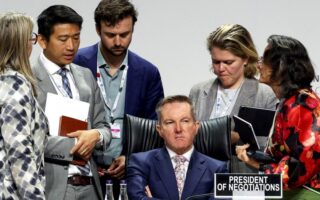
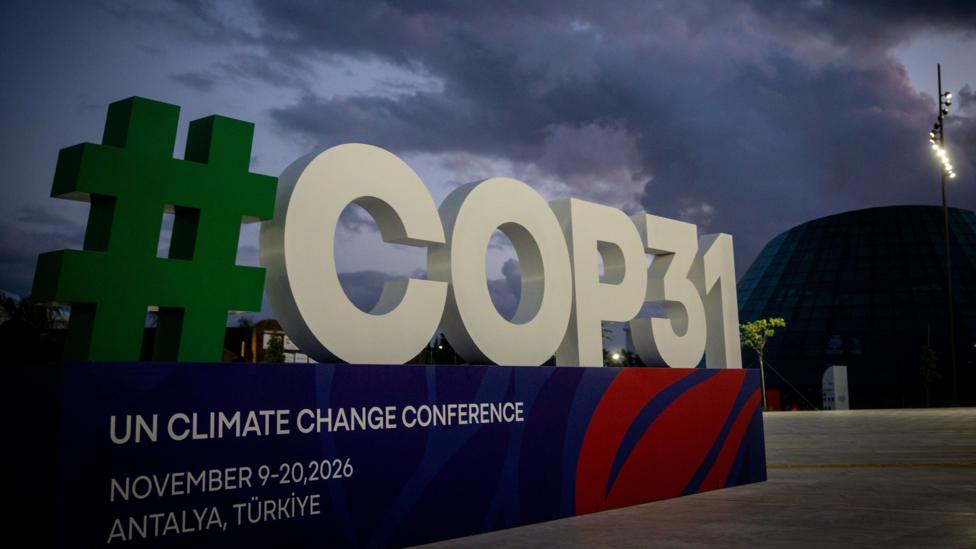
The COP31 climate summit in Turkey collapsed without reaching its central political agreement, the Antalya Pacts, following deep geopolitical divisions and intense disputes over fossil fuels and financing. Co-hosted by Australia and Turkey, the gathering became the longest-running climate talks in UN history, leaving participants questioning whether the COP process can still deliver actionable results amid severe global warming evidence.
The World Prepares for Life Beyond 1.5C
COP31 marked the first summit since UN warnings indicated global temperatures are set to exceed 1.5C above pre-industrial levels, the threshold established in the 2015 Paris Climate Agreement. While the draft agreement acknowledged this reality, the failure to reach a consensus meant that recognition was lost in the final text. UK Energy Secretary Miatta Fahnbulleh stated at the close of the talks, as reported by BBC News, that the summit sought to confront hard truths regarding the necessity to act with greater urgency.
The draft text suggested carbon dioxide removal (CDR) as a measure to keep any temperature overshoot as short-lived as possible. While natural removal via tree planting has limitations, technological solutions remain controversial and largely undeveloped.
Deep Divisions Over Fossil Fuels and Funding
Negotiations exposed fractures in international consensus, with countries failing to include language on fossil fuels despite a similar pledge made at COP28 in Dubai. Rich nations also did not commit a specific figure for increasing adaptation funding for developing countries, failing to clarify a previous goal to triple funding by 2035 from $40bn.
Australian Minister Chris Bowen noted that the geopolitical environment was the most complicated in living memory. During the final meeting, EU representative Darragh O’Brien accused certain oil states of hijacking the talks, while Russian delegate Sergei Kononuchenko criticized the EU for providing climate finance solely as loans, calling it an old colonial distribution of labor under a new banner.
Progress on Procedural and Technical Items
Despite the collapse of the central political agreement, delegates agreed on 164 other agenda items. Funds raised from a global carbon credits system will support developing nations in climate adaptation, and countries agreed to advance a just transition framework to protect workers shifting toward clean energy. However, other issues, including the work programme for cutting emissions, were deferred to COP32.
Renewable Energy Growth Remains Unstoppable
Energy security and market economics continue to drive the clean energy transition independently of formal negotiations. According to the International Energy Agency’s World Energy Outlook, disruptions to oil and gas supplies in the Strait of Hormuz have created a massive energy supply shock, incentivizing countries to switch to domestic electricity. With solar panels, batteries, and electric vehicles becoming increasingly competitive, Fatih Birol, head of the IEA, told BBC News that energy security and climate policies are closely aligned in the new age of electricity.
Dr Jennie Dodson of the World Business Council for Sustainable Development noted that while businesses find clean energy cost-competitive, policy barriers regarding infrastructure and permitting still require government facilitation.
The Changing Role of UN Climate Conferences
With the international architecture for tackling climate change largely built over the first 30 COPs, the Antalya conference was billed as an implementation summit. Camilla Born, who heads Electrify Britain, told BBC News that the process is becoming more procedural and focused on making existing machinery work rather than securing fundamental new negotiations, which could include doing away with cover texts altogether.
Alden Meyer, a negotiator at E3G, suggested that the COP process acts as a mirror held up to the world, meaning that disappointing outcomes reflect the actions of governments rather than a failure of the system itself.