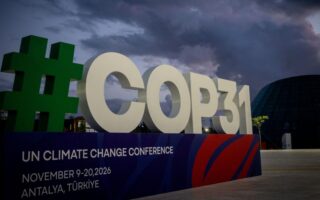
Countries failed to reach a major new deal to tackle climate change at the UN COP31 talks in Turkey after deep divisions emerged over fossil fuels and money. Negotiations were scheduled to finish on Friday but ran late into Sunday in search of common ground, making it the longest UN climate conference in history.
Breakdown Over Fossil Fuels and Finance
The final deal proved unacceptable to the EU, Pacific island nations, and others because it failed to directly mention fossil fuels, the main cause of global warming. Meanwhile, many poorer countries objected to the absence of clear financial commitments from richer nations to help them adapt to the impacts of rising temperatures. The last time a COP main political agreement collapsed in this manner was in 2009 in Copenhagen.
UN Secretary-General Antonio Guterres, in his final COP before stepping down, stated that he was deeply disappointed. As reported by BBC News, he criticized powerful fossil fuel interests for taking a page from Big Tobacco’s playbook by distorting science, delaying policy, blocking action, and piling up huge profits while ordinary people pay the price. Australian Prime Minister Anthony Albanese, whose country co-hosted the talks, attributed the failure to difficult geopolitical times.
Exhausted delegates were presented with a new draft deal in the early hours of Sunday after two weeks of negotiations to break the deadlock. The words fossil fuels did not appear anywhere in the text, with the only indirect reference being a nod to a 2023 COP28 deal where countries agreed to transition away from fossil fuels in energy systems. The EU representative, Irish Minister Darragh O’Brien, made it clear that the EU strongly objected, stating that the decisions went nowhere near the level of ambition needed to tackle climate change.
A first draft of the deal on Monday had mentioned fossil fuel or fossil fuels six times, but that proved unacceptable to oil-producing nations. Saudi Arabia delegate Mohammad Ayoub argued that Arab countries continued to engage in good faith but accounted for only a small proportion of historical greenhouse gas emissions. Russia warned against turning to slogans over coal, oil, and gas, claiming that moving away from fossil fuels too quickly would lead to fuel poverty.
Climate advocates reacted with dismay, with former US vice-president Al Gore writing on X that it was outrageous for a handful of petro-states to have veto power over any mention of fossil fuels. Money for poorer countries to adapt to intense heatwaves and severe droughts served as another major sticking point. Although nations agreed last year at COP30 in Brazil to triple finance for that purpose, this year’s deal contained no reference to concrete figures or a baseline for measurement, raising fears of too much wriggle room for richer nations.
Broader Impacts and Process Reform
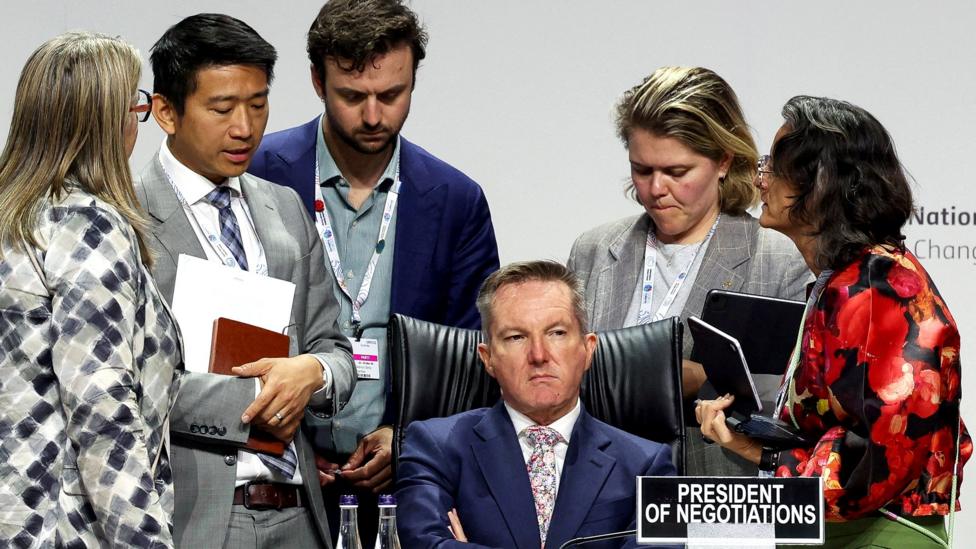
The UK Energy Secretary, Miatta Fahnbulleh, described the failure to reach a political agreement as immensely disappointing, adding that the UK commitment remained unwavering. While Antalya in Turkey hosted the talks, Australia led the official negotiations, creating what some observers described as a chaotic dynamic. Chris Bowen, the Australian government minister and COP31 president of negotiations, pointed to unbridgeable red lines and the most complicated and fraught geopolitical environment in living memory.
The conference marked the first annual UN meeting to formally discuss how a key international target for limiting climate change would be missed. Under the 2015 Paris talks, nearly 200 countries agreed to try to limit global warming to 1.5C above pre-industrial levels to avoid the worst effects of climate change. While current government policies are likely to limit warming to about 2.8C by 2100, action has not been fast enough, meaning the world is likely to overshoot 1.5C of long-term warming in the next few years.
Despite the collapse of the main deal, some agreements were reached, including progress on a just transition mechanism to support workers and communities during the shift to clean energy. Over 80 countries also backed Turkey’s target to increase the share of global energy use met by electricity to 35% by 2035. The UN climate chief, Simon Stiell, told BBC News that he would seek advice on potential reform to the consensus-based process, with the next conference, COP32, scheduled for November 2027 in Ethiopia.