Table of Contents
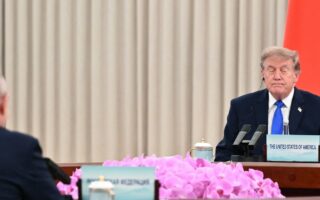
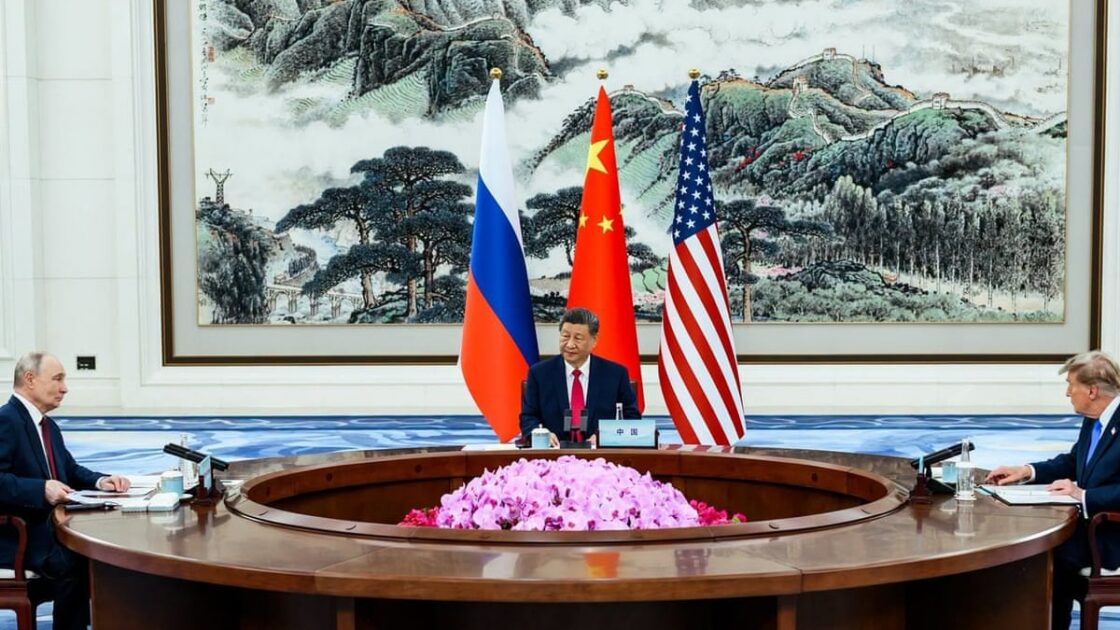
Leaders from China, Russia, and the United States have announced a joint peace declaration following an unprecedented trilateral summit held during the Asia-Pacific Economic Cooperation (Apec) gathering. Despite the high-profile meeting, the resulting document notably omitted any reference to the ongoing wars in Ukraine and Iran.
Priorities and Nuclear Stance
The declaration, finalized on Thursday, outlined several key priorities, including the reform of the United Nations, an increase in oil supplies, and the protection of diplomatic immunity. Regarding nuclear security, the leaders affirmed that “a nuclear war cannot be won and must not be fought,” though they did not propose a framework for denuclearization.
During the summit, Chinese President Xi Jinping called for nuclear weapons to “be completely prohibited and thoroughly destroyed over time to make the world free of [them].” While some observers hoped for discussions on arms reduction, the language used in the declaration mirrored previous statements issued by the five permanent members of the UN Security Council.
Patricia Kim, an expert on Chinese foreign policy at the Brookings Institution, noted that the real test will be whether the nations follow through on commitments to discuss nuclear risk reduction. Yun Sun of the Stimson Center added that China’s willingness to engage on these topics is significant, suggesting Beijing is successfully setting the global agenda.
Diplomatic Optics and Criticism
The meeting, which lasted approximately 80 minutes, was described by Donald Trump as a historic opportunity for engagement. Vladimir Putin stated at a press conference that the three leaders engaged in a “free discussion” and reached a “mutual understanding.”
However, analysts remain divided on the substance of the talks. Professor William Hurst of the University of Cambridge suggested the summit was primarily focused on symbolism and prestige. The declaration included a clause stating that the International Criminal Court (ICC) and similar institutions “must not abuse their jurisdiction,” a point viewed by some as a diplomatic win for Putin, who is currently subject to an ICC arrest warrant.
The optics of the meeting drew sharp criticism from European allies. Polish Prime Minister Donald Tusk rejected Trump’s characterization of Putin as a “friend,” while Danish Prime Minister Mette Frederiksen expressed confusion over the US president’s willingness to meet with the Russian leader.
Economic and Strategic Implications
The declaration also included a commitment to increase the production and supply of refined petroleum products. Shan Guo of Hutong Research noted that while this is a significant goal, its success depends on whether the US chooses to lift existing sanctions.
During separate bilateral discussions, Xi and Trump addressed the state of US-China relations. Xi described the relationship as “generally stable and positive” but issued a warning regarding Taiwan, urging the US to avoid actions that could cause setbacks. The two leaders also briefly touched upon artificial intelligence, with Xi emphasizing the need for coordination to ensure AI remains under human control.
Experts suggest that the lack of concrete breakthroughs may align with China’s current strategy. According to Patricia Kim, Beijing has little interest in assuming the diplomatic risks associated with brokering peace in Ukraine or resolving the conflict with Iran, preferring to avoid entanglement in those specific regional disputes.