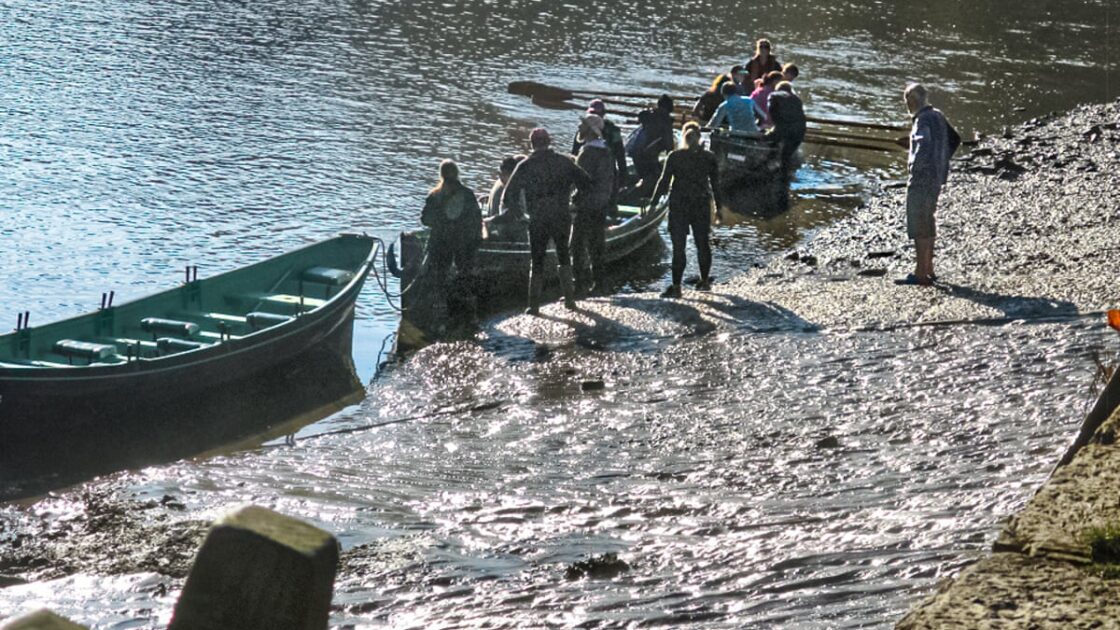
By Cotehele quay in the Tamar Valley, Cornwall, thin plumes of mist rise from glistening mudbanks during a sequence of calm sunlit days. Riverside reedbeds glow luminous in the morning sun as gig crews haul their boats up the slipway away from the ebbing water. Old man’s beard bushes thrive on lime, recalling past cargoes of limestone and coal once shipped to these quays to be burned in monumental kilns.
Woodlands and Historic Estate Gardens
Further upriver, the path leading toward the river cliff chapel is covered in dry leaves while beech and sweet chestnut retain green and golden foliage. The valley garden managed by the National Trust stays shaded, except for the fiery top of a swamp cypress standing brilliant against a blue sky. Beyond a gloomy tunnel, Cotehele House emerges with its slate roofs and mullioned windows.
Although currently closed, the inner courtyard features branches of Pittosporum waiting to be combined with masses of dried flowers. These materials will form the festive garland traditionally strung the length of the great hall, a construction process that requires a full week. Visitors wander through budding camellias and meadow cyclamen, children play hunt the bear, and jackdaws strut and peck among fallen apples in the orchard featuring local varieties.
Tidal Waters and Local Wildlife
Further downhill past a low-flowing millstream and a sign indicating the presence of beaver, the tide floods swiftly up the Tamar. The water carries debris and Canada geese toward Calstock while a group of touring vintage Austin car enthusiasts pause by their vehicles for a picnic in the autumn warmth.
Nearby, cattle and sheep graze green pastures alongside a subsidised cover crop of brassica producing yellow flowers. Flocks of pheasants and pigeons, which escaped from a local shoot, feed inside fallen beech mast. In private gardens, nuts and fruits including chestnuts, apples, haws, holly, and cotoneaster have mostly been consumed by blackbirds, thrushes, and grey squirrels, leaving behind kousa dogwood fruits and pink spindle berries.
Turbulent evening clouds indicate an approaching weather shift, bringing hopes for much-needed rain without any destructive gales.