Table of Contents
A mathematician working at Anthropic states that the San Francisco-based artificial intelligence company’s software has assisted in solving a major mathematical problem. Levent Alpöge published a note on his personal website indicating that the Claude AI software helped him develop a solution to the Riemann hypothesis over approximately six weeks.
The Breakthrough and Verification
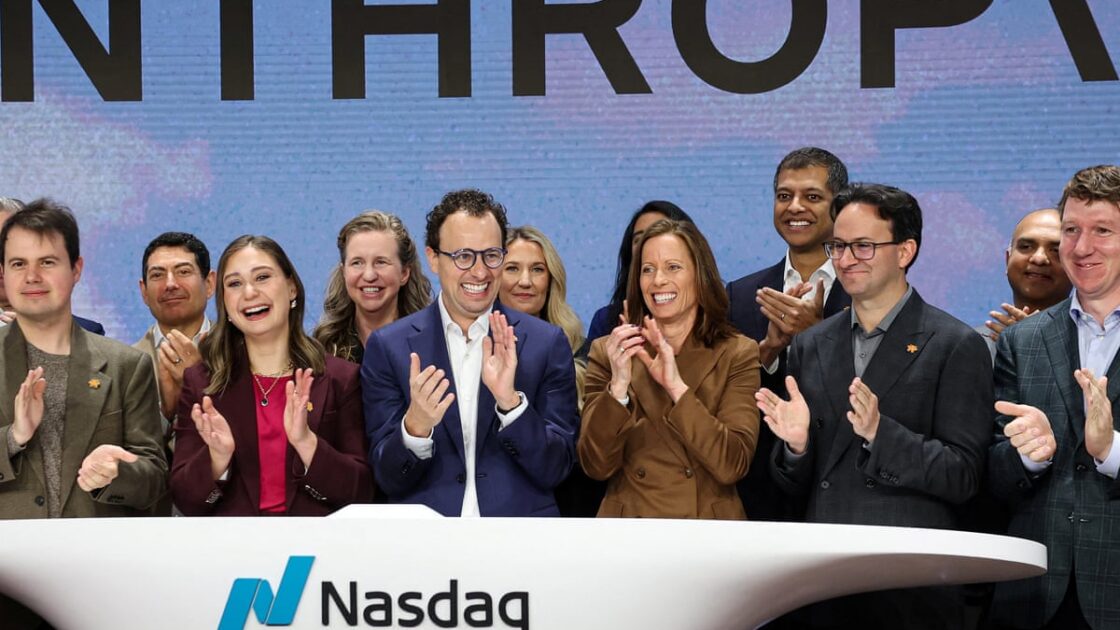
If verified, the proof would represent a significant milestone in applying AI to complex mathematics, though researchers maintain concerns regarding private technology companies investing millions into the technology. Alpöge described the AI’s performance, noting that Claude outpaced him near the completion of the work. He provided a link to computer code written in the Lean programming language which he states can verify the results, prompting other mathematicians to begin checking the proof. The publication coincided with Anthropic’s debut on the Nasdaq stock market, an occurrence Alpöge noted was poorly timed.
History of the Riemann Hypothesis
First proposed in 1859 by German mathematician Bernhard Riemann, the Riemann hypothesis is a nearly 170-year-old problem concerning prime numbers and their distribution along the number line. The Clay Mathematics Institute named it one of the seven Millennium prize math problems in 2000, offering a $1 million reward for each correct solution.
Broader Reactions to AI in Mathematics
While researchers continue working to confirm Alpöge’s findings, other developments have highlighted mixed views on AI in the field. Italian independent mathematician Alessandro Masullo released an incomplete proof of the hypothesis that he spent nearly 12 years working on without AI, stating he lacked full trust in automated systems. Previously, competitor OpenAI stated that an unreleased version of its AI tools helped address a portion of another Millennium prize problem using massive computing power, drawing criticism from academic researchers regarding resource consumption and environmental impact.