Table of Contents
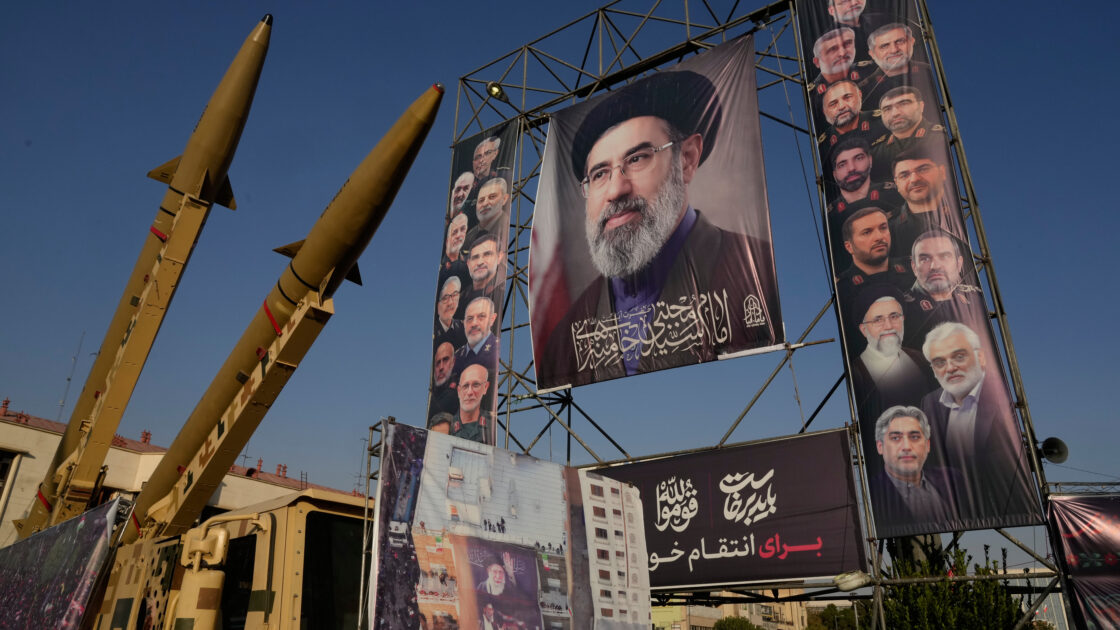
Iran’s Foreign Minister Abbas Araghchi has stated that the country’s enriched uranium stockpile will be utilized according to its needs, highlighting potential shifts in Iran’s longstanding nuclear doctrine. These remarks come amid ongoing conflict with the United States, where the future of Iran’s nuclear programme has become a central point of contention in peace efforts.
Official Nuclear Policy and Recent Statements
Iran has continuously asserted that its nuclear activities are strictly peaceful, meant for electricity generation, medical research, and agriculture. This policy is supported by a religious decree, or fatwa, from the late Ayatollah Ali Khamenei that bans nuclear weapons development. Concurrently, Tehran maintains its right to enrich uranium under the 1970 Treaty on the Non-Proliferation of Nuclear Weapons (NPT).
Speaking to state-run IRNA news agency, Araghchi confirmed that Iran’s enriched material remains inside the country. The International Atomic Energy Agency estimated in 2025 that Iran possessed roughly 440 kilograms of uranium enriched to about 60 percent, falling short of the 90 percent weapons-grade level but exceeding power generation requirements. Araghchi stated that this material would be used according to how needs are defined.
Araghchi acknowledged an ongoing debate among Iranian lawmakers and officials regarding nuclear doctrine changes, noting strong arguments on both sides. Proponents of reform argue that the current approach has failed to protect nuclear facilities from US and Israeli attacks, though Araghchi emphasized that official doctrine remains unchanged for now.
Other officials have echoed these discussions. Security chief Mohsen Rezaei mentioned a review of defense doctrine during new wars, while the Assembly of Experts called defense doctrine review and deterrence establishment unavoidable necessities. Ali Fathollah-Nejad, director of the Center for Middle East and Global Order (CMEG), told Al Jazeera that this marked the first time a governing institution endorsed such a position.
International Concerns and Inspections
Following the US withdrawal from the 2015 Joint Comprehensive Plan of Action in 2018, Tehran abandoned deal restrictions and intensified its nuclear activities. In June 2025, the IAEA declared Iran non-compliant with international safeguards, a report Tehran rejected while accusing the IAEA of facilitating US and Israeli attacks on nuclear sites including Fordow, Natanz, and Isfahan.
IAEA chief Rafael Grossi reported in March that at least 200kg of enriched material likely survived those attacks, though the agency cannot currently verify amounts or locations due to restricted access. The IAEA views these enrichment levels with serious concern. US Vice President JD Vance questioned the necessity of 60 percent enriched fuel during an interview with Reuters, while President Trump stated Iran must never develop a nuclear weapon. Israeli Prime Minister Benjamin Netanyahu also condemned the revival of Iran’s nuclear programme in a recent address.
Prospects for Policy Reversal and Impact on Negotiations
Analysts suggest that a policy reversal, while carrying far-reaching consequences, is now within the realm of possibility due to calculations shifting after the US-Israeli military actions. Rouzbeh Parsi, an Iran researcher at Lund University, told Al Jazeera that open discussion on renewing the late ayatollah’s ban indicates deterrence is being rethought. Simon Mabon, a professor at Lancaster University, told Al Jazeera that a rational defensive reason is emerging for a policy shift, though it would violate the NPT and require withdrawal from it.
Fathollah-Nejad noted deep divisions within the government, with hardliners viewing nuclear assets as vital for regime security, while others argue weapons development would invite further attacks. Mabon explained to Al Jazeera that a shift in nuclear doctrine would severely impact US and Israeli assessments of the conflict, potentially prompting renewed violence and dangerous misinterpretations of defensive measures as offensive actions.