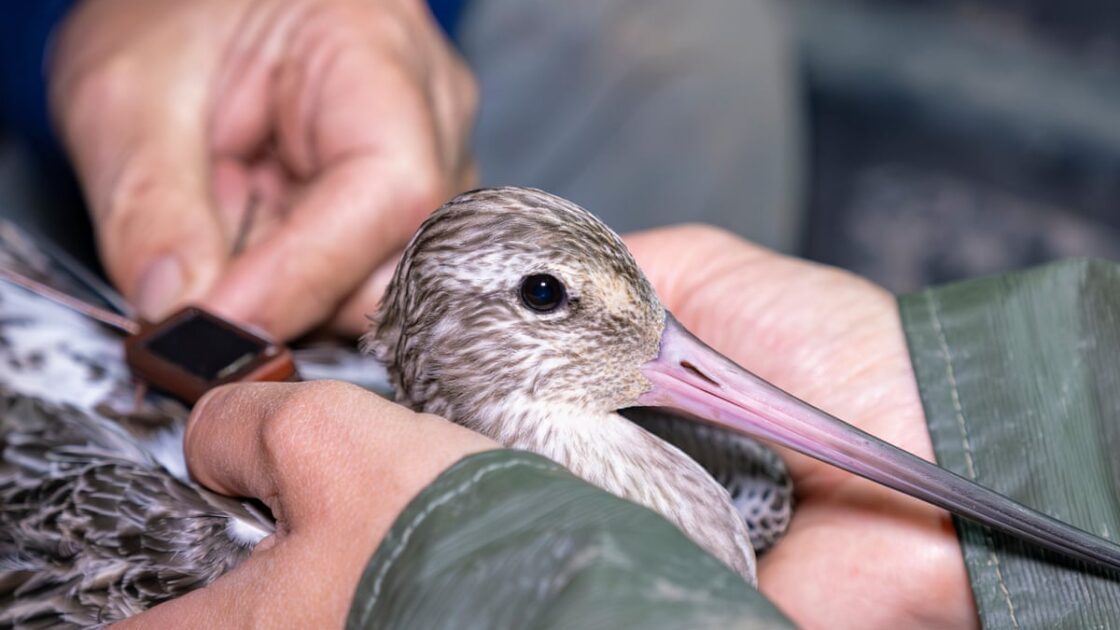
A bar-tailed godwit named Phil has completed a 6,800-mile round trip from Norfolk to Siberia, marking the first time the endurance feats of this long-distance migrant have been successfully mapped.
The Extraordinary Journey of Phil the Godwit
The bar-tailed godwit is a wading bird slightly larger than a pigeon and holds the record for the longest non-stop migratory flight of any bird species. Populations visiting Britain spend their summers breeding within the Arctic Circle before traveling south to winter in Britain’s unfrozen wetlands.
Researchers from the Royal Society for the Protection of Birds (RSPB), alongside the Wash Wader Research Group, uncovered the full extent of this journey by fitting Phil with a tracker weighing only 6 grams in January. The bird was named in tribute to Phil Ireland, the long-serving leader of the research group.
Following the tagging, the device tracked Phil from the Wash to the Wadden Sea coasts across the Netherlands, Denmark, and Germany in March. By late May, the bird reached the Taymyr peninsula located in central Siberia. During his return journey, Phil flew over the Arctic Ocean off northern Norway and stopped at three small Norwegian islands before heading back to the Wadden Sea.
The bird has safely returned to RSPB Snettisham on the edge of the Wash, a location famous for winter tides where thousands of birds gather in a major wildlife spectacle.
Global Conservation and Migratory Flyways
Jeff Kew, a coastal adviser for the RSPB, expressed amazement that a bird tagged on the Wash could travel thousands of miles to Siberia and return safely. Kew noted that tracking Phil highlights the necessity for global cooperation in protecting migratory birds, as many species cross international borders and rely on interconnected networks of wetlands.
These British-visiting godwits travel along the east Atlantic flyway, which serves as a migratory route stretching from the Arctic down to South Africa for millions of birds annually. The extensive mudflats of the Wash provide essential feeding and resting grounds for numerous species.
Dr. Nigel Clark from the Wash Wader Research Group stated that the Wash remains the single most crucial coastal wetland in the United Kingdom for migratory waders, hosting impressive numbers during autumn and winter. Clark added that tracking birds like Phil demonstrates how deeply connected the Wash is to the broader flyway, emphasizing that this entire network of sites outweighs any single location in importance.