Table of Contents
Russian President Vladimir Putin used his address at the Asia-Pacific Economic Cooperation summit to encourage investments in Russia’s Arctic regions. Moscow aims to establish year-round navigation on the Northern Sea Route, which currently operates primarily during the summer months.
The Investment Pitch and Route Background
Putin expressed confidence that business communities and investors from APEC economies will recognize and utilize the emerging opportunities within the Russian market, as reported by Russian media during his speech in Shenzhen, China. To support this initiative, the proposed package includes tax breaks on profits, property, and land, alongside reduced payroll contributions and preferential leases.
This address follows Putin’s statements at the Eastern Economic Forum in Vladivostok in September, where he similarly detailed plans for year-round navigation and expanded transport, energy, and technological infrastructure along the route. Russia has actively developed this shipping corridor connecting northern ports to the Pacific, though these ambitions have generated concerns regarding geopolitical challenges, security issues, and environmental risks.
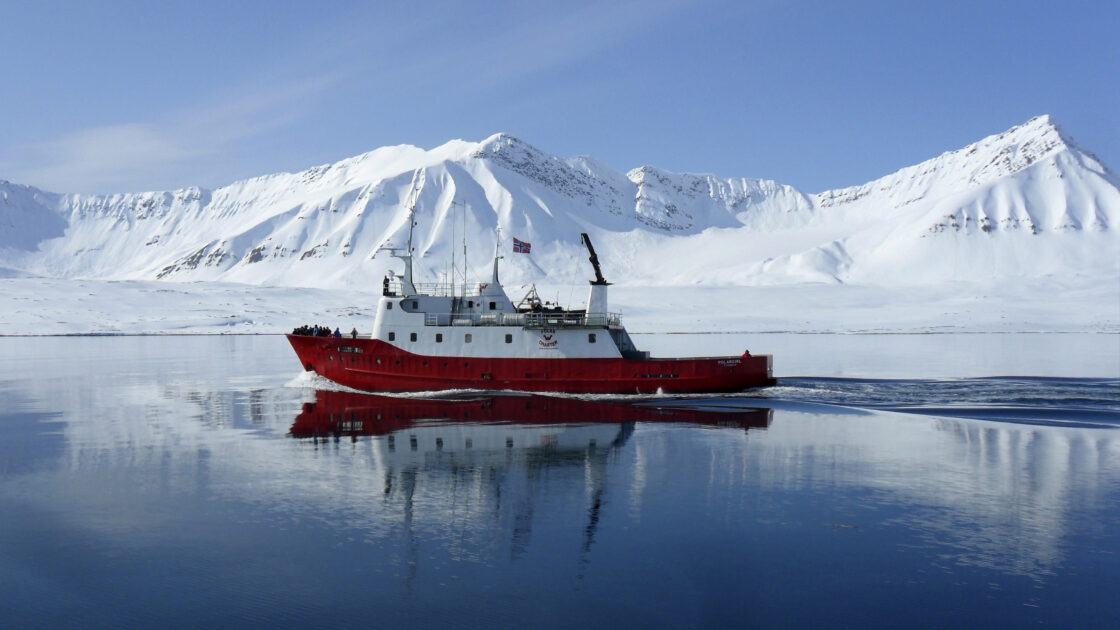
The Arctic shipping lane spans approximately 5,600 kilometers along Russia’s northern coast from the Novaya Zemlya archipelago to the Bering Strait. While historically restricted to brief summer melting periods, a more reliable Arctic route could alleviate global trade disruptions caused by Middle East crises affecting vital waterways like the Bab al-Mandeb strait, the Suez Canal, and the Strait of Hormuz. In response to these security concerns, China introduced its own Arctic shipping route in August, known as the Ice Silk Road, which incorporates Russia’s northern route. Climate change has further accelerated ice melting, reducing the Arctic sea ice cap to record lows according to NASA satellite data and making the corridor navigable for extended periods.
Feasibility and Expert Perspectives
Despite these developments, experts interviewed by Al Jazeera suggest that transforming the Russian Arctic into a global trade route presents significant hurdles. Andrey Todorov, a researcher at the Netherlands Institute for the Law of the Sea, noted that harsh climates, low visibility, short navigation windows, and drifting ice will persist as major obstacles for large-scale commercial traffic. Todorov explained that utilizing the route requires specialized ice-capable vessels that operate inefficiently in non-polar waters, as well as experienced operators. He anticipates the route will remain niche, serving primarily to transport Russian Arctic mineral resources to global markets rather than handling significant transit container traffic.
Ksenia Vakhrusheva, an Arctic project adviser at the Bellona Environmental Transparency Center in Vilnius, Lithuania, stated that Moscow lacks the financial resources to independently complete the project, driving its quest for Chinese investments. European sanctions on Russia’s energy sector and threats to cargo ships in the Black Sea have heightened the urgency to transport oil and gas to Asian markets through alternative corridors. However, Vakhrusheva considers a full transition to a global maritime trade route unrealistic, noting that nations like China are unlikely to want dependency on a single country controlling the passage.
Conversely, Pavel Devyatkin, a senior associate at The Arctic Institute, expressed confidence that Asia-Pacific partners including China, Japan, and South Korea will respond to Putin’s call for increased participation. Nevertheless, Devyatkin acknowledged legitimate concerns regarding limited search-and-rescue capabilities, environmental risks from increased traffic, and the potential inclusion of the Arctic in geopolitical confrontations.
Environmental and Geopolitical Consequences
Increased maritime traffic threatens to escalate black carbon emissions, worsening climate change impacts, pollution, and biodiversity loss in the fragile Arctic ecosystem. A 2024 review published in the Ocean and Coastal Management journal highlighted the detrimental effects of Arctic shipping on local water bodies, air quality, and wildlife.
Simultaneously, melting ice is exposing new geopolitical tensions, as the Northern Sea Route largely traverses Russia’s regulated economic zone. While Russia and China enhance cooperation over the corridor, United States President Donald Trump has repeatedly asserted that Washington must take over Greenland to counter Russian and Chinese Arctic dominance. These developments led to an agreement in September between the US, Denmark, and Greenland during the United Nations General Assembly in New York, increasing the American military presence on the island and straining US relations with European allies.