Table of Contents
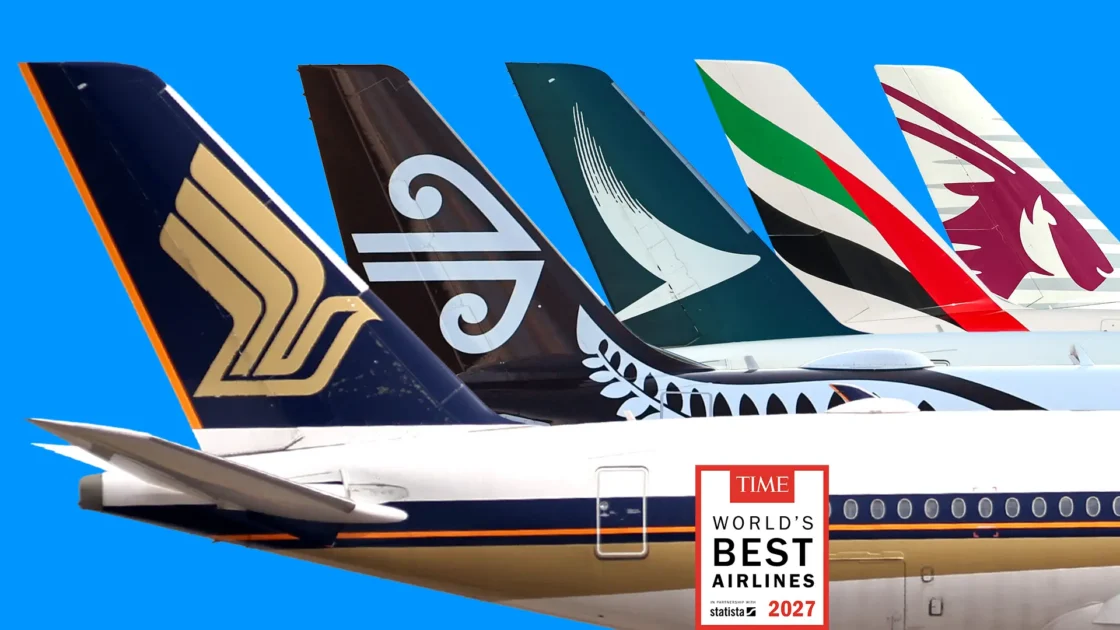
TIME has partnered with Statista to identify the world’s top airlines for 2027, focusing on passenger experience and operational performance. The rankings are based on independent flight data from OAG and surveys conducted over the past three years, categorizing carriers by reliability, business travel, and long-haul service.
Industry Challenges and Economic Outlook
The aviation industry is currently navigating a complex landscape defined by supply chain constraints, aircraft backlogs, and fluctuating fuel costs linked to geopolitical instability. While the International Air Transport Association (IATA) expects passenger traffic to rise, the financial outlook remains tight. In June 2026, the IATA adjusted its industry profit forecast to $23 billion on $1.17 trillion in revenue, representing a net margin of only 2%—roughly half of what was projected before the war in Iran.
Seçkin Özkul, an assistant professor and director of the University of South Florida Supply Chain Innovation Lab, noted that airlines operate on extremely thin margins. “The revenues are in the couple of hundreds, but then they are paying a lot of things out,” Özkul explained, adding that the profit per passenger is estimated at approximately $4.50.
According to the IATA, rising costs are outpacing revenue growth. Fuel expenses are expected to reach $351 million this year, accounting for 31.4% of total operating costs. While industry revenues are projected to grow by 9.5% in 2026, expenses are anticipated to climb by 13.1%. Furthermore, aging fleets present additional financial burdens, as older aircraft require more maintenance and consume more fuel.
Revenue Strategies and Operational Efficiency
To improve profitability, airlines are increasingly relying on ancillary revenue—fees for seat selection, luggage, meals, and lounge access. In 2025, these add-ons generated nearly $160 billion, accounting for 16% of total industry revenue, up from 9% in 2016. Major U.S. carriers have also bolstered their earnings through lucrative loyalty programs.
Airlines also prioritize high load factors to distribute fixed costs across more passengers. “That’s why they sometimes run into issues that they oversell,” Özkul said, noting that carriers use sophisticated engineering to predict passenger no-shows.
Different business models have emerged to address these pressures. Low-cost carriers like Ryanair, which topped the “Most Reliable Airlines” list, focus on extreme operational efficiency. “They have to optimize to the minute of their flights, and they have to keep those operations in such a tight schedule to deliver on the reliability,” Özkul observed.
Premium Services and Market Positioning
Larger carriers are responding to market demands by offering “basic economy” options to remain price-competitive while simultaneously investing in premium cabins. According to The Associated Press, airlines are increasingly centering their business models on first-class, business-class, and premium-economy seating. A 2026 McKinsey report highlighted that on transatlantic routes, business-class cabins can generate revenue comparable to economy cabins while utilizing significantly less space.
Emirates, which ranked first on both the overall “World’s Best Airlines” list and the “Best Airlines for Business Travel” category, has maintained its status through luxury offerings and the expansion of premium economy seating. The airline is currently leveraging Dubai’s recovering tourism sector and collaborating with international partners to develop specialized travel packages across Europe, Southeast Asia, the Indian Ocean, and the UAE.