The head of the United Nations nuclear watchdog, Rafael Grossi, announced on Wednesday that North Korea has completed an extension to its primary uranium enrichment facility at the Yongbyon nuclear complex. The International Atomic Energy Agency (IAEA) has been monitoring the site through satellite imagery, as the country has barred agency inspectors since 2009.
Expansion at Nuclear Facilities
During a quarterly meeting of the IAEA Board of Governors, Grossi detailed the developments at North Korea’s nuclear sites. He noted that construction on the Yongbyon expansion began in mid-September 2026, with the exterior of the new structure finished by late October 2026. Grossi also highlighted that the agency continues to monitor enrichment operations at the Kangson facility, located southwest of Pyongyang.
Grossi described the ongoing growth of the nation’s uranium enrichment program as a matter of “serious concern.” Enriched uranium is a versatile material that can serve as fuel for nuclear power plants and naval reactors, or be utilized in the production of nuclear weapons.
Strategic Context and Regional Tensions
North Korean leader Kim Jong Un has publicly stated his objective to build a significant nuclear force to deter the United States and South Korea. Following military strikes by the U.S. and Israel against Iran in March, Kim characterized Washington’s actions as “global terrorism and aggression.” This conflict has solidified Pyongyang’s stance that a nuclear arsenal is essential for national defense against its primary adversaries.
Despite facing international sanctions aimed at curbing its ballistic missile technology and nuclear development, North Korea has consistently ignored these restrictions. In September 2024, the country publicly disclosed a covert uranium enrichment plant for the first time, with Kim calling for an “exponential” increase in the nation’s nuclear stockpile.
The IAEA has expressed growing alarm regarding these activities, noting a “rapid increase” in operations at North Korean nuclear sites earlier this year. In September, the agency passed resolutions addressing the nuclear program, prompting a sharp response from Kim Yo Jong, the sister of the North Korean leader. She asserted that the country’s status as a nuclear-armed state is “absolute” and dismissed any expectations of denuclearization.
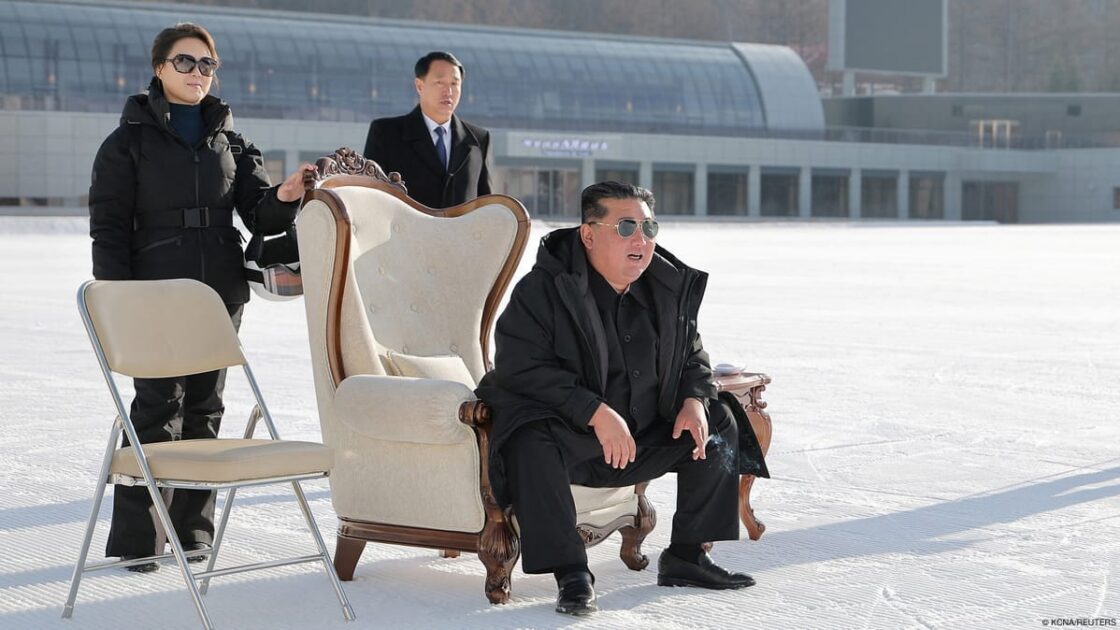
As diplomatic discussions continue, U.S. President Donald Trump has suggested the possibility of a meeting with Kim Jong Un amid his current diplomatic engagements with leaders in China and Russia. Meanwhile, North Korean state media has remained focused on domestic activities, showing images of Kim visiting a ski resort and Mount Paektu without referencing potential international travel.