Table of Contents
Takeoffs from airports across the United States experienced a massive freeze on Friday after the Federal Aviation Administration (FAA) imposed a national ground stop at 3:44 PM ET. Officials enacted the measure due to extraordinary circumstances and for safety reasons.
Flight Resumption and Travel Disruption
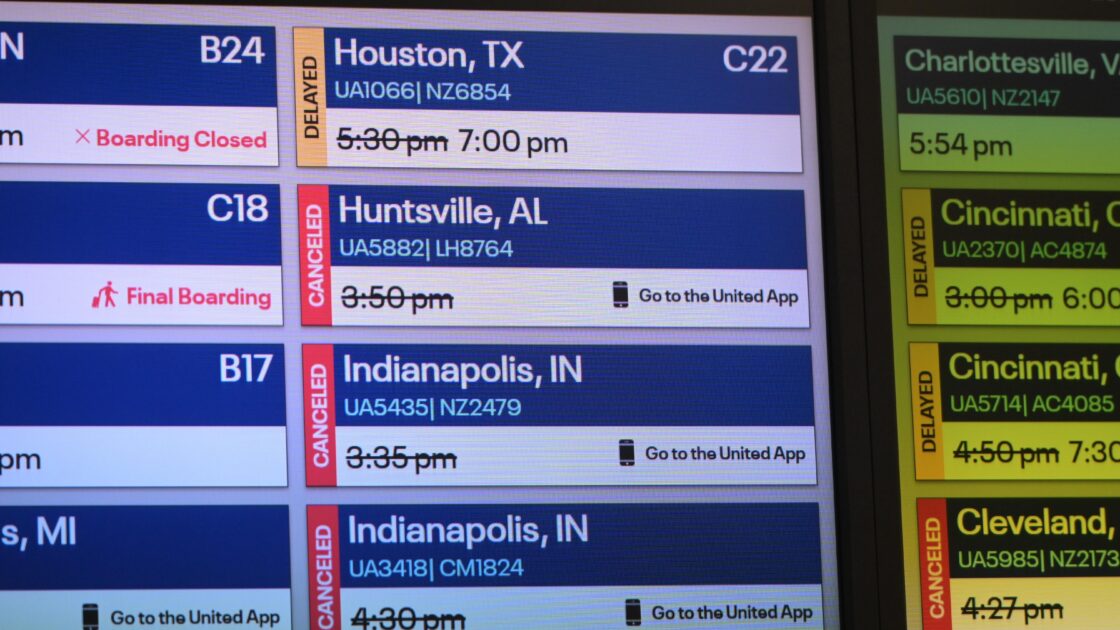
Officials announced that the ground stop was lifted at 8:15 PM ET, more than four hours after it began, allowing flights to resume. The disruption created severe backlog issues, leaving airports overloaded and flight crews exceeding their legal operating hours, which resulted in widespread delays and cancellations.
Data from the flight tracking site FlightAware recorded 9,124 delayed flights and 5,901 canceled flights nationwide as of 8:39 PM ET. CNN noted that the last nationwide ground stop occurred in 2023 and lasted approximately 90 minutes due to a failure in the Notice to Air Missions (NOTAM) system, while the previous nationwide stop happened following the September 11th terrorist attacks in 2001.
Causes and Official Responses
During a White House press conference, Transportation Secretary Sean Duffy attributed the failure to an aging air traffic control system, stating that Terminal Radar Approach Control (TRACON) centers experienced data inconsistencies from radars and aircraft communications. He explained that outdated analog telecom devices suffered from data overloads on their switches and routers.
An initial report from CBS News cited multiple sources indicating that a software update to the private communications network operated by L3Harris triggered a system reboot and subsequent outage. During the press conference, Duffy and Homeland Security Secretary Markwayne Mullin confirmed that system patches caused the issue, with Duffy defending the updates by stating that inaction introduces greater risk.
According to reporting by Jon Ostrower of The Air Current, the disruption originated at the Chicago air traffic control center before spreading to facilities in Boston, Washington, New York, and Minneapolis as the FAA ordered a ground stop for eastbound aircraft. The failure impacted both radar and radio frequencies utilized by controllers and pilots.
Security Inquiries and System Denials
Addressing reporters outside the White House on Friday afternoon, Mullin stated that authorities had no initial evidence indicating a cyberattack, national security threat, or connection to a recent Microsoft Outlook outage, though no potential causes were immediately dismissed.
When questioned about a possible link to the cloud-based AI Strategic Management of Airspace, Routes and Trajectories (SMART) system rolled out nationwide on November 10th, officials stated they were investigating the possibility. However, Air Space Intelligence (ASI)—the developer behind the system—released a statement denying any involvement, clarifying on social media that the ground stop was entirely unrelated to the SMART system, ASI products, or its integration with the FAA.