
Table of Contents
Americans are growing increasingly anxious about the rapid expansion of artificial intelligence, voting in midterm elections to slow down its progress through local restrictions on data centers. According to a 2026 Pew Research Center survey, about 52% of Americans feel more concerned than excited about AI’s growing footprint, and nearly six in ten want greater control over how the technology affects their lives.
The Convergence of Two Economic Shocks
Public anxiety is also driven by geopolitics, the safety of powerful systems, job displacement fears, surveillance, deepfakes, and the massive electricity and water consumption of data centers. A potential espionage scandal involving Nvidia’s former chief executive Jensen Huang has further intensified public focus on the technological competition between the United States and China. While America leads in computing power through advanced chips, China is advancing rapidly in AI models.
This dynamic threatens to merge with a broader economic phenomenon known as the “China Shock,” a term coined two decades ago by economists David H. Autor, David Dorn, and Gordon H. Hanson to describe the massive surge in Chinese exports that caused steep declines in American manufacturing and job losses. Today, the world faces a potential convergence of the China Shock and the AI Productivity Shock.
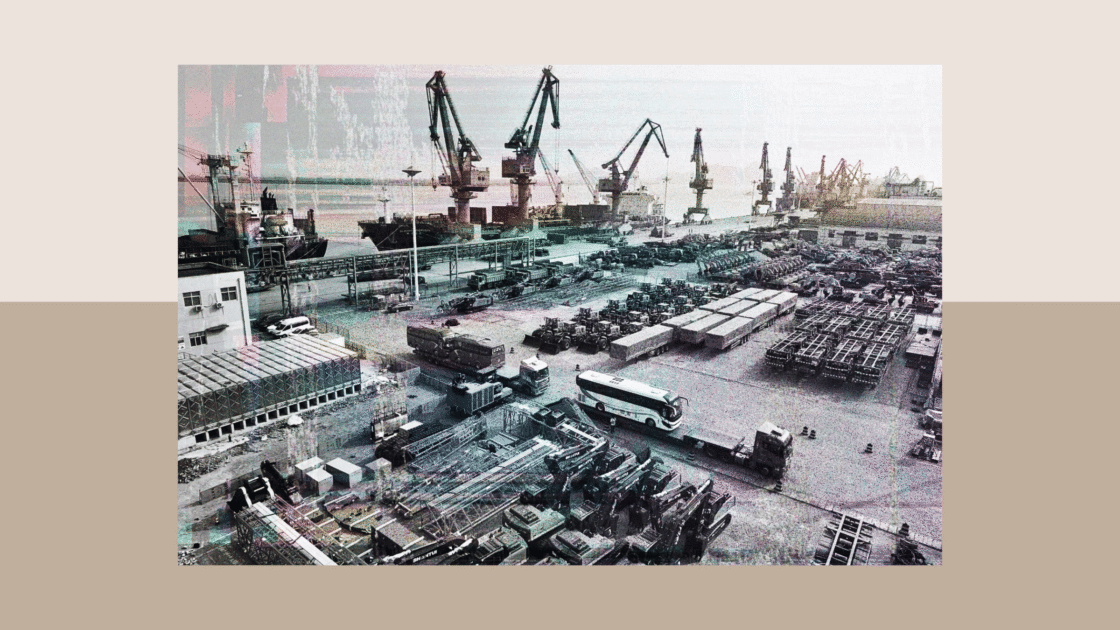
Both shocks share a critical risk: creating an enormous glut of output without generating a corresponding increase in demand or jobs. While China dominates advanced manufacturing in electric vehicles, batteries, solar panels, AI, and robotics, its exports have surged globally without a matching rise in imports.
Global Imbalances and Domestic Strains
China now produces more than 80% of the world’s solar panels, with factory capacity far exceeding global demand, while its battery manufacturing capacity is projected to outpace global needs by 2030. However, domestic consumption remains weak and youth unemployment is rising, with the official urban jobless rate for ages 16 to 24 hitting 18.9% in August 2025.
China accounts for roughly 35% of global manufacturing capacity but only 11% of global consumption, with household consumption amounting to 39% of its GDP compared to 68% in America. This imbalance forces Chinese companies to sell abroad at cutthroat prices, harming foreign manufacturers and triggering tariffs and anti-dumping cases from Southeast Asia to Latin America.
Economists Shoumitro Chatterjee and Arvind Subramanian note that low- and middle-income countries relying on manufacturing for jobs will be the real casualties of a new China Shock.
Policy Choices and Future Risks
China’s economic model has consistently favored capital and production subsidies over household consumption and labor. Chinese families bear heavy burdens, paying roughly a third of healthcare costs out of pocket, while rural pensions remain extremely low, with the national minimum basic pension raised to just 143 yuan a month in 2025.
As AI and robotics enable companies to produce even more without raising wages, the two economic shocks will reinforce each other, leaving the world ill-prepared for the fallout. China must focus on boosting domestic incomes and strengthening its social safety net, while Western policymakers need to rethink how to distribute the gains from AI when most citizens depend directly on employment compensation for their livelihood.